
American Wolfdogs
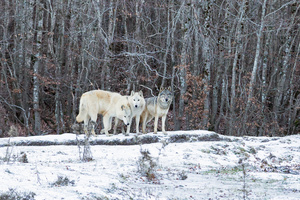
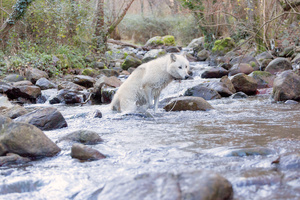
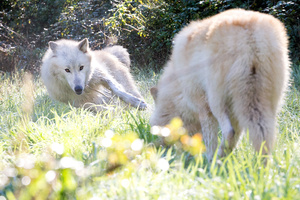
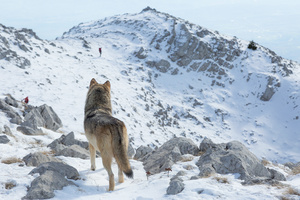
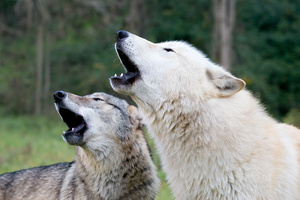
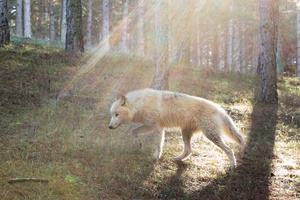
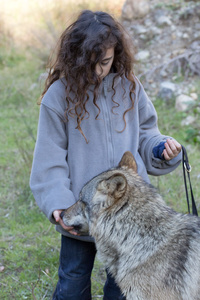
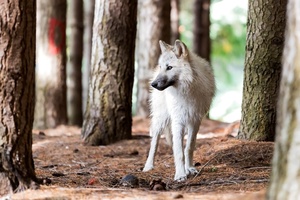
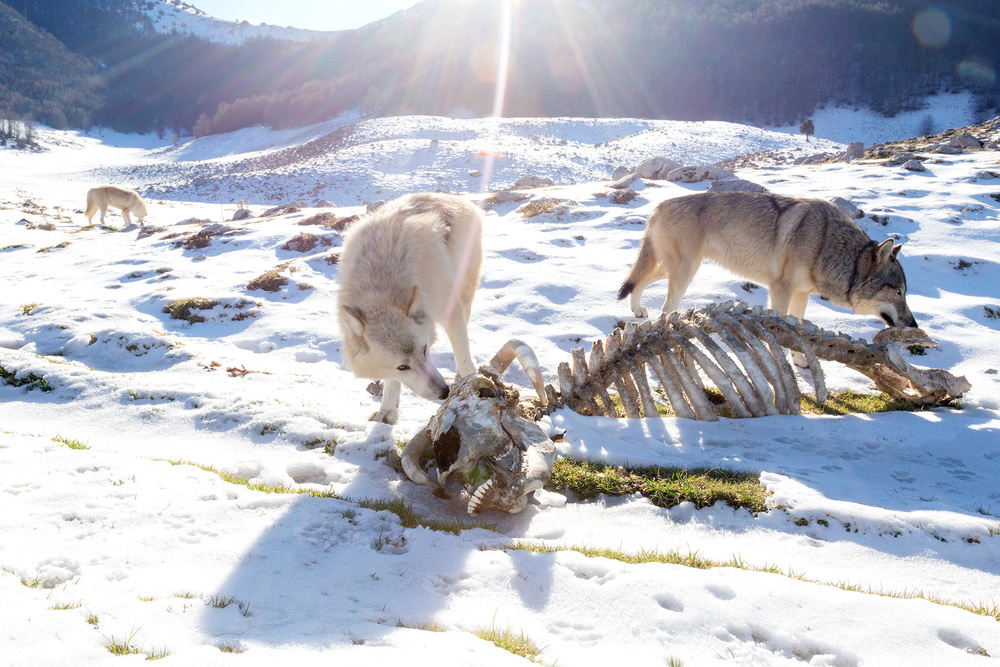
Who is afraid of the wolf? What is an AWD: AWD is the acronym for “American Wolfdog”, indicating those dogs of American origin which have been more or less directly hybridized with wolves. This kind of animal has been bred since more than 40 years, but there is no real breed. Since the breed is not clearly defined, its physical and behavioural characteristics may differ in the different bloodlines. British Columbian, Mackenzie and Alaskan Interior – these are the main types of wolf which are hybridized with Nordic dogs, such as Malamute, Siberian Husky and German Shepherd. At the moment of sale, American breeders distinguish these dogs into low, mid and high content”. This value (more or less low) indicates the percentage of wolfish blood of the example and – most likely – the similarities with wolves and their wild disposition. This value is not verifiable, though, and does not define how many times the samples have been hybridized with wolves. For this reason, in the USA, this differentiation is mainly made on a phenotypic rather than genetic basis. Behaviour, morphology and diseases: Gigantic American Wolfdogs are often used in success film or commercials and can capture the audience thanks to their wild appearance and great charm. Since this is not a well-defined breed, though, their behaviour is very varied. Outside their territory, some examples tend to be more sociable with humans, while others are shier and more fearful, but never aggressive. The impression is, that those hybrids are more suitable for freedom, than domestic life. Differently from the wolf breeds which are more diffused in Italy, such as Czechoslovakian Wolfdog and Saarlos Wolfdog (which are quite shy and stubborn themselves), American Wolfdogs are far harder to train, and gaining their confidence is a real goal. AWDs are omnivorous, but they need a high-protein diet, with very little cereals. Their size widely exceeds the one of the more common wolfish breeds. Males, in fact, reach 55 Kg in weight and 80 cm withers height. To date, no cases of common diseases, such as degenerative myelopathy, dysplasia or dwarfism, have been found. This data may lead to think that the percentage of wolfish blood has fortified these weaknesses which are more common in other species. How they are introduced: Currently, it is very hard to introduce AWD samples in Italy. American breeders release puppies as soon as possible, to make their already difficult socialization easier. In Italy, though, it is not allowed to introduce examples which have not received the rabies vaccine, which may not be given before the age of 3 months and 20 days. AWDs grow very fast and, at that age, they would be so old that it would not be possible to transport them in the cabins of airliners. To avoid these problems, they are bought at the age of 2 months and transported in UE countries with a low rabies level (such as Holland). Once in Europe, they are taken to Italy by car, passing through Austria. In fact, AWB samples which are introduced with this method have an American chip and, according to the documents released by breeders, they are common hybrids. (Personal Note: as a reporter, I have described facts in detail, but I do not know how correct it may be to spread these information about, since they represent an illegal behaviour. I fear someone may try to emulate.) Reportage AWD - by Francesco Cinque - www.cinquephoto.com Useless alarmism or real danger? On December 7th, 2013, the Italian State Forestry Corps carried out a raid on the whole territory to seize all known examples of American Wolfdog. The hybrids, which had been put to house arrest, are mostly awaiting trial, to define whether they are dogs or wolves. Professor Ettore Randi, geneticist from the University of Bologna and member of ISPRA (Institute of Environmental Protection and Research), asserts that tests are performed through the analysis of mitochondrial DNA. Mitochondrial DNA is a minuscule filament inside cells and allows the cell’s own breathing; with this kind of analysis, it is possible to identify, without reason of doubt, whether the sample under test belongs to a dog or an hybrid; nonetheless, it is very hard (if not impossible) to go back to the generation of the hybrid. Italian regulations forbid possession of hybrids up to the fourth generation (“F4”) without normative authorizations, since they are considered as endangered species from the Cities Convention – Washington Convention on International Trade in Endangered Species of Wild Fauna and Flora. Since it is not possible to determine to which “F” generation AWDs belong to, they are currently seized, waiting for a decision to be taken. But what are the real dangers? On the one hand, you may find the Italian State Forestry Corps, on the other hand, enthusiasts and owners of American Wolfdogs. They both express thoughts and doubts towards the counterpart. The State fears the introduction of these animals, since they may spread as strays and “contaminate” Italian wolves. Also, they fear that those animals may be aggressive towards people and other species. AWD owners (who recently summoned in an association for the preservation of AWDs), state that it is unusual alarmism and, if we judge on their appearance only, we will never manage to go beyond this mental block. Just as per other wolfdog breeds, they are hybrids with a wild nature, but never aggressive or dangerous, since this depends on the education they receive from their owners. Finally, they maintain that they own real dogs, far beyond the F4 generation which is prescribed by the regulations in force. Whatever reality may be, this is a situation to be solved as soon as possible. It is ethically immoral that these animals have to be kept under house arrest, without going out of their cages. New reference parameters are necessary, defining once for all the legality or not of these examples and the rules to be followed for a safe and protected importation.
No categories selected
Photos (12)