LensCulture Editor Review
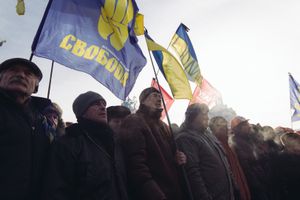
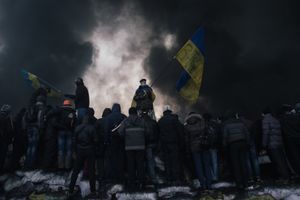
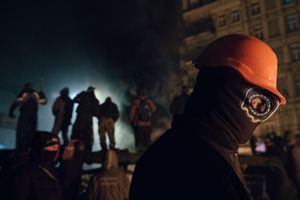
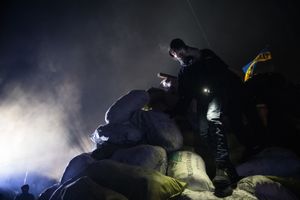
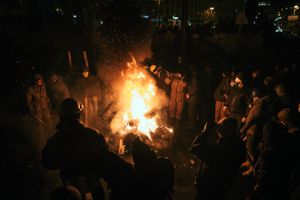
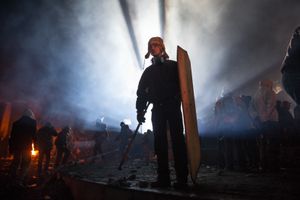
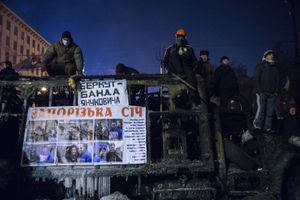
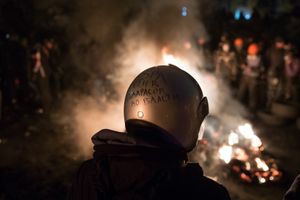
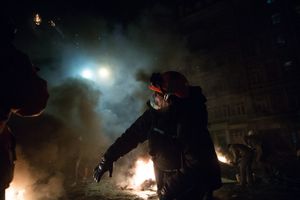
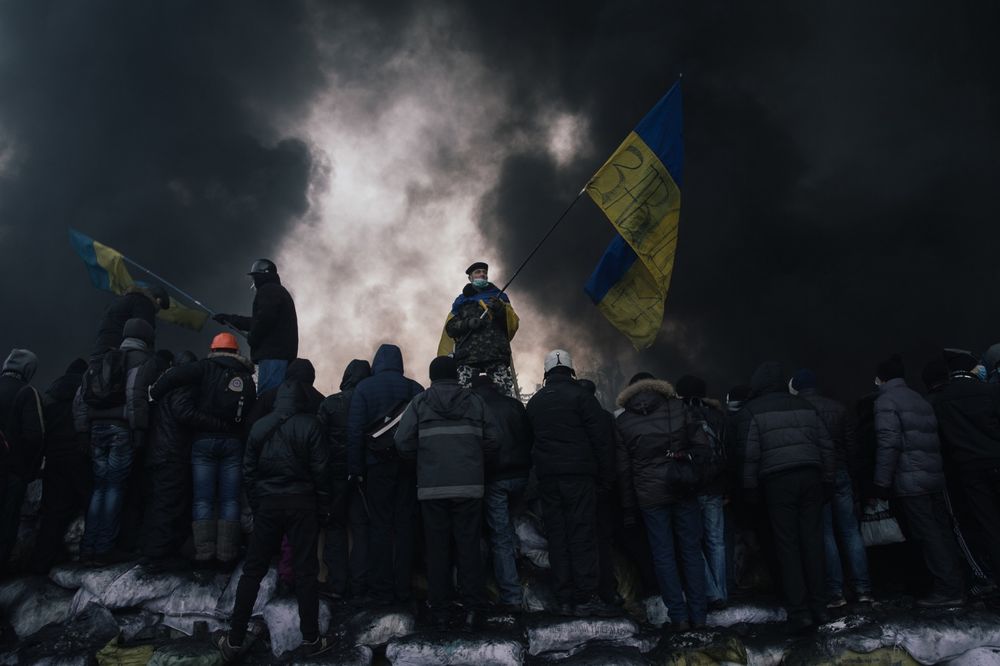
The protest started as a gathering of a few thousand students demanding that Ukraine sign an Association Agreement with the European Union, after the government had announced that work had been suspended on this agreement just before the Vilnius Summit of November 28–29, 2013. For Ukraine, signing the Association Agreement would have marked a decisive step away from the centuries-long orientation toward Russia and the east, first consummated in the seventeenth century when the Ukrainian Cossack leaders signed a treaty with the czar of Muscovy. The eastern part of Ukraine was ruled by Russia for most of that time until independence, while the western part spent many years governed variously from Vienna or Warsaw as part of the Austrian Empire or Poland. The disparate lands where Ukrainians lived were finally united under Soviet rule after 1945, but the tensions between west and east remained.As both sides hardened their positions, the ultimate outcome of the standoff in Ukraine became hard to predict. But one thing was clear: the opposition, which before was primarily electoral and procedural, had changed into something not seen before in Ukraine or its political neighborhood.The Euromaidan was an encampment and daily gathering site for thousands of people in downtown Kyiv that swelled to hundreds of thousands of bodies on weekends, through weeks of frozen days and nights, from November into the new year. The student organizers’ rejection of political party symbols was the first sign that this was not a second coming of the Orange Revolution. This generation of young Ukrainians is more hardheaded and clear-sighted about the future than their predecessors. Even though the opposition political leaders put themselves at the head of the movement, there was a distinct sense that they had not planned for such an uprising and were catching up with the people already on the streets.
No categories selected
Photos (10)