
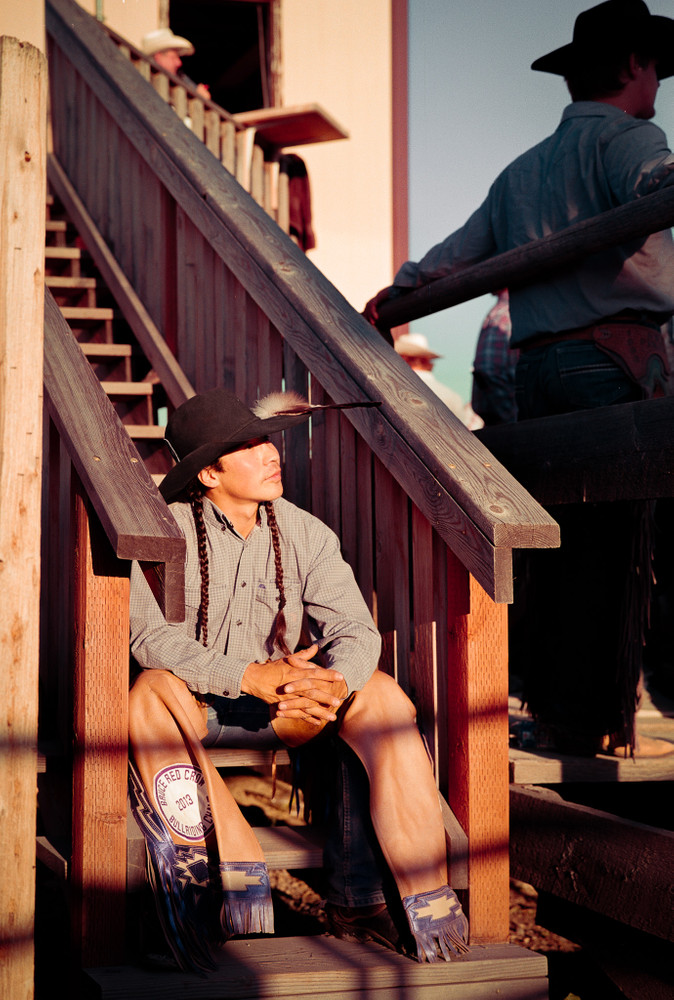
“Ranching and rodeo have for over one hundred years nurtured and protected youth from generational trauma on the Pine Ridge and Northern Cheyenne Reservations. They are still suffering from the trauma of murder, family separations and denial of cultural heritage.
In 1876 Lakota and Cheyenne warrior bands defeated Custer and have since lived in the shadows of broken treaties. Since the battle at little bighorn and the massacre at Wounded knee, they live in marginalised communities with little federal aid or recognition.
Ranching and rodeo have been lifelines for these rural communities, and helped Lakota and Cheyenne ranchers remain custodians of their land. Despite efforts to ban traditional medicine teaching, plant and animal medicine is still respected and taught amongst Lakota and Cheyenne communities.
In the shadow of alcohol and drug abuse, continued social and economic marginalisation, the future of both ranching and rodeo is cast in doubt.”