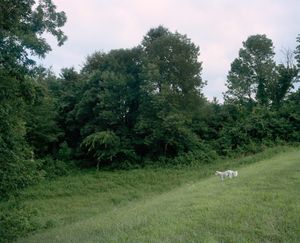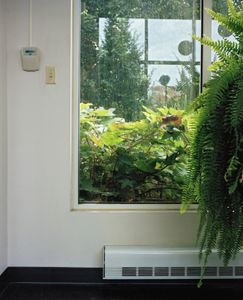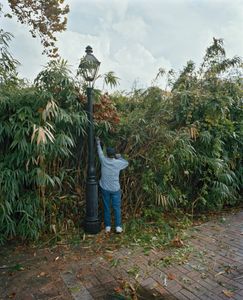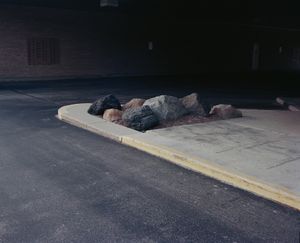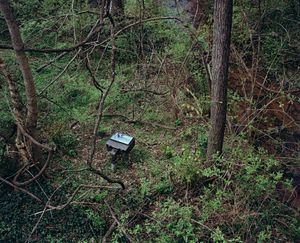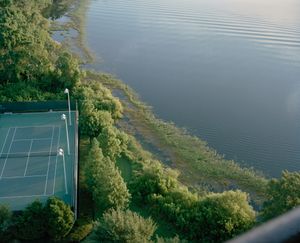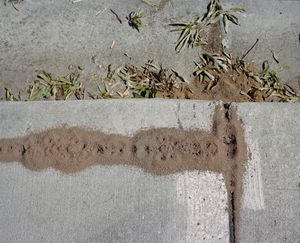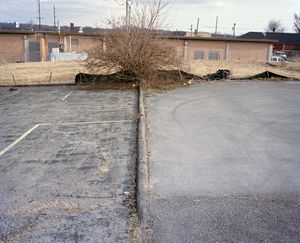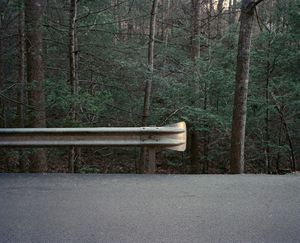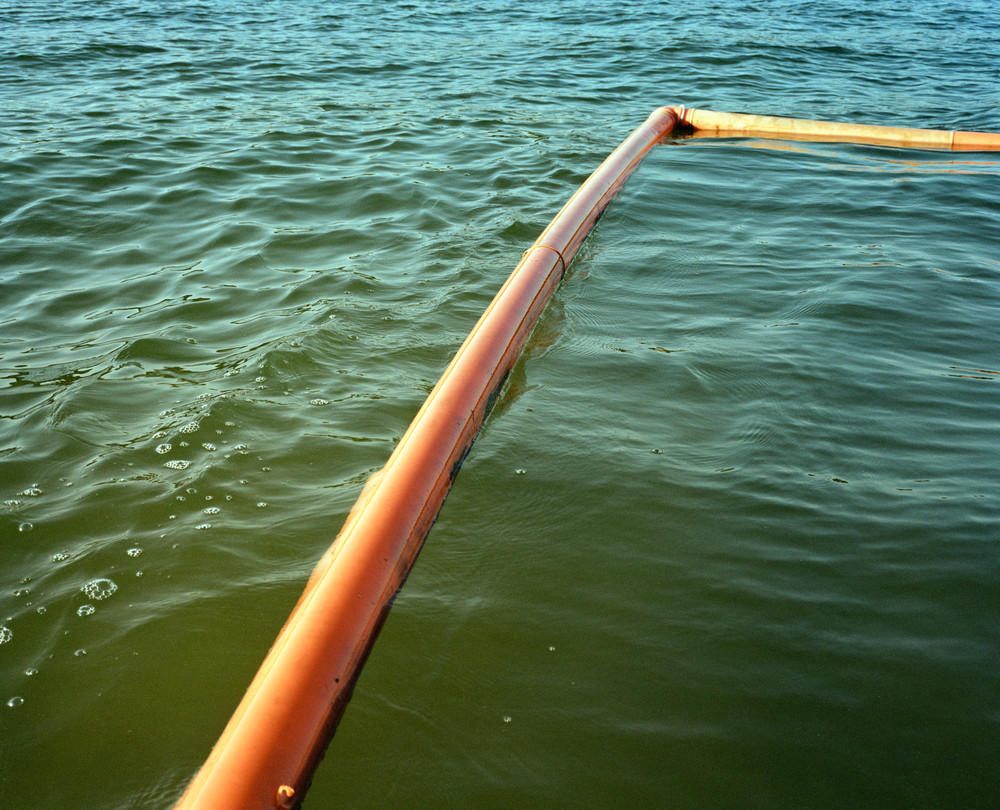

How the singular subject, viewer in the case of photography, is located in relation to other objects is referred to as spatial relation. Often happening subconsciously, ways in which objects respond to each other impacts the use(s) of a particular space. Consider lines on a roadway, a queue at an event, or perhaps a sidewalk. Where these examples differ in physicality, they align in terms of social contract. Nothing stops someone from crossing into another traffic lane, ducking under the rope, or walking off the sidewalk other than the understanding that public space has been designed to be shared and navigated in certain ways. The communal spaces in these images exhibit ways in which design and function sometimes clash and sometimes work in harmony; in either condition they do affect ways in which space is engaged. Do large rocks in the sidewalk serve an aesthetic or utilitarian purpose? Is the floating buoy keeping things in, out, or neither?Answers can vary but what remains constant is the notion that space design and behavior are linked, regardless of intention.
While the majority of images in Pedestrian are devoid of the human figure, all imply that the space has been impacted by human needs, wants, or desires. This is significant because the occasional appearance of the figure reminds the viewer that indeed, humans create, use, and traverse spaces.