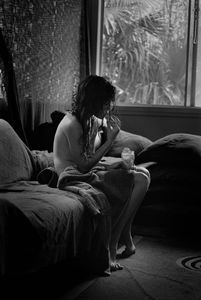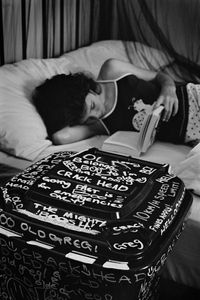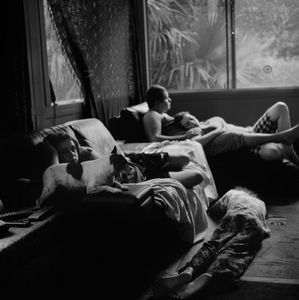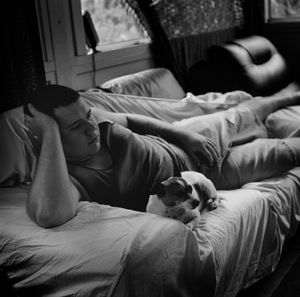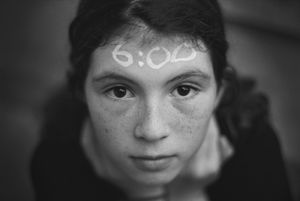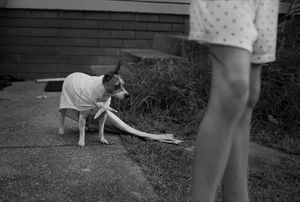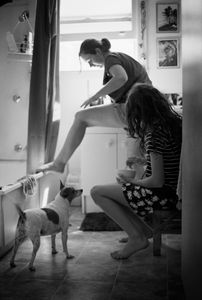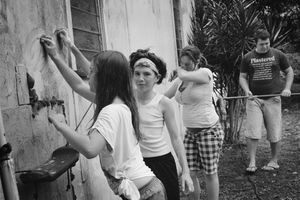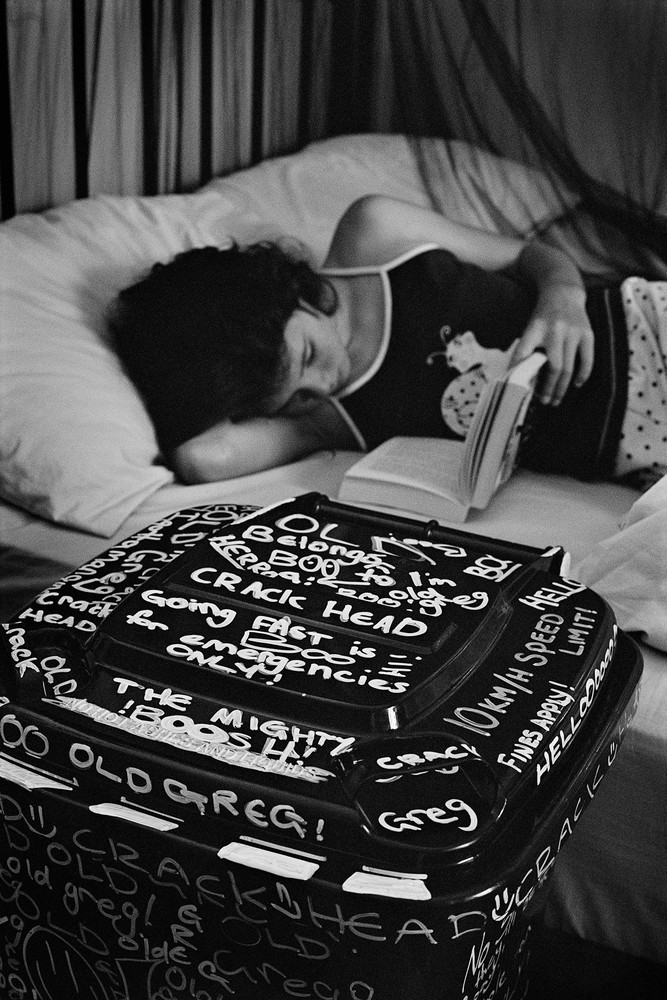
From 2004 to 2012 I rented a dilapidated fibro house in Bangalow – a town that was rapidly gentrifying in the Byron Bay hinterland.
The house stood alone on the very edge of town, bordered by sporting fields and paddock. The back yard was dark, heavily shielded by large old trees and dense shrubs. One map from a local Easter Egg hunt listed it as the Witch’s House. We called it, affectionately, our hovel.
We were of the town, but separate from it. I was a single mother raising a neurodiverse family on income support. Looking back, these images are representative of the margins that we have lived in: on the edge of town, under the poverty line, in the fringes of society.
The backyard that shielded our personal space, the empty spaces that separated us from the community, were a physical representation of those intangible barriers created by our difference.
But these are also poignant images of erasure. After we were pushed out by rising rent in 2012, this house was stripped back to its foundation and reinvented as a modern upmarket residence. The trees were all felled and a second residence was built in the back yard.
The last house on Byron Bay Road had become gentrified.