
The Valley of the Shadow of Death
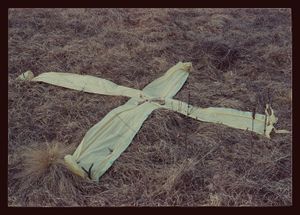
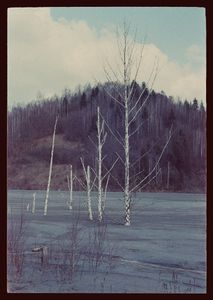
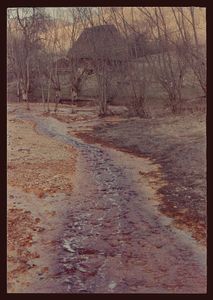
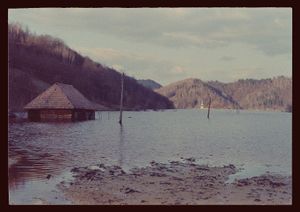
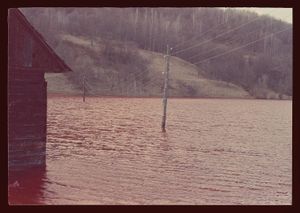
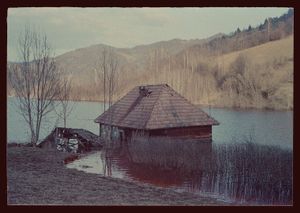
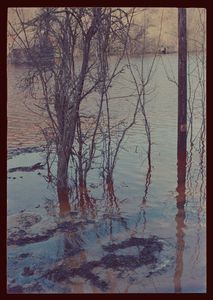
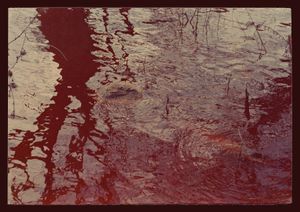
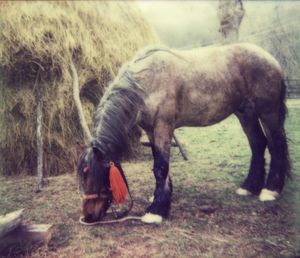
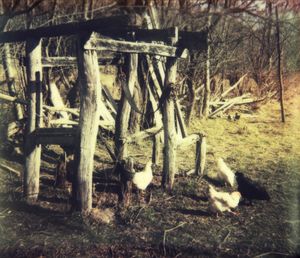
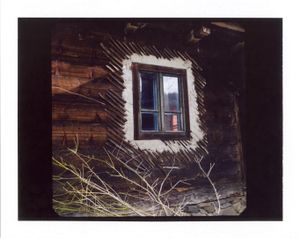
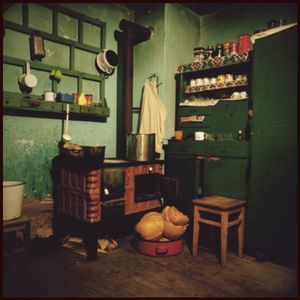
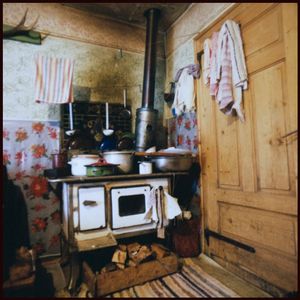
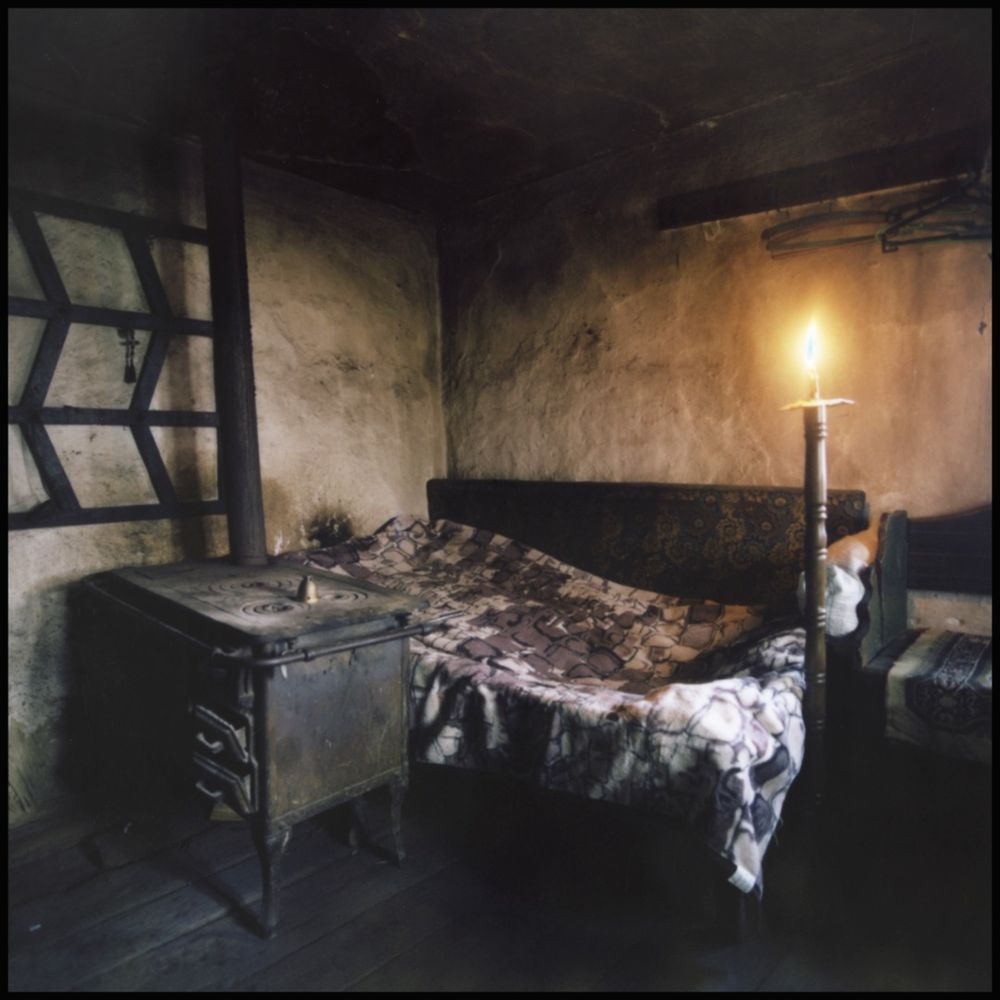
“Even though I walk through the valley of the shadow of death, I will fear no evil, for you are with me; your rod and your staff, they comfort me.” (Psalm 23:4) “The village will die, when the church will be completely covered by the mud.” (Niculai Prata, resident of Geamana) I first came across a picture of the flooded church in the village of Geamana (Romanian for ‘Twin’) by Hungarian photographer Tamas Dezso in late 2013 during the research work for my photobook-series ‘Pride and comfort’. I was dazzled by the picturality of the landscape, in center of which an old church throned, surrounded by a grey porous mass and a stripe of red and cyan water. Right away I started to investigate what seemed to be a ghost-place, probably the stage of dramatic events some years before. Situated in Romania’s Alba County, Geamana was a prosperous mountain village with around one thousand inhabitants until the end of the 1970’s. A few years earlier, the Romanian communist authorities, led by its ‘highest commander’ Nicolae Ceausescu, discovered important copper reserves in Rosia Poieni, a mountain next to the village. When the mine has been officially opened in 1977, it was the largest open-pit copper mine in Europe, the reserve itself the second largest on the continent. During the next few years, the government forced the people of Geamana to abandon their houses so that an artificial lake could take its place and serve as a kind of catch-basin for the mine’s toxic cyanide sludge to flow into. This way the so called ‘Tailing Pond Valea Sesii’ was established. The peasants were offered an estimated amount of money to leave everything behind and build themselves new households elsewhere. It has been personally reported to me that most of them didn’t leave until the red mud – or the ‘evil water’, how they still use to call it – didn’t reach their living rooms. Strangely enough, some villagers stayed: either they moved to a higher spot of the mountain slope or they were lucky that their houses were already up there. Less than ten households, around fifteen souls are still striving to survive in Geamana, most of them 60 or older. Living without medical care, a general store for buying at least oil and flour, which they painfully miss, with almost no contact to the exterior world except their old TV sets. But they still have their animals, which give them eggs, milk and meat, and their oven where they bake bread, if they get some flour from the next city. As the level of the lake is rising every day – the state-owned copper mine being still active – clean water becomes a severe problem. Eugen, a man in his end 60’s who spent all his life here, living now with his wife in a house which is only a few steps away from the huge toxic pond, confessed that if his well gets contaminated, he will hang himself. Just a few days before my last visit to Geamana in March 2014, Victor, the oldest member of this tiny community passed away. He was 88. The state ‘bought’ his property more than thirty years ago, but Victor was not capable to leave. He didn’t want to, because this was ‘his place’, his daughter told me. He received every year a warning from the mine management, urging him to leave right away. For some unknown reason, they finally let him live and die in the house of his ancestors. The last picture of the series shows his death bed and the Christian orthodox ritual on the day of his burial. The people from Geamana regret one thing most: that the post-communist authorities didn’t keep their promise in moving the graves of their ancestors to a safer place. They lie now under a thick layer of mud and red water, around the ‘Three Hierarchs’ orthodox church. The following series is not a reportage. It is an elegy dedicated to a place and a world which soon will be History. Lucian Spatariu
No categories selected
Photos (15)