Goat Dance
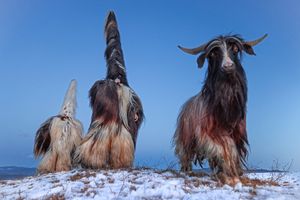
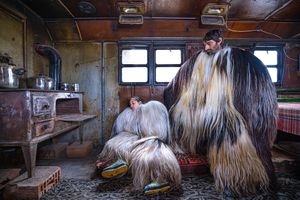
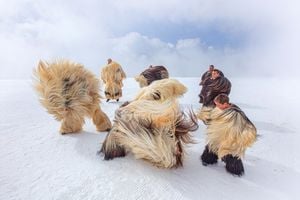
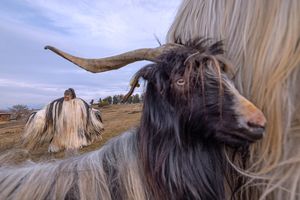
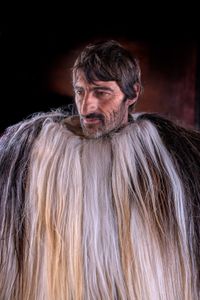
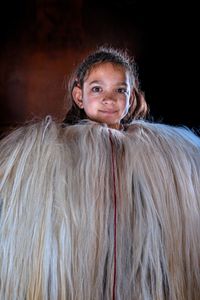
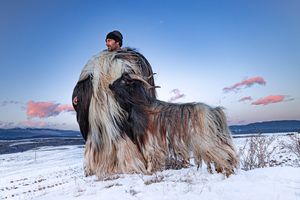
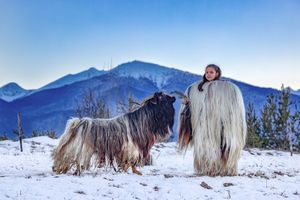
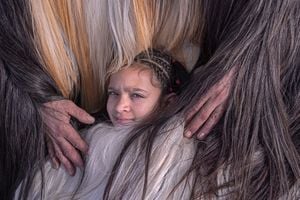
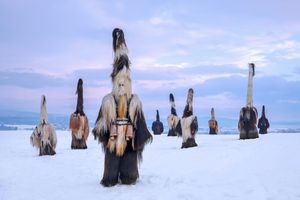
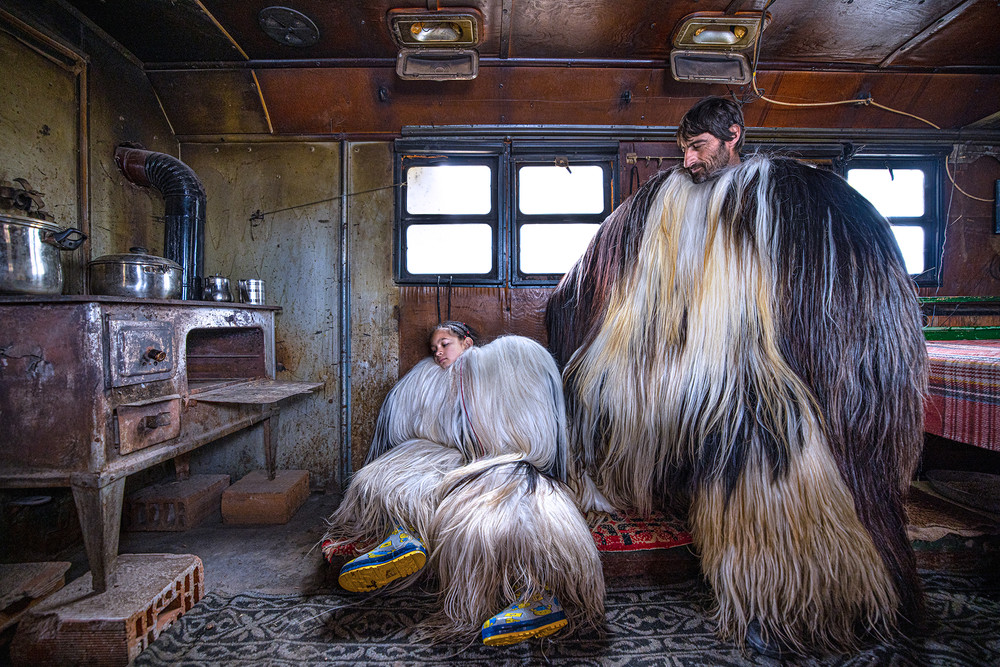
Every January in the southwest of my country Bulgaria an ancient and wild pagan custom take plase. We call them - Chaushi (Guardians) and they represent the strong bond between the local rural communities and their environment. Traditionally shepherds would use hides to create magical masks and costumes. They believe his transformation allow them to enter the spirit world during the winter ritual evil spirits chase. The purpose of the mask is to hide the identity of the dancer and serve as protection while on the magic quest to bring blessings and health to the people, animals and crops. Throughout the past century the masked rituals of Bulgaria have been gradually adapted to different political and cultural changes. Originally, this tradition was a realm occupied exclusively by men, but recently in order to keep the kukeri alive, the tradition opened up for women and children. The sacred ritual that was only performed by men has now gradually turned into a family activity. However, for the thousands of kukeri the tradition is not limited only to the winter rituals, but is an all year round way of life and a source of passion and inspiration. Taking daily care of their livestock and preparing for the next winter holidays fills them with positive energy and motivation to get over the dificulties and the endless work on the land and livestock. A new “long hair” fashion was introduced some 20 years ago as someone made a costume from the nearly extinct local longhair goat breed (Capra aegagrus f. hiricus). The beautiful hair shake of the new costume inspired more and more kukeri to start breeding the mountain goat species, until the fashion became a total mania in the southwest. From only about 900 goats survived 2013 today the number of animals is over 10000 and growing bred by the goat dancers. A typical Chaushi family will keep a herd of 10 to 20 goats.
No categories selected
Photos (10)