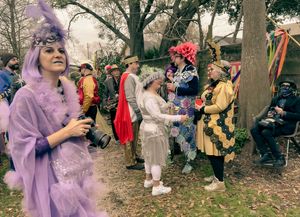
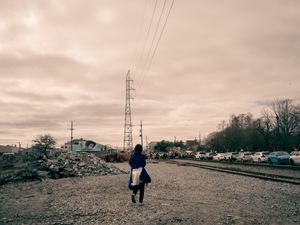
I had set out to create a photo essay on Mardi Gras Day—something deliberate, structured, a visual exploration of the spectacle and spirit of the event. But almost as soon as I arrived, my plans began to dissolve. After nearly two decades away from the city, returning during Mardi Gras wasn’t just overwhelming—it was deeply emotional. The sensory overload, the familiarity turned strange, the collision of memory and present-day experience—it all hit me harder than I expected. After a couple of hours, I put the essay aside and simply let myself be there.
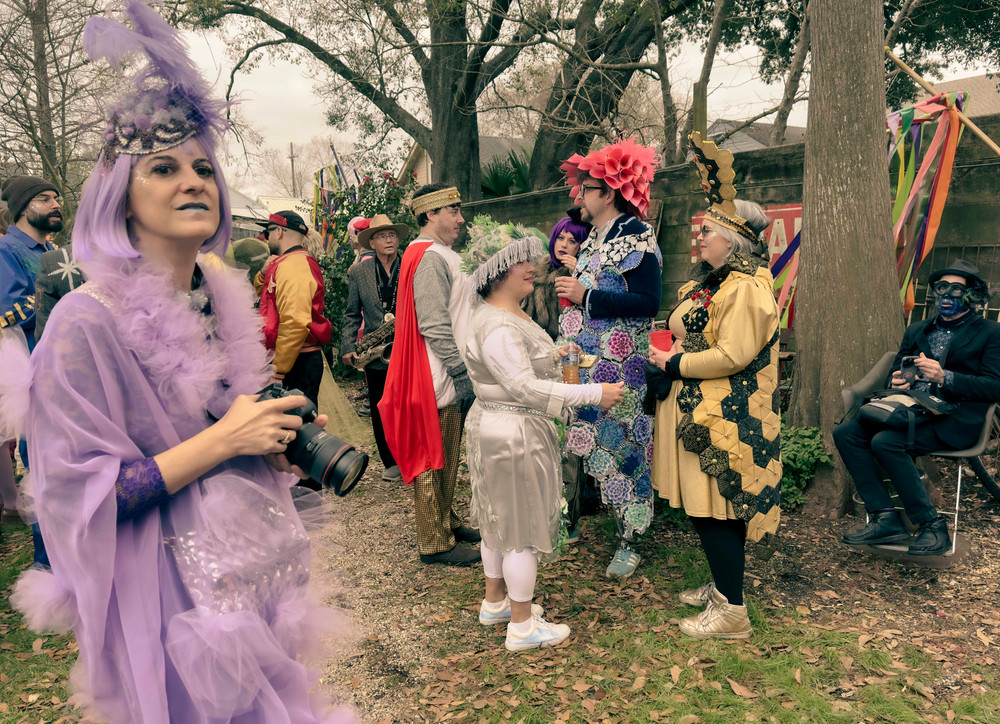
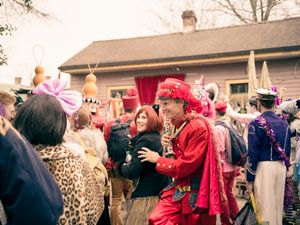
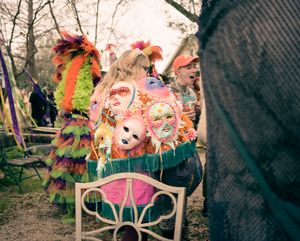
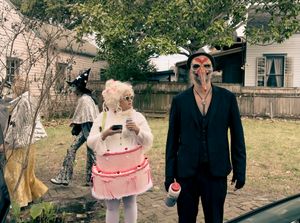
Still, I kept my camera close, and when I could, I made photographs—not with an agenda, but with instinct. What emerged wasn’t a traditional documentary, but a series of impressions. I wasn’t trying to define Mardi Gras, just to feel it. The images reflect that: chaotic, exuberant, beautiful, and slightly unhinged—much like the city itself.
Throughout the day, I wore a costume and mask, disappearing into the crowd. Even as I photographed friends and familiar faces, I remained anonymous, hidden behind silks and props. That anonymity gave me a strange freedom—it made me both participant and observer. It also echoed the deeper spirit of Mardi Gras: the suspension of identity, the fluid performance of self, the dance between public spectacle and private emotion.
These photographs aren’t about documentation so much as sensation. They capture fragments of a day lived between past and present, memory and immediacy, celebration and disorientation. In stepping back into the chaos, I found a kind of reconnection—not just with the city, but with the act of photographing as a way of processing what words couldn’t quite hold.
Tags
#Mardi Gras
#Photo Essay
#Street Photography
#Emotional Return
#Memory
#Identity
#Anonymity
#Costume
#Mask
#Celebration
#Chaos
#Exuberance
#Beauty
#Disorientation
#Sensory Experience
#Urban Culture
#Reconnection
#Nostalgia
#Visual Storytelling
#Personal Narrative
#City Life
#Transformation
#Performance
#Public Spectacle
#Private Emotion