
The Sublime Heights
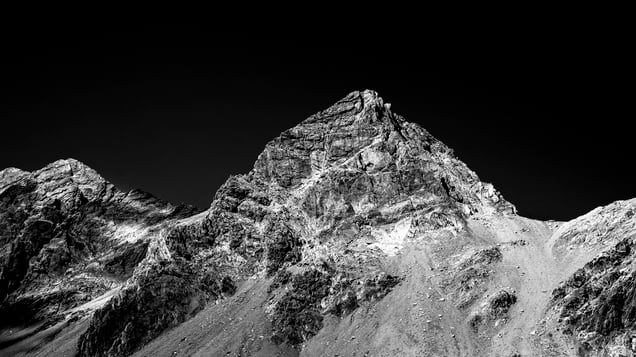
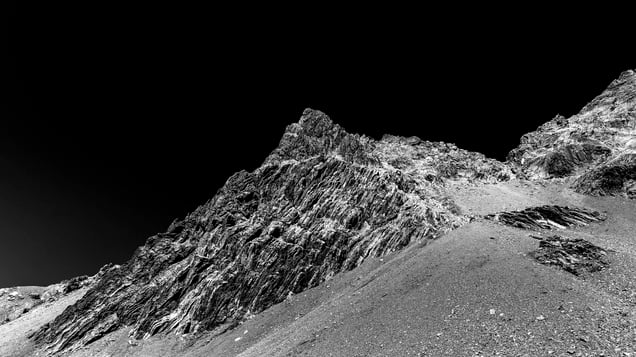
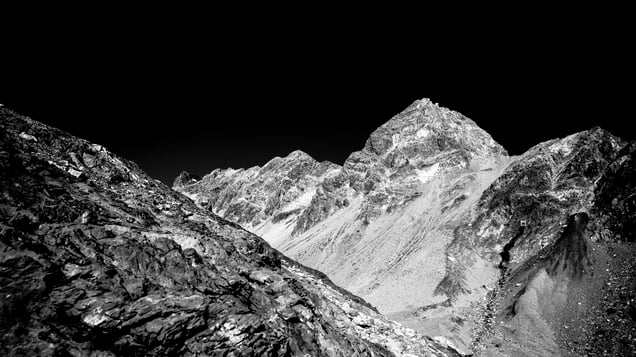
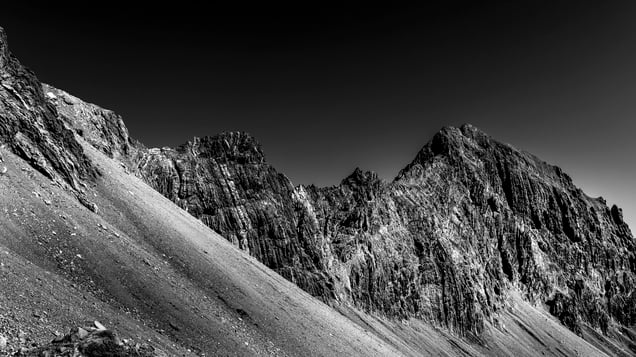
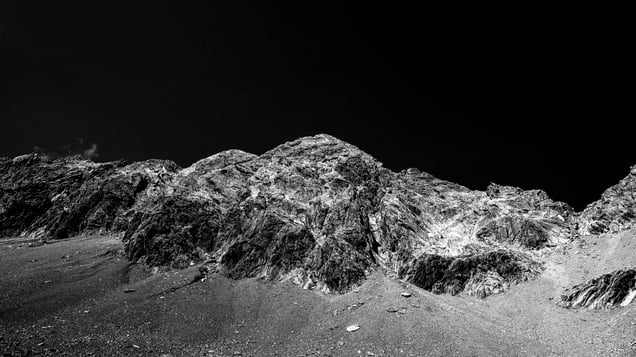
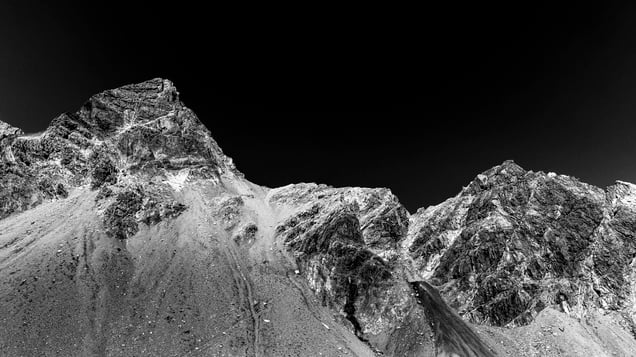
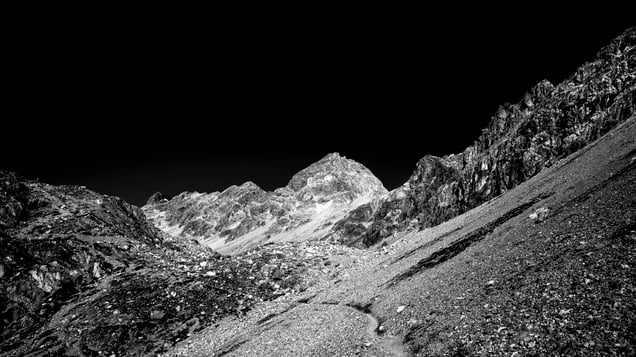
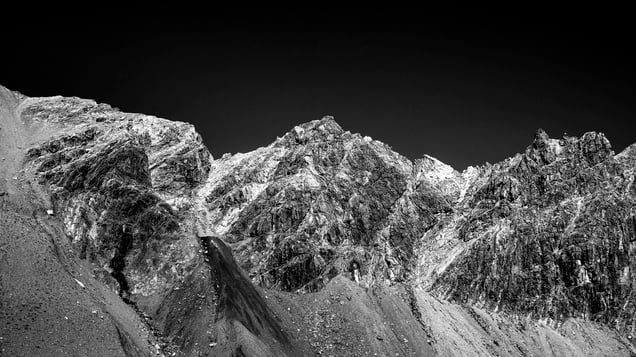
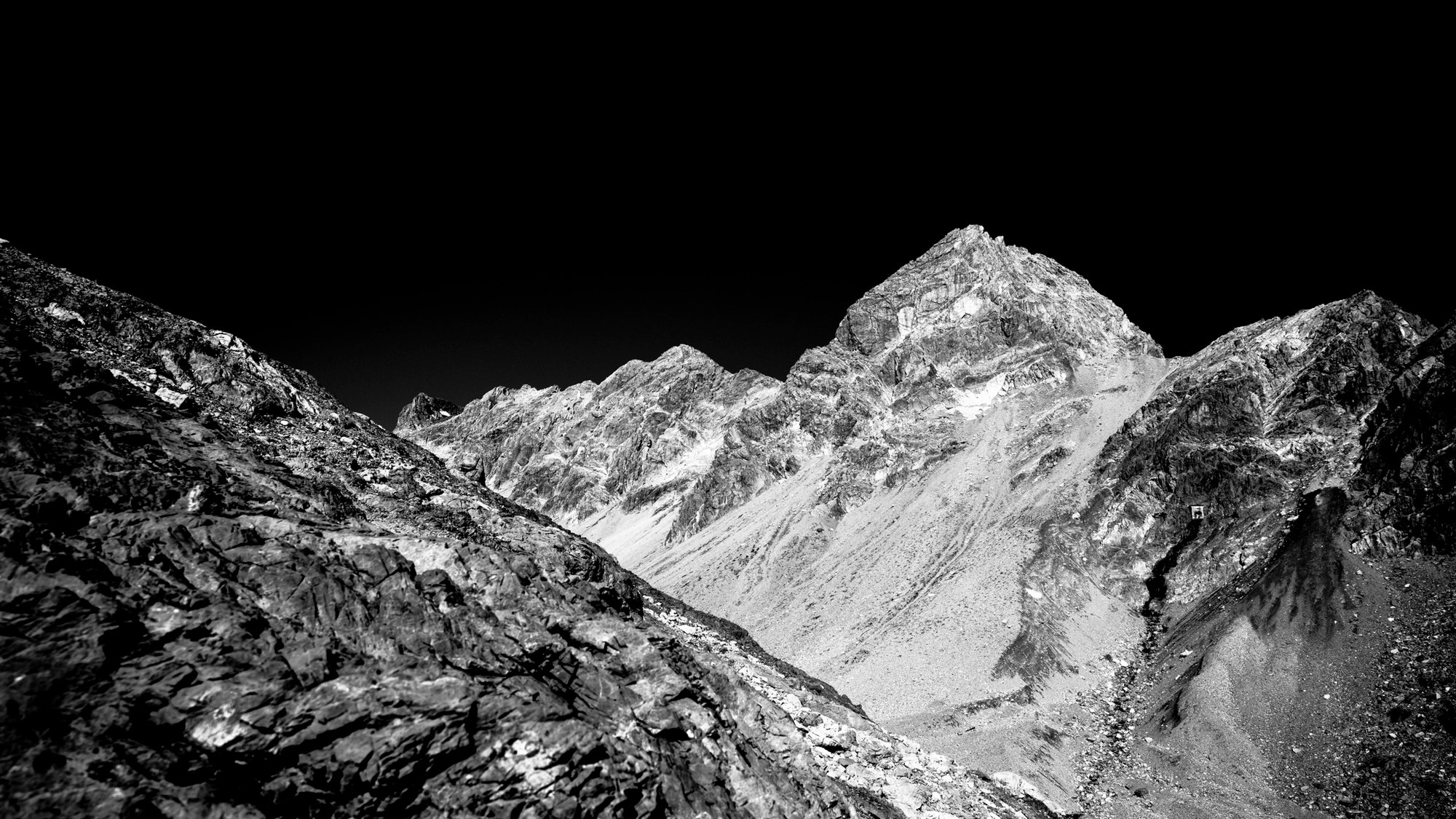
The eight-part black-and-white series by Stefan Kuhn offers viewers a monumental glimpse into the world of the high mountains. Kuhn focuses on peaks set within a rugged, high-alpine terrain—landscapes whose primal and inaccessible character is rarely depicted with such intensity. His photographs deliberately dispense with distracting color, thereby enhancing the visual weight of forms, lines, and structures. Here, black and white is not used as a nostalgic stylistic device but as an instrumental tool to reveal the essence of the mountains. Particularly striking is the deep, almost velvety black of the sky that appears in all the images. This dark sky seems not only to frame the mountains but to let them emerge from the darkness itself. Through this radical reduction, a visual effect arises that is both dramatic and meditative. The viewer senses a feeling of vastness—paradoxically created by the density and heaviness of the compositions. The black sky functions as a stage on which the mountain massifs become visible in their full weight and harshness. The mountains themselves appear highly contrasted and clearly modeled, cut through with deep shadow lines that sharpen their structure and amplify their presence. Light and shadow act like opposing forces that reveal the natural severity of the rock formations. Out of the blackness, the shapes of the mountains emerge as if detaching themselves from an elemental void. This effect lends them an aura of the gigantic and the sublime. The subjects are not merely landscapes but almost archaic manifestations—symbols of permanence and resistance. Kuhn succeeds in portraying the high mountains not as a touristic idyll but as an existential space. His series confronts viewers with the experience of smallness and, at the same time, with a longing for vastness. This ambivalence runs through all eight images: the mountains appear both inaccessible and familiar, foreign and yet fundamentally human in their ability to evoke emotion. Their silence is loud; their mass speaks. The viewer is drawn into a state of quiet attentiveness. The impression of the sublime—inseparably linked with the depiction of mountain landscapes since Romanticism—finds a contemporary reinterpretation in Kuhn’s work. The images require no painterly fog effects or dramatic sky scenes. Their pathos emerges from radical focus, the severity of contrasts, and the immense presence of black. Thus, the high mountains transform into a universal motif about grandeur, solitude, and the power of nature. Taken together, Kuhn's series forms a cohesive body of work that blurs the boundaries between photography and visual art. The eight black-and-white subjects stand like chapters of a visual essay that translates the language of the mountains into light and shadow. The result is an imposing, almost timeless impression: gigantic, sublime, and vast.
Photos (8)