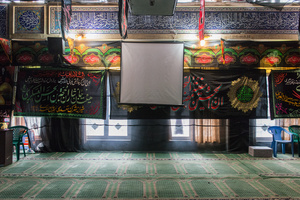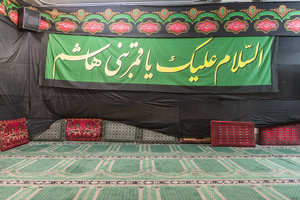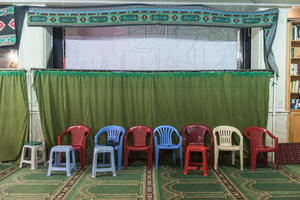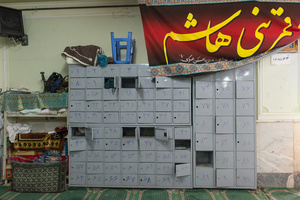

In the absence of Hussain
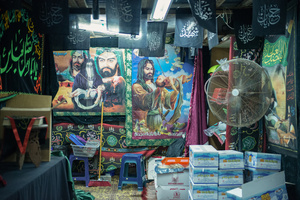
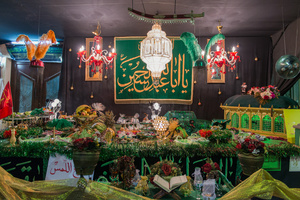
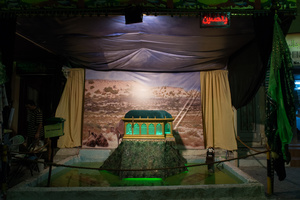
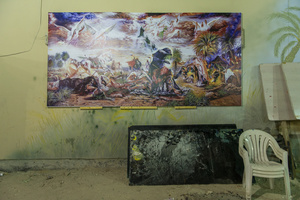
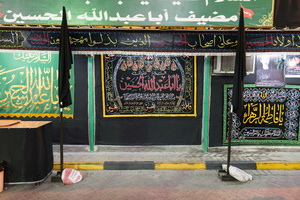
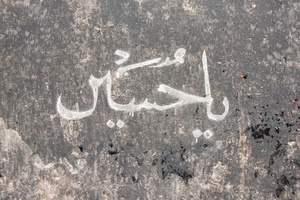
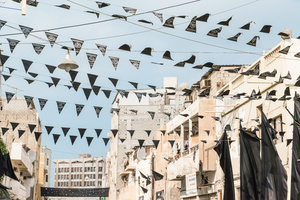
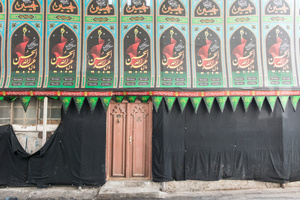
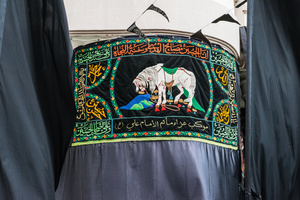
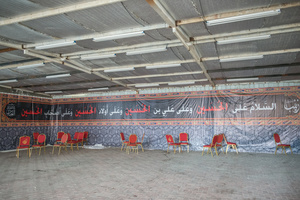
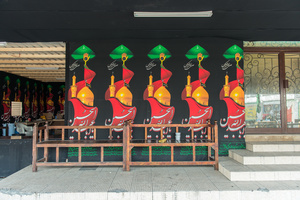
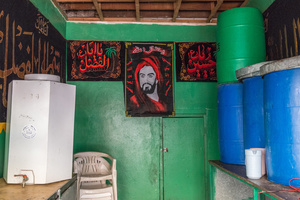
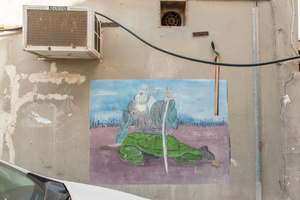
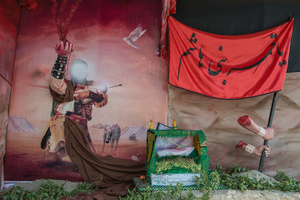
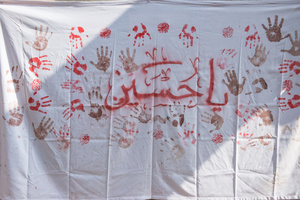
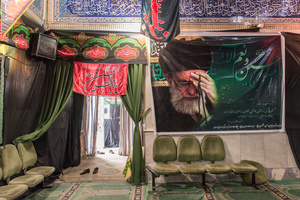
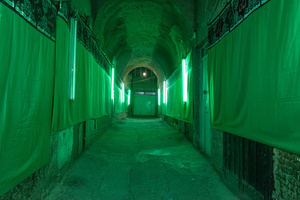
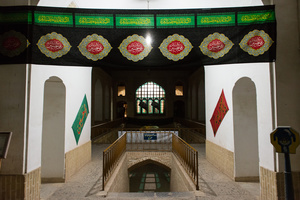
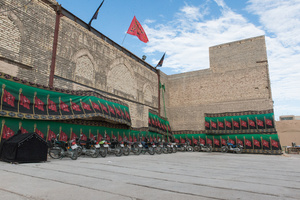
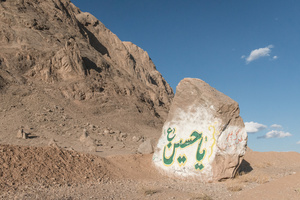
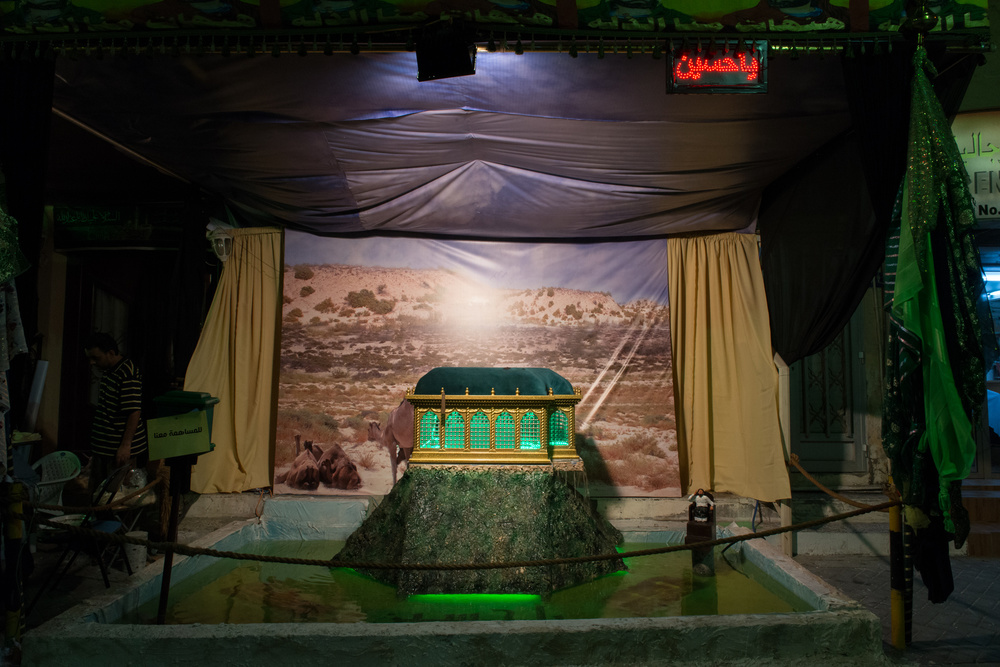
‘In the absence of Hussain’ documents the impact of the commemoration of Ashura by the Shiite community on urban landscape both in Bahrain and Iran. If the Bahraini and Iranian political contexts are different, we observe during Ashura that the common element is a temporary modification of space through a massive visual production or reproduction of religious narratives and the materialization of Shiite memory in the urban space. This physical transition is the expression of a particular mental state in which the Shiite community enters during this period: mourning. Ashura is the tenth day of Moharram, the first Islamic month. For Shiites particularly it is a day of mourning recalling the martyrdom of Imam Hussain (grandson of the prophet Mohammed) at Karbala in 680 AD. Each year during ten days, crowds of mourners attend commemorative services, reciting elegies, passion plays as well as processions of chest beating and self-flagellation, the tenth day being the climax of this dramatic tension. The aim of the project is to propose a different vision of Ashura rather than the common graphic and violent photographs found every year in the media. This work focuses on the sociological and artistic aspect of the commemoration, hoping to widen the understanding of the Shiite community. Photographs translate the interplay absence-presence of Imam Hussain and this unique time-space dimension that creates Ashura.
No categories selected
Photos (24)