Le Bois des souvenirs: Marcinelle au-delà de la tragédie.
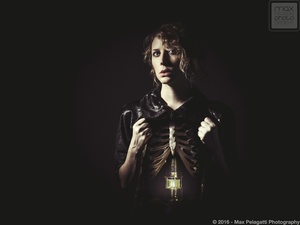
The collection is a tribute to the Italian miners' families, who lived in Marcinelle (Belgium) during the decade 1946-1956. That period was marked by the bilateral agreements between the Belgian and the Italian government, that lead many families to leave their homeland to work in the Belgian coal mines. That emigration process ceased with the catastrophe in the coal mine Bois du Cazier on the 8th of August 1956. The exhibition is inspired by the stories and memories belonging to the women of Cesare Di Berardino's family. Cesare Di Berardino was an Italian miner who fell victim to the tragedy. The photographic project “The Wood of Memories. Marcinelle beyond the tragedy” originated from the will of Cesare Di Berardino's granddaughters (among whom there is the undesigned) to recover with proud and deep commitment the most beautiful - and until now untold - memories of their family’s life in, and ties to, Belgium. Max Pelagatti has worked for two years with Cesare Di Berardino's granddaughters to collect useful material for the project realization. Each image created for the exhibition reflects the process that memories undergo through time. Indeed memories rarely come to consciousness with an intentional effort; most of time they are recalled by a daily cue (such as a smell, a flavor, an object belonged to childhood or youth...) in a casual and fragmented way. Max Pelagatti has tried to convert into images the laborious and fragmented process of memories. His intent is to convey an historic and social memory of great value through his personal suggestions and interpretations. He transformed the stories and the memories of the widows and female orphans of Di Berardino's family by overlapping actual situations with situations dating the period they lived in Belgium. The application of different techniques of digital manipulation to photography made this work possible. The result is a series of surreal images that however are tied to events, places and objects referring to the life in Belgium at that time. The exhibition consists of 24 pictures, and can be considered like a polyphonic storytelling. The photographer takes into account the point of view of the daughters (children at that time) and the one of the sister in law of Cesare Di Berardino (young woman and thoughtful mother at that time). He also takes into consideration the point of view of the granddaughters of Cesare Di Berardino. Indeed they are the custodians of a unique piece of collective history, that deserves not to be forgotten and that can still be transmitted only by creating a trans-generational bridge.
No categories selected
Photos (24)