
HOSPITAL
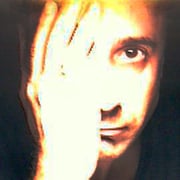
Hospital I started working on the “Hospital” theme almost twenty years ago. It’s not a long time, I assure you. And I don’t intend to stop adding tesserae in the years to come. But presently I am taking a moment to pause; as I collect these years’ material I contemplate upon it with critical thinking. I suppose it constitutes a hefty body of work that can now be exhibited, whatever this might entail. Looking back in time and through the portraits of the people photographed, the empty, cold places and the harsh- lifeless objects, I recognize my dual existence and my personal journey in photography and medicine. I can now conclude that my engagement with “Hospital” has been the doorway to the strenuous pursuit of discovering the path of photographic survival/artistic creation within the friction of a mundane work routine and the general “harshness” of the medicine field. Initially, it was an almost daily photographic exercise of capturing two or three frames, quite often indifferent ones. Gradually, after having collected the first pieces, an unexpected reality started forming and a whole new world was revealed before my eyes. I realized that the long working hours, the night shifts, the “enclosed” holidays constituted a parallel universe. Thereafter, the rest in the on-call rooms became a conscious time break of internal contemplation. All these years, the bag with my personal belongings managed to fit books (Camus, Kafka, Dostoyevsky and other “unattainable heights”), music (Bob Dylan, Miles Davies, Tom Waits…) and films (Tarkovsky, Bergman, Antonioni…). And of course, it always contained my photographic camera and my photographic ghosts. The grand masters of photography and the creators of “allied” arts (Rodin) enhanced my efforts to produce personal photographic work within the time-space of my work environment. Step by step I learned how to “organize” photographic conditions, compromising my professional capacity with my photographic persona. The strictly entrenched boundaries of the asphyxiating hospital structures possibly resulted in taming my forms. The search of subject in my immediate surroundings led to my mapping of the hospital landscape, including in it the human presence, or, contrarily, indicating its “absence”. The working people who experience these spaces were always cordially invited to stand before the camera. They indissolubly gaze directly at the lens bearing their professional “garments” or, temporarily, stripped off them. My mental approach, that of the serial depiction of the hospital anthropogeography, led to my exclusively using the existing interior lighting of the hospital buildings. I feel that by doing so, the plasticity of the body structures is emphasized and the rigidity of the gaze of the depicted figures embodied in the atmosphere of their “natural” surroundings is imposed. Dimitris Mytas
No categories selected
Photos (35)


