you breathe from a garden in your neck
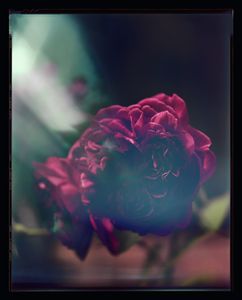
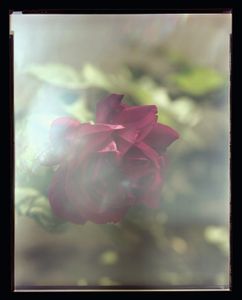
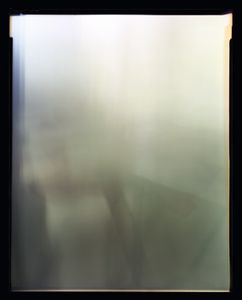
In early 2011, my best friend passed away. We shared a studio with a small garden in the east of Amsterdam. After she died, I came into possession of her old analogue Cambo 8x10 inch camera. The bellows of this camera is old and damaged. In a normal view camera, rays of light would be focused into an image projected on the back panel by a lens, but the holes in the bellows of this camera add an uncontrollable amount of light. The projection of the image fades; flares appear and modify the photo. From 2011-2015 I have been photographing the roses in our old studio garden with her damaged camera. Summer light is omnipresent in my images; bright and ablaze the rays of light playfully go their own way. But something dark, too, lies in wait in the shadows of this sunny construction: the realisation that things are vulnerable and transitory. All the photos are cloaked in layers of light and flares that make it harder to get a clear, full view of the rose. The faulty entry of light makes the photographic technique play a role in the image: the camera becomes visible, without us actually seeing the camera. At the same time, this entry of light suggests a notion of the afterlife and of gazing into the body, a body that is riddled with holes and is transitory, transparent.
No categories selected
Photos (18)