"Péchiney-Ville" in Guinea
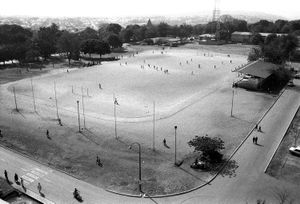
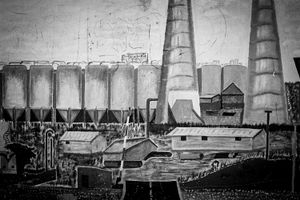
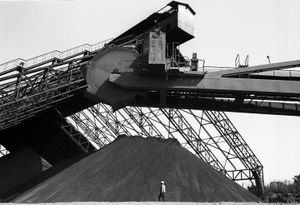
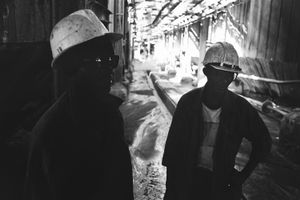
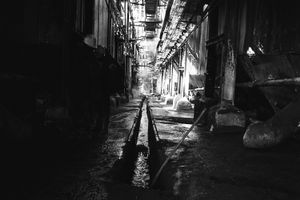
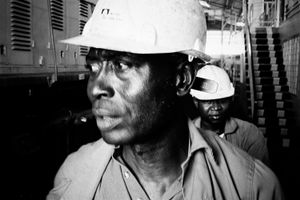
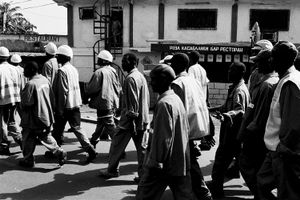
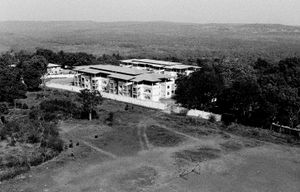
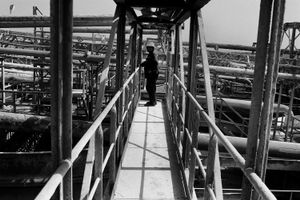
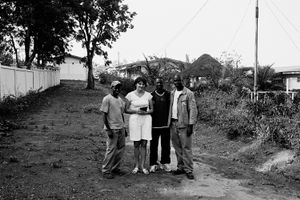
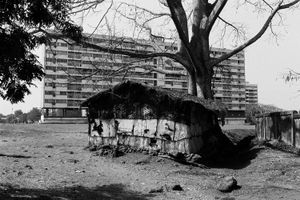
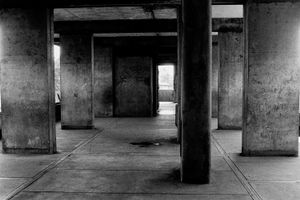
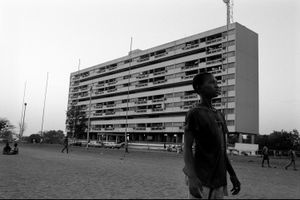
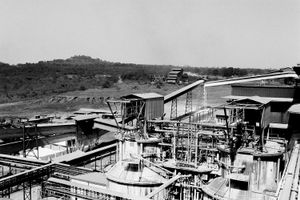
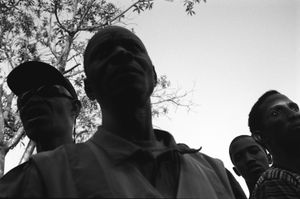
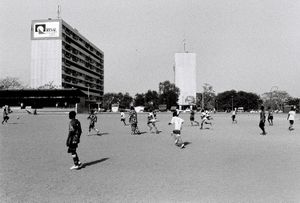
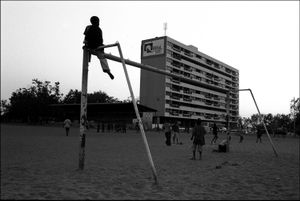
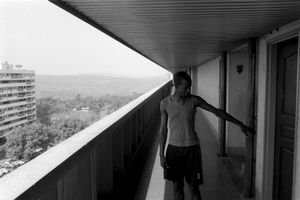
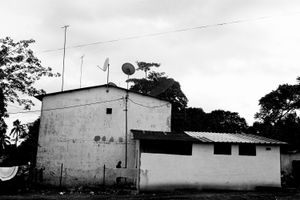
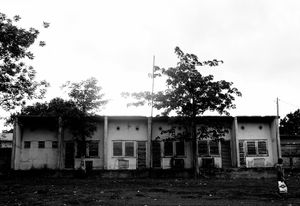
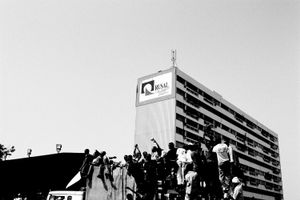
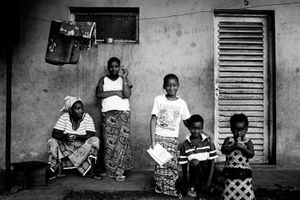
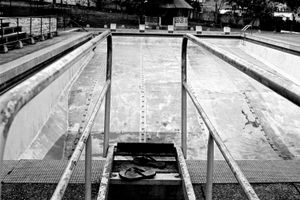
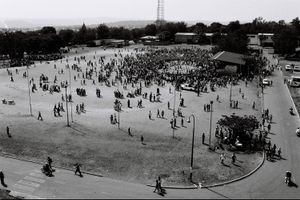
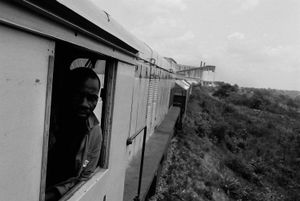
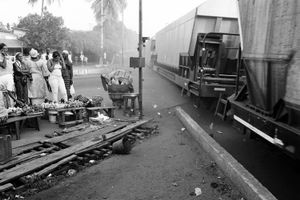
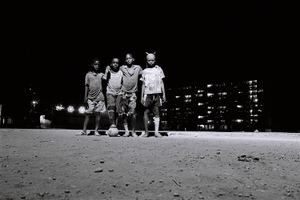
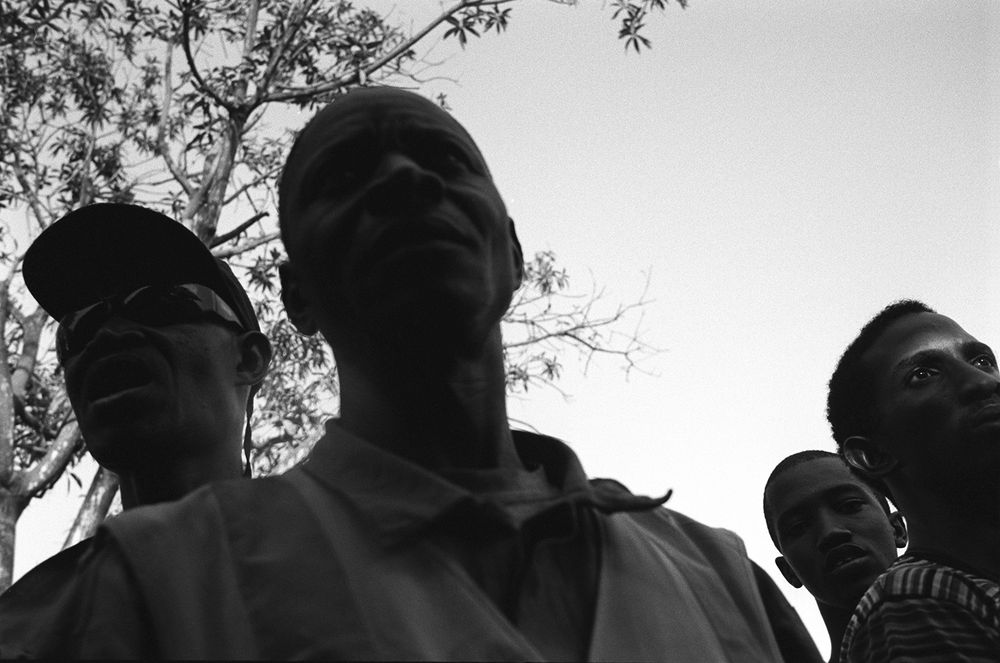
After a two hour drive north from Conakry, through a landscape of dense forest and moss-covered rocks, the image on the face of the Guinean bank note suddenly appears: the bauxite mines at Fria. Three concrete blocks tower up, adorned with hundreds of balconies and almost as many satellite dishes. The French aluminium conglomerate Pechiney built these flats for its expatriate employees in 1958, when France, under President de Gaulle, abruptly withdrew from Guinea after being rejected by its people (1). The Russian aluminium company Rusal has since bought up this Guinean gem. A sign at the top of a block proudly displays the company’s slogan: “Responsibility, reliability, expertise”. On the eighth floor, Bakary Kourouma, an engineer, shows me a picture the company presented to him in 2006, in recognition of his “outstanding service and contribution to the development of the factory”. Kourouma is in charge of water and electricity for the town. He earns around $180 a month, but after giving $40 to his mother, $20 each to his father, brother and sister, and paying for his travel to work and other expenses, he is left with just $22. Kourouma’s bosses live in an enormous villa complex on the horizon, just visible from his balcony. Barbed wire protects the 40 Russian speakers inside, and their swimming pool. Sixty years ago this place was the small village of Kimbo. Now that has been wiped off the map and replaced by a town of 60,000 built around Africa’s first alumina refinery. Clouds of dust In 1957 a group of western businesses formed the Fria aluminium production company (2), although Pechiney was in charge of construction and operations. In 1973 it became Friguia, a joint venture, with Guinea holding a majority stake (51%). In 1997 Pechiney withdrew, selling the business to the state for the nominal price of $1. In 2003 the factory was privatised and sold to Rusal. Under a cloud of bauxite dust, Fria resembles any European factory town with chimney stacks and blast furnaces, workers’ housing estates (varying in quality according to their level of qualifications), and community projects: sports stadiums, a swimming pool and youth centres, symbols of Pechiney’s paternalism. Guinea has almost 16bn tonnes of bauxite – an ore used to make aluminium – around one third of the world’s known reserves. It could continue producing at the current rate for another 1,600 years. This year bauxite, along with iron, diamonds and gold, provided 20% of Guinea’s GDP and 80% of its exports. When commodity prices plummeted in autumn 2008 (3), management stopped replacing worn out machine parts. “We’re having to make do as best we can, replacing one broken part with a part from another machine”, says an employee. “Suppliers have stopped delivering altogether because so many bills are unpaid.” The financial crisis is the reason the company gives for not raising salaries: it is one of the few employers in Guinea not to pay the national minimum wage of $324. Its staff bulletin, The Voice of Rusal, urges the plant’s 1,200 employees, and 1,600 subcontractors, to take more responsibility: “If everyone took their responsibilities seriously, our refinery would run more smoothly”, it wrote in May 2008. Instead of complaining about the poor state of the equipment and the remoteness of the Russians (who have given no management posts to Guineans), the bulletin says workers should ask themselves: “What can I do to help the refinery in this difficult time? What have I done, personally, to reduce costs, increase productivity and save materials?” A year earlier, when people in the town protested about frequent power cuts, Rusal organised a children’s drawing competition on the theme “How to save electricity”. Ibrahima Diallo Taribé, a stationmaster who used to work for Pechiney, says he may not know much about the global aluminium market, but he does know that in 2008, Rusal became the second-biggest company in the sector. Its boss, Oleg Deripaska, is the tenth-richest man in Russia and is close to Vladimir Putin. Genady Ulyanich, the company’s head of communications, sits at his computer opposite a photo of his children back in Ukraine. Under his high-visibility vest he wears an ethnic Guinean shirt, an attempt to brighten the gloom with some local colour. As he puts the finishing touches to the latest edition of The Voice of Rusal (which he has to send to Russia for approval), he points out: “In Moscow they don’t realise that most workers here are fathers with dozens of mouths to feed... The locals have told me that when they drive us out of here, I’ll be the only one they take pity on.” He predicts the Chinese will take over once Rusal leaves: “They’ll tear everything down and build a new, more modern factory. It would cost too much to renovate this factory.” This April the workers at Fria went on strike. They appealed for help from Guinea’s new president, Captain Moussa Dadis Camara, who took power from the late president Lansana Conté in a coup last December. Camara rebuked Rusal, but told the workers to return to the factory. In June the lowest salaries were raised by $59, but Rusal still refuses to pay the minimum wage. In disrepair In a courtyard of the quarter reserved for unmarried men – small rooms with washbasins – about a dozen labourers and engineers defy the order not to talk to journalists. They are not taken in by the company’s talk of belt-tightening: “The Russians say we have to accept bad living conditions if we don’t want them to leave – that’s blackmail!” “When they came they promised to preserve our benefits,” says Mamadi Kourouma, a member of the factory’s main trade union, the CGSL. “But all they talk about is making cuts. In the past our accommodation was maintained by the company, there were no power cuts and there was a grocery where we could buy subsidised food.” He’s 29 years old and only remembers the end of the Pechiney regime, but like everyone here he idealises the French company, and resents the Russian one. Many of the benefits the locals used to enjoy are being lost. While they have a brand new training centre, and accommodation remains free, the children’s nursery is closed, the swimming pool, athletics tracks and sports stadium have fallen into disrepair, water and electricity are now rationed, and the bus service to Conakry has been subcontracted. The Pechiney hospital, as the locals still call it, long recognised as the best in Guinea, is no longer regularly supplied with medicine. With the price of food and petrol going up, the people of Fria organised a demonstration in March in support of the new government, which had promised to fight corruption and renegotiate mining contracts. There had been no love lost between the locals and President Conté. He had ruined the economy, selling off resources to foreign companies. His sons ran vast drug, prostitution and corruption rings. In 2003 Conté sold the Fria operation to Rusal for around $21m, even though auditors had estimated its value at $258m. This September a court in Guinea ruled that the sale was illegal. Rusal, supported by Moscow, has lodged an appeal. Pavel Ovchinikov, the company’s director, denies wanting to close the refinery, even though “global consumption of aluminium is at its lowest for 22 years”. He says Russia has always supported Africa’s economic development. After independence Russia and China carried out geological surveys in Guinea, cooperated in education and commerce, even donated snowploughs in recognition of Soviet-Guinean friendship, while Ahmed Sekou Touré, awarded the Lenin peace prize in 1961, sent dancers to Moscow. Forty years later, the Russians are also in charge of exploiting the huge bauxite reserves at Kindia, in Lower Guinea, through the Kindia Bauxite Company (CBK). At Pechiney hospital, the head doctor, Alpha Hasimou Diallo, says: “Everyone needs to tighten their belts.” Having worked in hospitals in the Paris region, he is used to talking about cuts. “It’s the same in France, isn’t it? Some medicines are no longer paid for by the government? Rusal provides everything here. This is meant to be a hospital for workers and their families, but the rest of the population comes too, because it has the reputation for being the best hospital in Guinea. Only 35% of admissions are employees and their relatives. When people come here in an emergency, we don’t turn them away.” But Rusal has not replaced any of the hospital’s equipment since 2007. But crisis or not, every day, trains loaded with bauxite leave Fria for Conakry. When they arrive in the capital, whistles blowing, old men sit up and gaze with admiration at one of the last railway lines in operation. Young Guineans, 60% of the population, stop their ears against the noise as they are engulfed in clouds of white powder. Alumina powder sticks to the skin of everyone who lives along the line, while giant billboards on the roads still proclaim the old slogan: “Rusal: with Guinea, for Guinea.” (1) In 1958 Guinea, under president Ahmed Sekou Touré (1922-84), rejected in a referendum General de Gaulle’s proposal of being part of the French Community. (2) The group consisted of the US firm Olin Mathieson Chemical Corporation (48.5%), the French companies Pechiney and Ugine (26.5%), British Aluminium Company Limited (10%), Aluminium Suisse SA (10%) and the German group Vereinigte Aluminium-Werke AG (5%). (3) At the end of the fourth quarter of 2008 aluminium was being traded at less than $1,500 a tonne, compared to $2,450 in the third quarter. http://mondediplo.com/2009/11/12guinea
No categories selected
Photos (35)