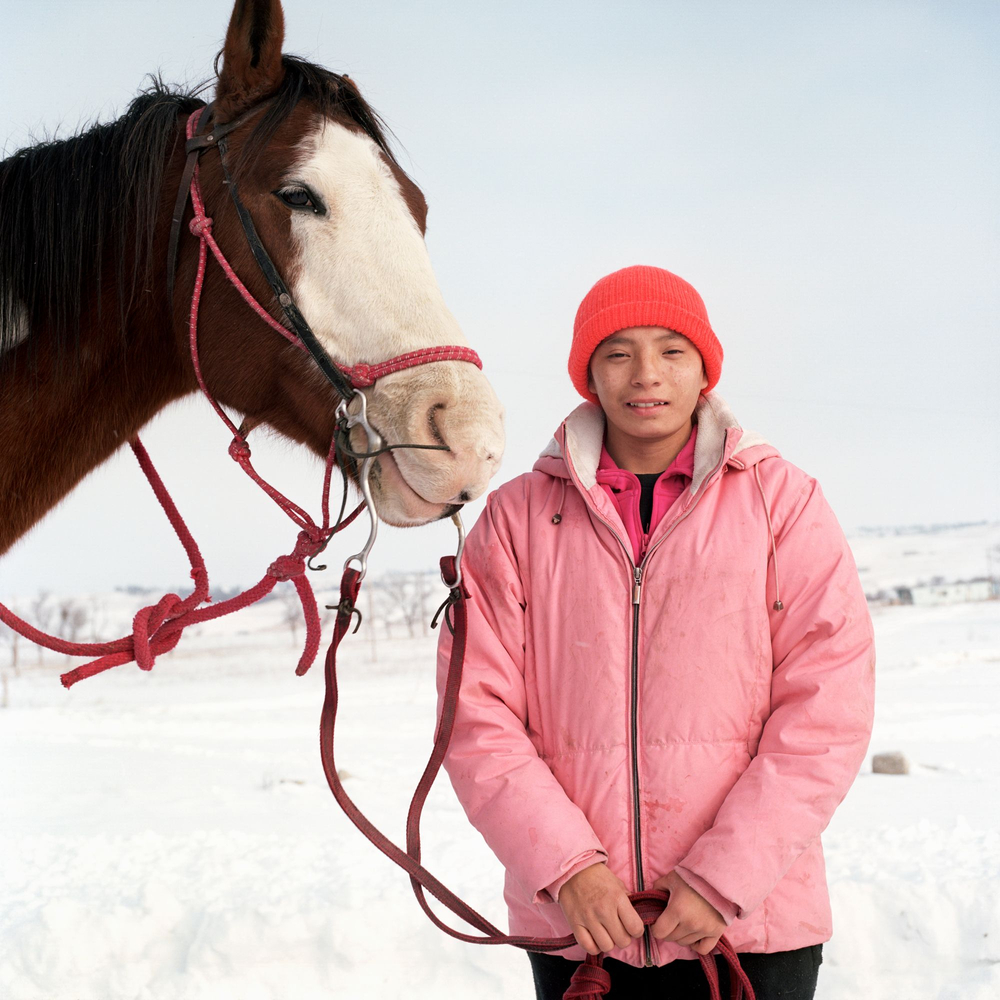
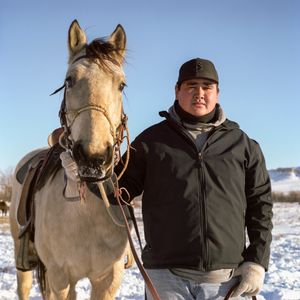
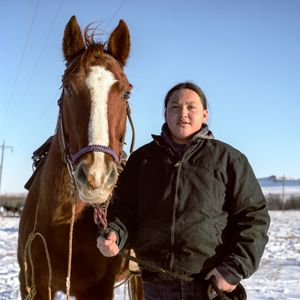
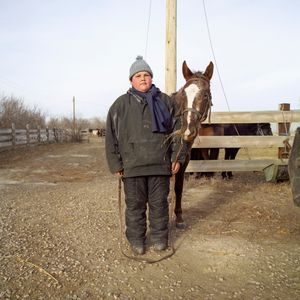
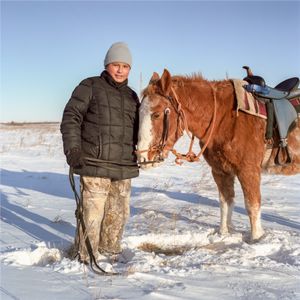
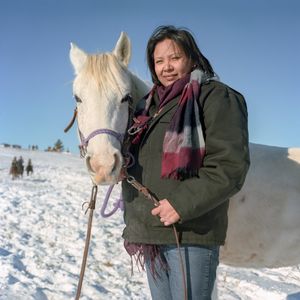
In 1986 a small group of Lakota men and women started an annual tradition, riding horseback across the South Dakota winter, tracing the historic trail that led to the Wounded Knee Massacre.
The massacre took place on December 29, 1890, and is credited as the final battle of the Indian Wars, where hundreds of Lakota were disarmed and killed by the 7th Calvary of the United States Army.
On the one hundredth anniversary of the massacre, after four years of the memorial ride, members of the Hunkpapa, the Minnicoujou, and the Oglala nations rode into Wounded Knee and performed a Wiping of the Tears Ceremony to signify the end of mourning.
Every year, riders still gather twenty miles from the North Dakota border, at the location where Sitting Bull was killed, to start the two-week journey to the site of the massacre.
Known as the Oomaka Tokatakiya or Future Generations Ride, this is a Lakota effort that self-empowers through a spiritual and physical remembrance of their ancestors’ experience. Braving the brutal South Dakota winters, kids as young as seven, ride up to 35 miles in a day through snow and blizzard conditions, with temperatures often reaching -20°F.
The ride is beautiful and powerful and I’ve had the privilege to be a part of it since 2004. Every year I bring cameras and computers for the youth on the ride so we can work together to tell the story.
Input from members of the Standing Rock, Cheyenne River, and Oglala Sioux Tribes is integral to the success of this work, and this exhibition includes POV videos from Jesse James White, Jamie Turning Holy, Marvin Noisy Hawk, Lachelle Turning Heart, Shad Young Agard, and Kayson Thompson.
This project was partially funded through grants from the Society for Photographic Education, the Sidney Stern Memorial Trust, and the California Community Foundation.