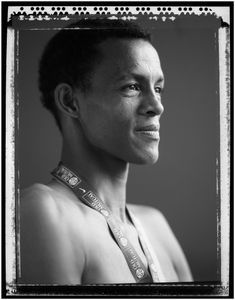
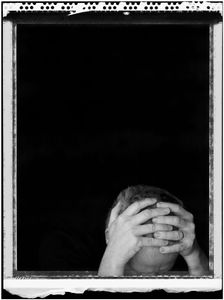
“If the photographer of a human being does not show a deep psychological insight it is not a true portrait but an empty likeness” states photographer Philippe Halsman (Johnson, 1982:180).
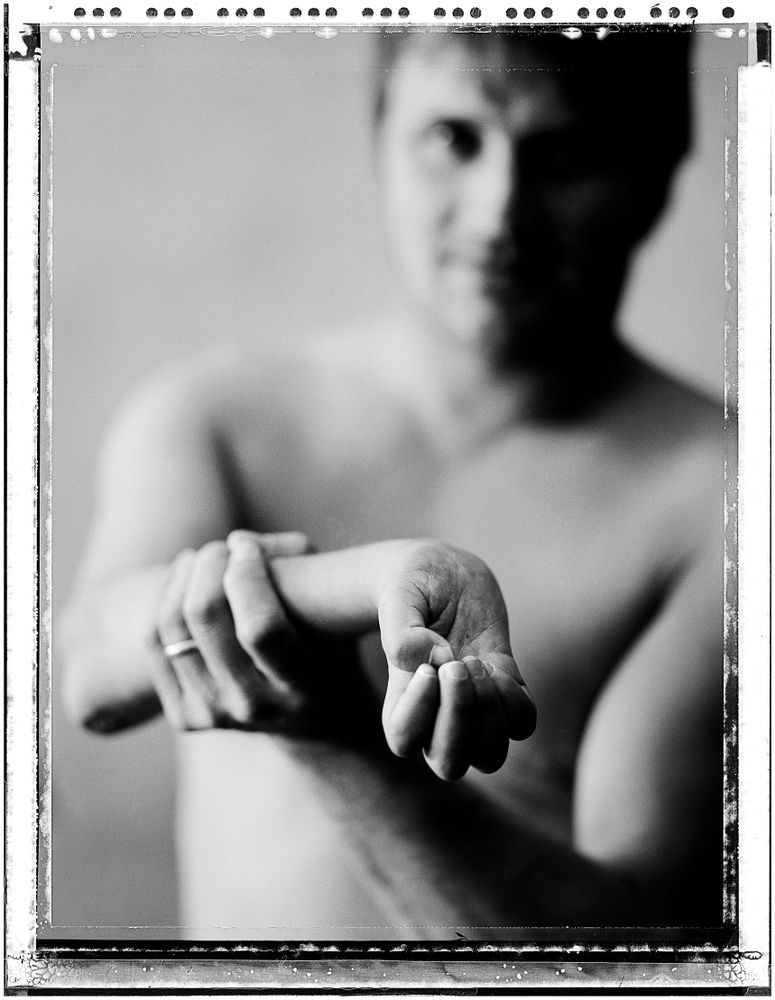
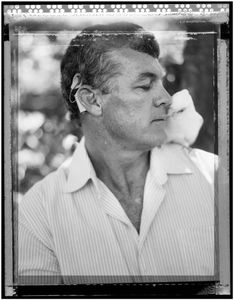
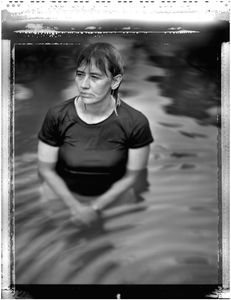
Contextual pointers are clues crucial to the understanding of the meaning of a portrait. Through the use of subtle nuances, the viewer is able to extract more information about the subject. It is up to the photographer to carefully plan the contextual pointers and the challenge is to avoid using meaningless and superficial entities that serve to confuse the viewer.
The challenge for any photographer lies in being able to sense both the limitation and the potential of the subject and to work within these boundaries. It is up to both the sitter and the photographer to collaborate, both consciously and unconsciously, on when to allow the moment of truth to emerge. A photographer does not take an image; it is given by the sitter.
The use of the large format camera limits the maneuverability of the photographer resulting in a slower tempo during the session. When employing a large format camera, and through the of a cable release, the photographer is able to move between the sitter and the camera, which in turn, dismantles the tangible barrier, and allows the energy and communication, both verbal and non-verbal, to flow unrestrained. Each portrait requires extensive pre-visualization and intent, far more so than with the use of any other format which can leave more to spontaneous chance.
The installation of this body of work is a contextual pointer within itself. The images are presented on a raw background, hung up with clips, which all indicate a sense of honesty and truth relevant to the intention of the project. There is nothing between the viewer and the image, except an opinion.
The significance of this project is to attempt to dismantle the social barriers that might arise when coming into contact with, or socially interacting with people who have experienced some form of trauma.
It aims, through the size of the images, and the manner in which they are presented, to bring the audience closer to their own fears and to provide visually and through narrative, an intimate interaction with these extraordinary people.
Sandy Coffey