FISH TOWN
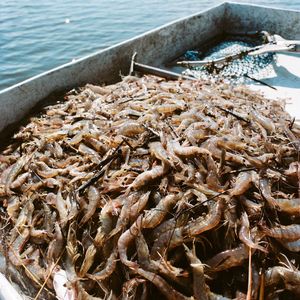
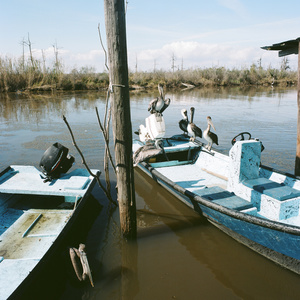
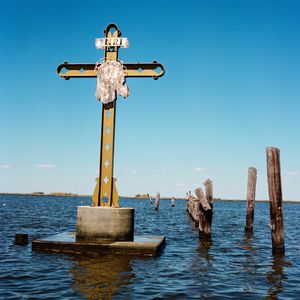
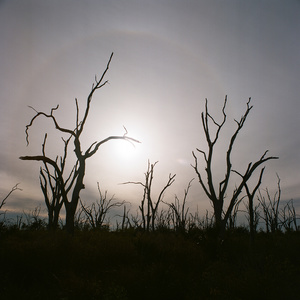
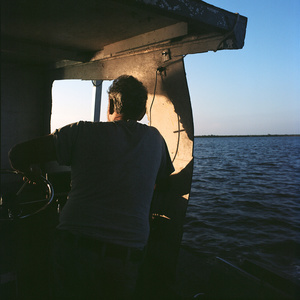
Fish Town (2012 - 2015) focuses on preserving the cultural and environmental remains of Louisiana’s fishing communities through photography and oral history recordings. It is currently a forthcoming title under George F. Thompson Publishing, expected for release as early as spring 2016. Photographs from the project have been published by CNN Photos and the Oxford American, and have also been exhibited at the Ogden Museum of Southern Art in New Orleans (2012/2013 Currents exhibition), and the Multi-Media Museum of Photography in Moscow (2014 New Orleans in Photographs exhibition sponsored by the United States Embassy). Selected photographs are currently being exhibited at the Ogden Museum of Southern Art for the 2015/2016 photoNOLA Currents exhibition, running through January 24, 2016. Fish Town was a finalist for the Center for Documentary Studies (Duke) 2015 Lange-Taylor Prize. Other notable awards include selection as a 2013 Critical Mass finalist, and a finalist for both the Michael P. Smith Fund for Documentary Photography and for the Clarence John Laughlin Award (New Orleans Photo Alliance) in 2013. Background: Yscloskey native Charles Robin III, a seventh-generation commercial shrimper, stands on the stern of his pride and joy, the Ellie Margaret, tied down to the same wooden pier his family used generations before. It’s where, as a teenager, he watched his father build the wooden-hulled trawler in their backyard with his own hands, the same ship he now captains. Squinting against the sun on a blue-sky day, he looks out over the bayou towards the remains of a small, scarred shrimp boat tossed up against the bank, reminiscent of a different time, of a childhood growing up in a tightly woven fishing community, a culture that was bound by the rich, wild paradise surrounding them. “I’ve seen the marsh disappear in my lifetime,” he tells me. The fresh seafood industry has been on a downward spiral since the 1970s nationwide, but what has been hiding in the shadows are the unique fishing communities along Louisiana’s coast that have either already vanished or are quietly slipping into extinction. In addition to the economic challenges faced by the industry as a whole - primarily competition against imports - for years they'e been plagued by natural and manmade disasters and also rest atop a “sinking land.” Since the late 1600s, manmade levees have restricted the natural flooding of the Mississippi River, the same flooding that is needed to replenish the surrounding land with minerals and sediments. Add to that the thousands of miles of wetlands that have been dredged through since the early 1900's, allowing saltwater from the Gulf of Mexico to enter and eat away at a fragile, freshwater ecosystem. According to the United States Geological Survey, Louisiana has lost over 1,800 square miles of wetlands since 1932, and approximately seventeen additional square miles are lost annually. To put that into perspective, that’s an area the size of a football field vanishing every hour. “That’s how we got saltwater intrusion,” a retired commercial fisherman told me. “That’s how, when you come down the highway there, you see all them big ol’ beautiful trees, all dead. They look like they petrified. Where the buoys are? They used to be on land; now they in the middle of the freaking ship channel.” As saltwater continues to eat away and swallow up the marshlands, it’s taking along with it a piece of unique American history—the cultures and a way of life that have thrived there for more than three centuries and counting.
No categories selected
Photos (24)