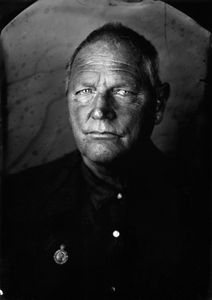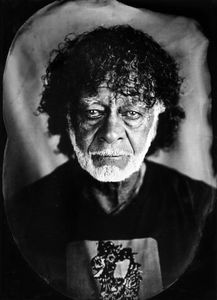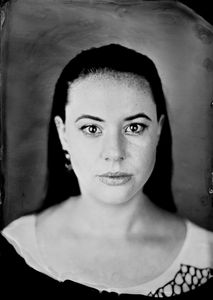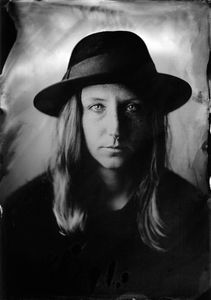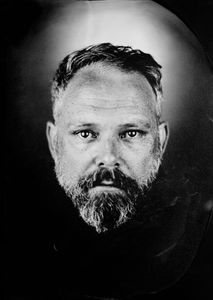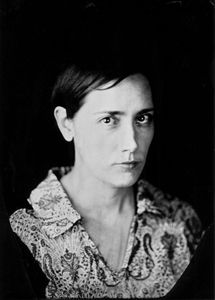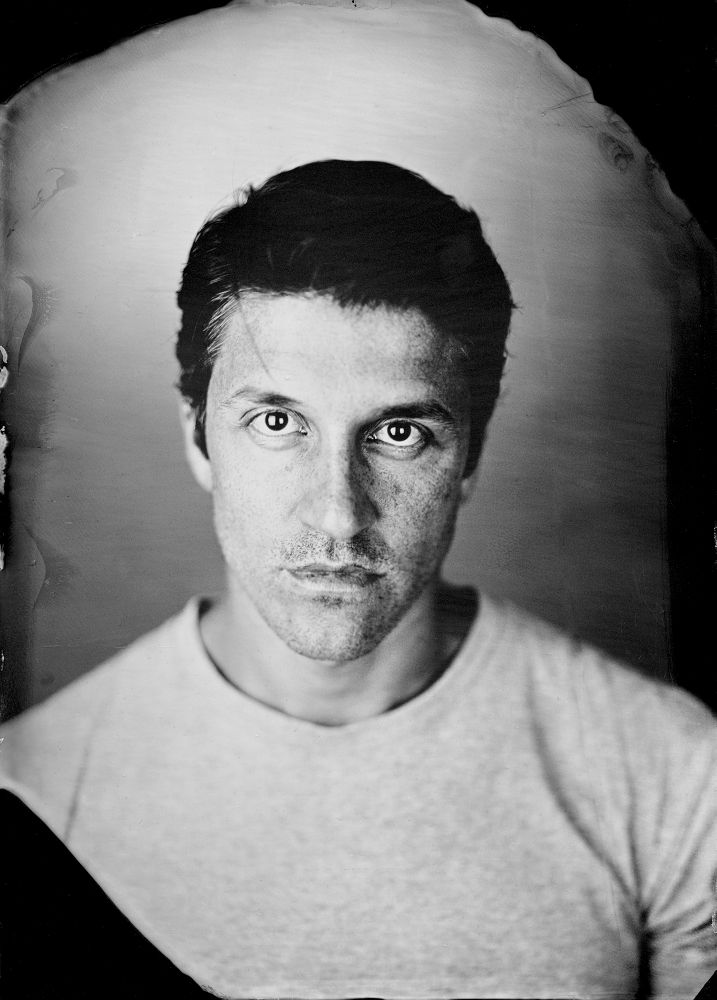

The tintype, also called the ferrotype or melainotype, was invented in 1856. It consists of a thin layer of photographic emulsion (traditionally collodion) coated onto a blackened sheet of metal. This plate is exposed directly in the camera and developed immediately. The resulting negative image appears positive against the black support.
The revival of collodion tintype photography exemplifies a yearning for hand crafted, analogue image making. Their beguiling materiality is rarely encountered in modern photography.
With tintype photography I am exploring the nature of the photograph as image object, with a medium that draws attention to the physical photograph itself as much as to the photographic subject. This subverts our tendency to confuse the photographic image for the subject itself.
But I am also investigating the potential of photographic techniques, which once were so potent, precious and ceremonial, to say something new, important and alchemical in an age of ubiquitous digital and infinitely computer-manipulatable imagery.
Tintype portraits in particular have an arresting power that haunts us from the past and in modern form is undiminished. The long exposures required force the sitter to concentrate on their own stillness and gaze, investing the photo portrait with aura and gravitas.
For this series I sought out artists as portrait subjects because of their almost mystical ability to see more deeply into the world around us lending their gaze a striking clarity.