

A Tale of Two
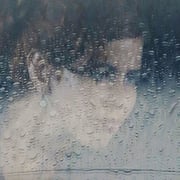
I started this series as an exploration of poses recognized in the way a couple is represented and related. What is expected from a traditional heterosexual couple. These, repeated in most of visual culture. My first idea was a documentary approach to an specific young couple. After spending time with my best friend and her brand new partner at that time, I decided to embrace the project as a sort of story tale. An artificial construction of scenes that could have been picked out from a movie or a painting so I could liberate myself of the literal representation but more of a surreal state of mind, maybe apocalyptic, maybe dystopian but moreover an aesthetic action of what reality could become if shared details of the couple would escalate. It would be a presumable portrait of a couple. The goal would be to revisit this conventional roles. I favored high contrast , avoiding detailed definition of features and spaces, making generic something unique. Since the artifice of a created scene was a premise, I emphasized it by structuring the series in chapters or scenes, being the first one: Recognition. Discovery of the center, a door is completely open. Eclipse of the souls. No face but hair. Second scene: Infatuation. No time for tomorrow, everything else disappear. Eclipse of the bodies. Third scene: Languidece. The repetition as an element that introduces a routine feeling. The adoption of a pose that feels coordinated. Fourth scene: The garlic dinner (o no solo de pan vive el hombre) Although I’m exploring an universal image of the idea of a couple, I also wanted to incorporate in an universal mode of the culture that the subjects and myself represent. Being cuban also means to grow with a prolific use of popular proverbs (dichos), most of them anonymous and orally perpetuated. The subtitle is a very popular cuban dicho or proverb: No solo de pan vive el hombre / the man can’t just live with bread. Once passion has faded, what happens? We deal with practical daily issues that unfold the aspects of the personality of the loved one. These flourished characteristics are often very distant from the ideal set of mind that we have of someone that we are starting to know and love at early stages. The fifth scene or chapter: The mouse parade, the office, work, how do we deal with work and love? How do we incorporate -or not- our love one to the specific occupation that we chose and entertain ourselves most part of the day. We usually do not think about work and love together as if they were two separate universes. Without noticing we tend to try to incorporate or alienate our partner from our work. If we decide to somehow incorporate her/him, a general approach would be as a sort of assistant of us, sometimes even when it may not be accorded to the description of his/her job. An exploration of power and love. The sixth and final chapter is developed as a haiku. A haiku may be the closest tale of a poem. It narrates. It evolves. I wanted to leave a sense of evolution -not perceived as positive but just simple change of state- since I feel that usually there is not a defined closure of a love story. It sort of evolves with time, even when it is already over, it evolves the way we see it, the way we remember it. It constantly permeates our future relationships maybe, hopefully as an experience of growing and not repeating the same paths. An iron, a very quotidian objet, a thing that straiten almost burning at the same time. I’m obsessed with the semantics of objets on personal lives. 35mm / Havana
No categories selected
Photos (6)


