Andreas Gehrke's Projects
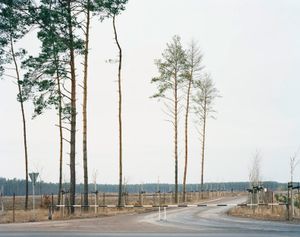
My investigation of Brandenburg, the state that surrounds Berlin and which for over 40 years sat inside East Germany, is a look into the past through the present. The region that has been described as bleak, austere and unforgiving. For over six years I worked on this project. The overall picture, however, is not a cliched collection of dilapidation and decrepitude, but a subtle series of allusions to the historical, structural and social changes Brandenburg has experienced since the fall of the Berlin Wall. Combining the personal, political and geographical, my images create a semantics of the region’s unique characteristics, offering the reader an unsentimental history of Brandenburg, beyond the realm of temporality.
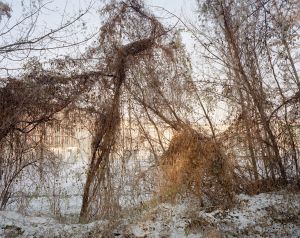
This seemingly innocent copse of Robinia, a patch of waste landscape colonised by nature right in the heart of Berlin, has born the brunt of history and been neglected by it in turn. Observers who know the site’s background find their view prejudiced by the knowledge of what happened here: Between 1933 and 1945, this plot of land was at the heart of the Third Reich. It was home to the headquarters of the Gestapo, the SS, and the Reich Security Head Office. After World War II, the area was erradicated and gradually turned into a piece of abandoned wasteland, and from 1961 the Berlin Wall ran along the northern edge of the then levelled terrain. In 1987, the site was “rediscovered”, vestiges of the buildings were excavated, and the area was landscaped and opened to the public with the inauguration of the exhibition “Topography of Terror” which documents the atrocities that were directed from this very place nearly eighty years ago. These photographs, taken in repeat visits over a year, have a powerfully haunted aura about them. They seem to contain all that once was, what is, and what will be, cocooned in nature’s blanket until human history rips through it once again.
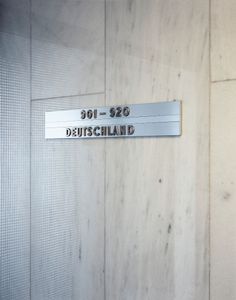
The three-part series captures the deserted tower blocks that formerly housed Der Spiegel, Germany’s renowned organ of investigative journalism, the old IBM Germany offices in Vaihingen, Stuttgart and the HQ of the now-defunct mail order firm Quelle in Nuremberg. Formerly home to business enterprises that played a significant role in shaping the economic, cultural and political landscape of postwar Germany, these vacated headquartes are also notable examples of German modernist architecture. In a fragile state of limbo—released from their previous roles and now bereft of purpose, they remain charged with the real or imagined memories of an era in recent German history, the traces of which we involuntarily seem to find in Gehrke’s stark images.
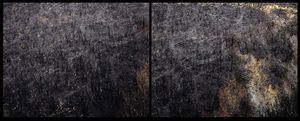
The fires began towards the end of August and by the time they had died down 67 people were dead, 260,000 hectares of forest and farmland had been consumed, destroying thousands of homes. One of the hardest hit areas was the Peloponnese in southern Greece, a region known for its olive groves, forests and unspoiled (and undeveloped) beaches. In the aftermath of the fire, as residents struggle to rebuild their lives and livelihoods, there are rumours of large companies taking advantage of the destruction to push through controversial development plans that will change the nature of the Peloponnese forever. Large, “Costa del Sol”-style developments are being pushed as a way to get the region back on its feet and a long-planned road scheme looks as if it will finally be built. The Ionian Road, which will give access to the region from the overpopulated Athens region, will be a six-lane motorway passing through areas previously given Natura status by the European Union, a classification aimed at limiting development in areas of environmental interest and sensitivity. With government aid still only trickling into the region the private sector is stepping into the breach, financing recovery efforts and promising to help residents whose homes, farms and villages have been destroyed. Some of these companies are the same ones who will profit from the Ionian Road: on July 24, just a month before the fires began, the Greek government signed an agreement worth € 2.8 billion with a consortium of Greek and European companies to build the road, that gives the consortium its toll revenues for the next 30 years.