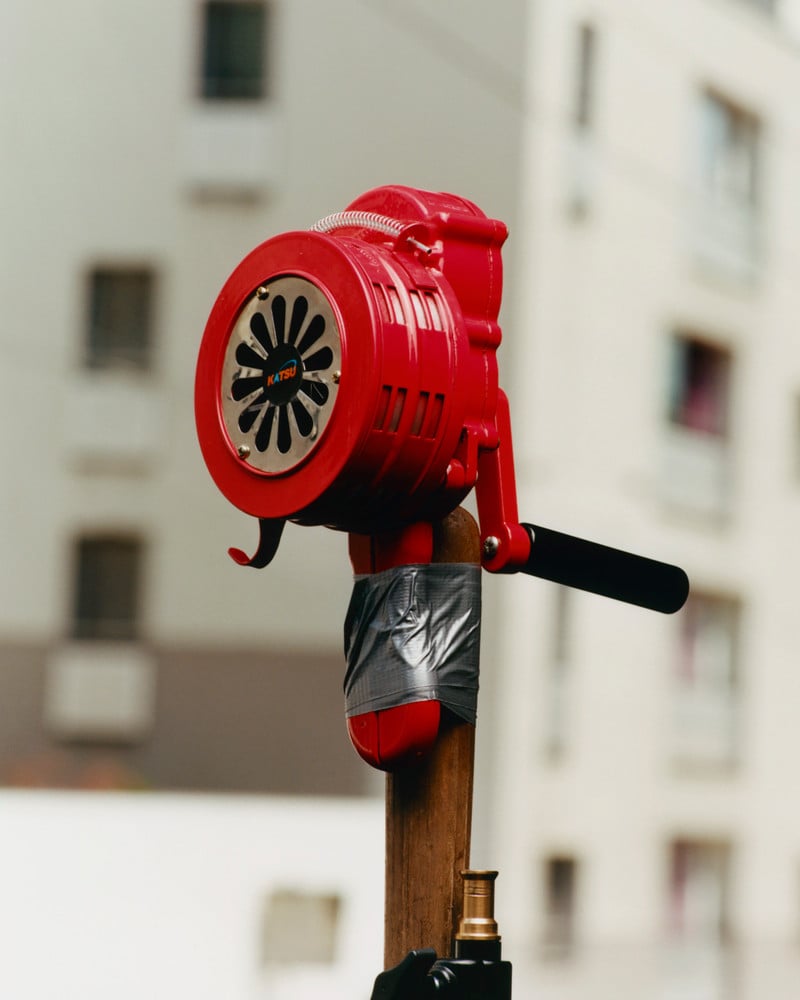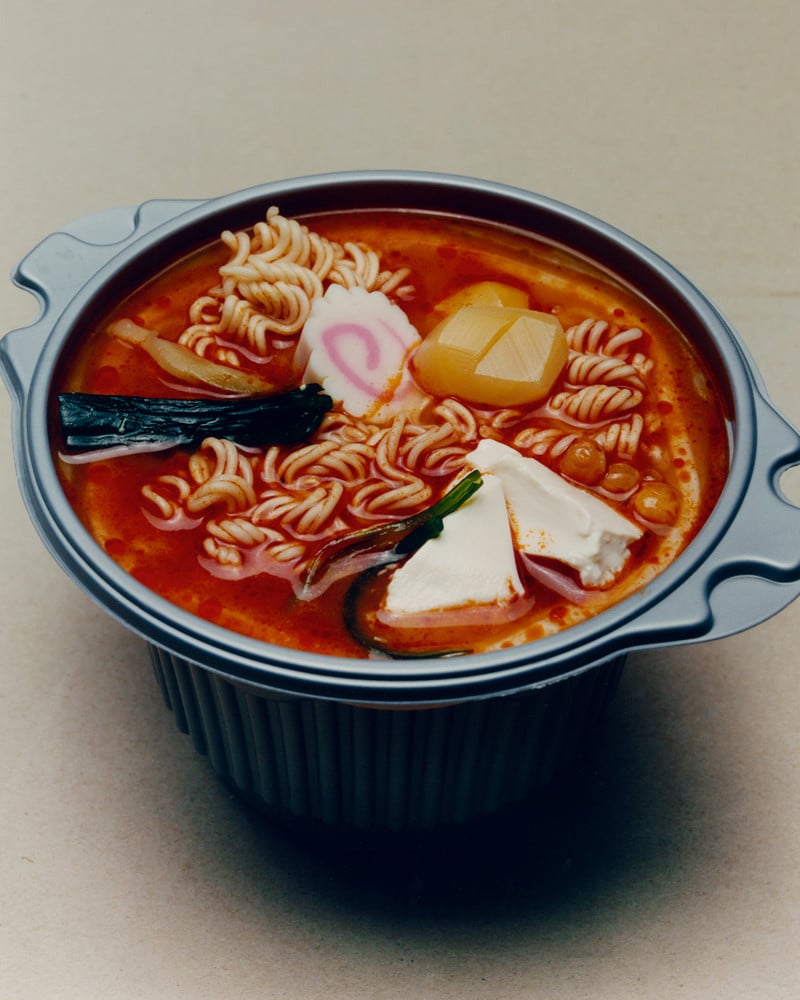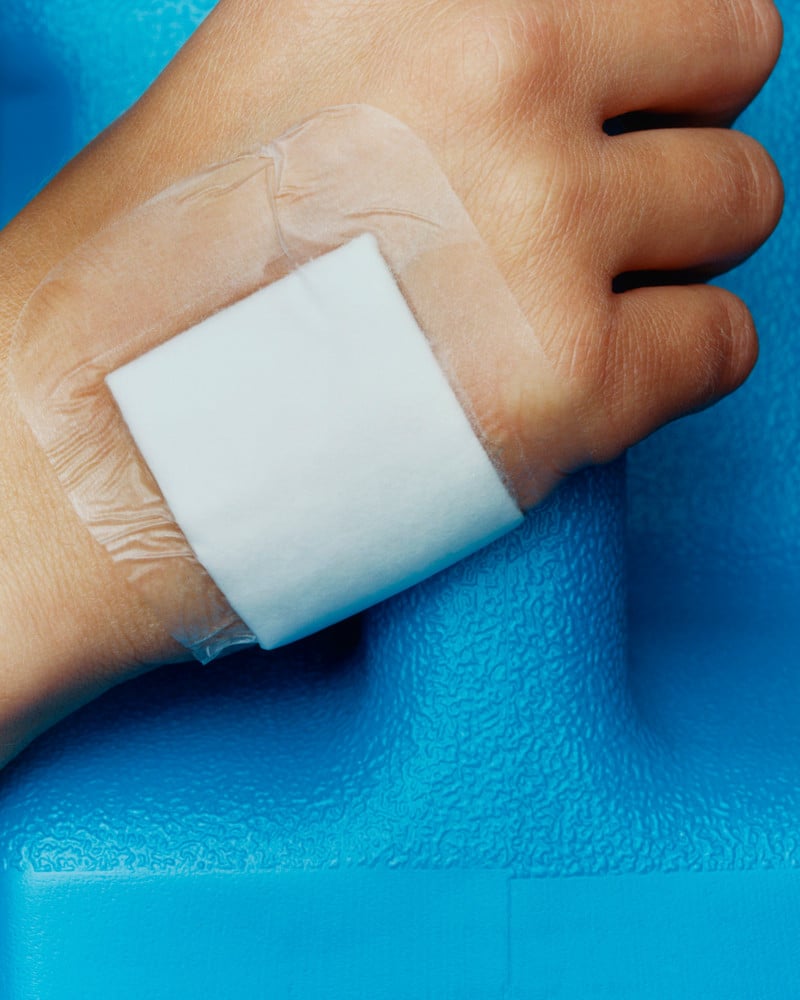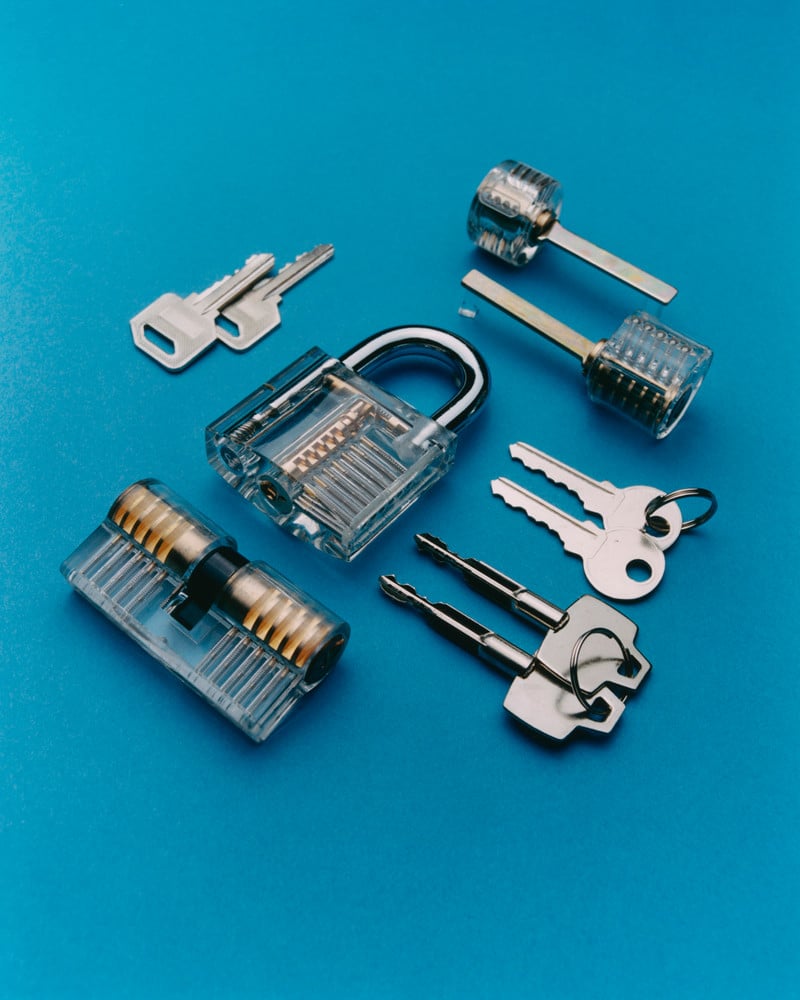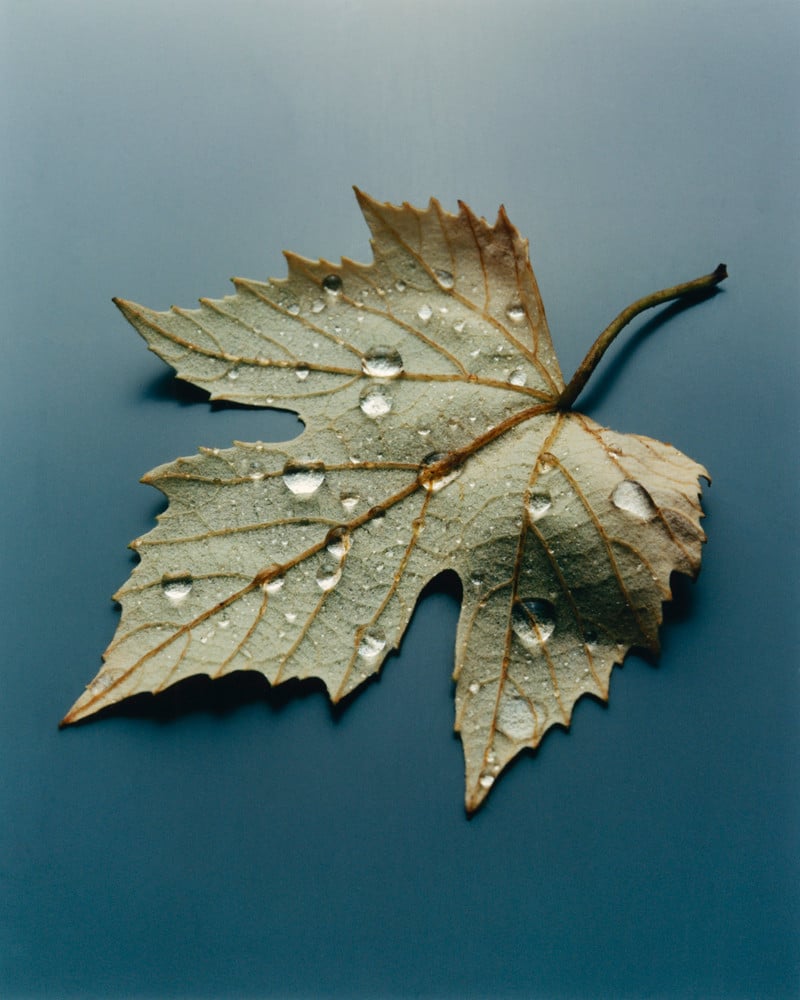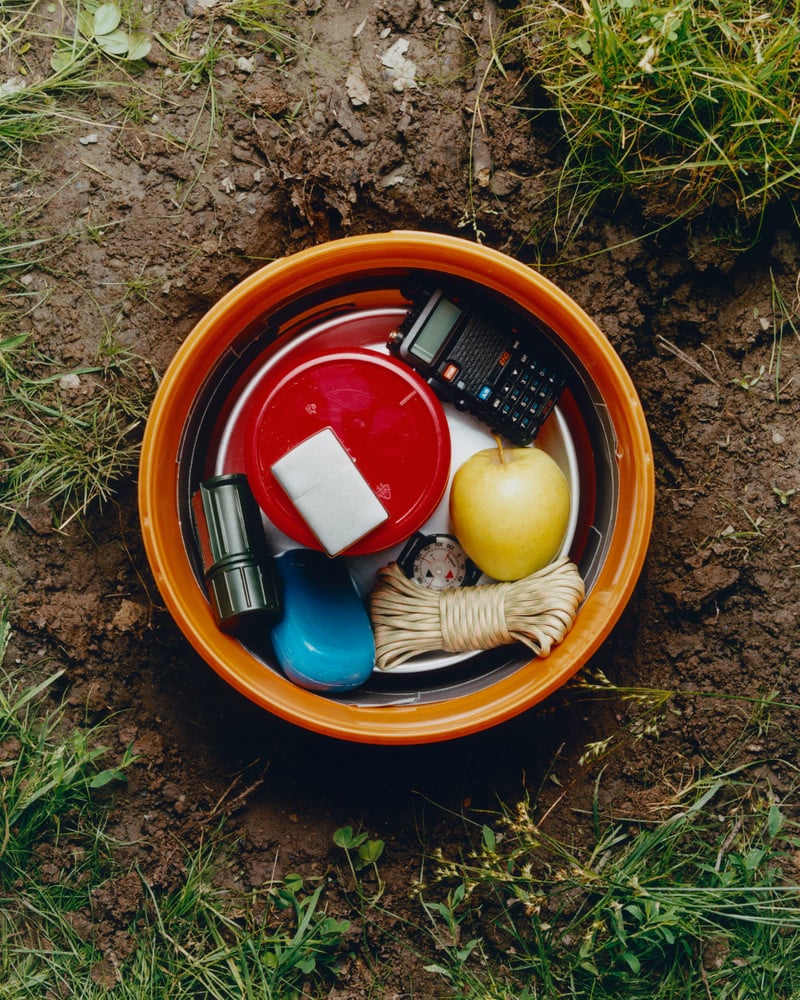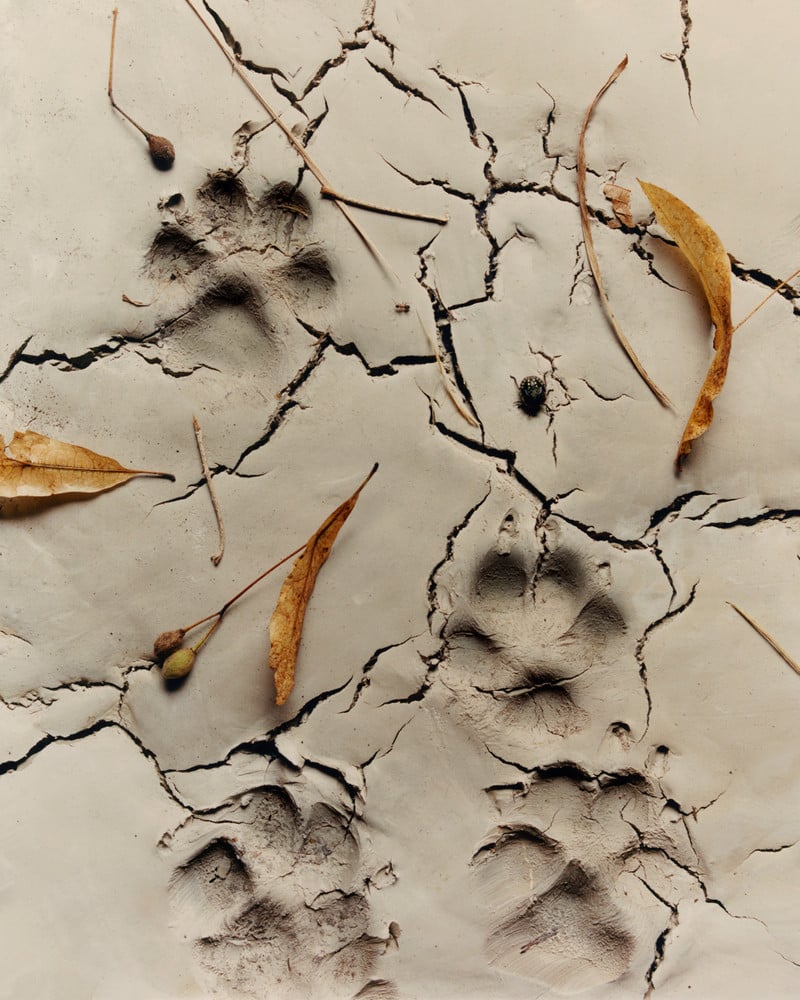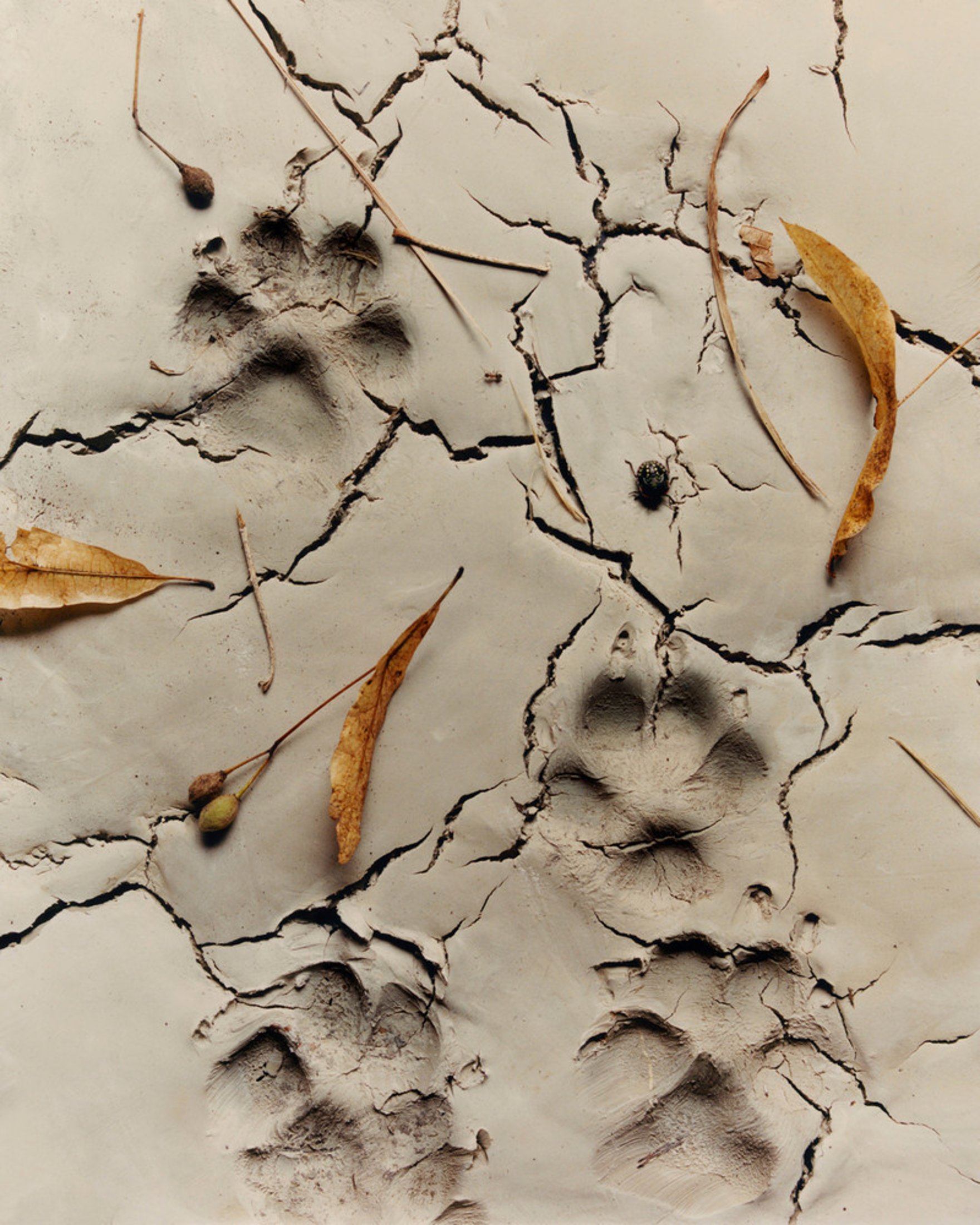
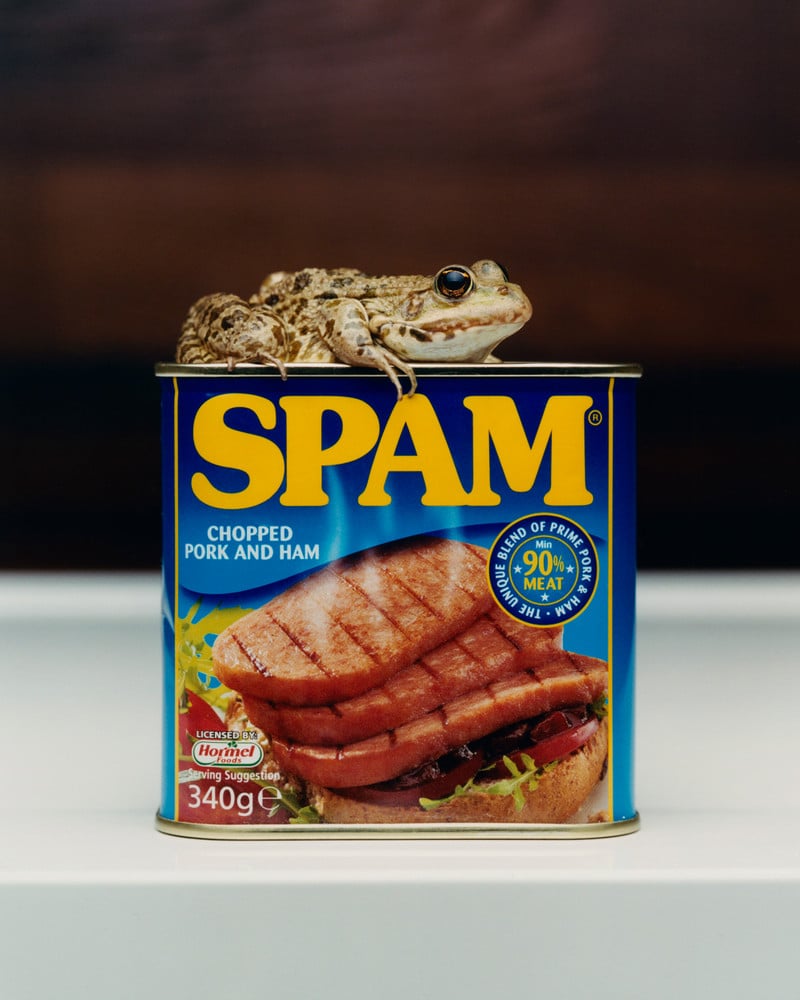
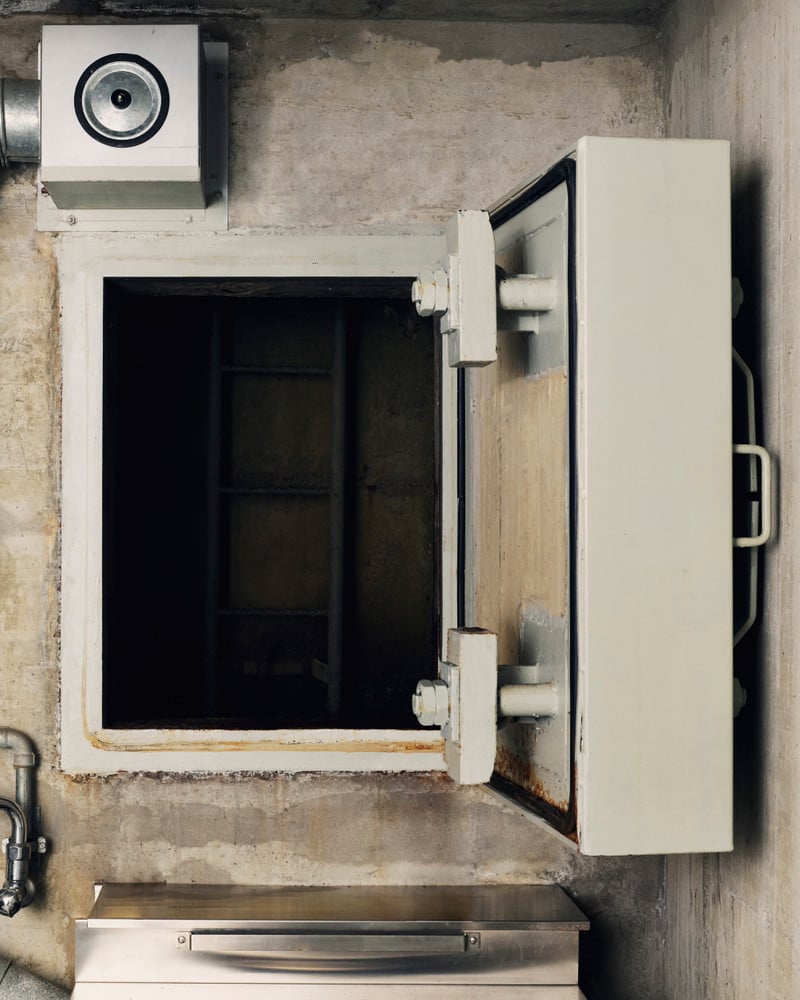
A frog comfortably perched atop a can of spam, a chunky gray door opening onto a dark black void, a potato tightly wrapped in clingfilm. These impeccable still lifes, made by Charles Negre in collaboration with set designer Aline Joana Ruede, are both alluring and unnerving. As clean and bright as stock or advertising imagery, they radiate with the certainty of these familiar visual languages. But their subject matter belies darker, even existential, themes. Commissioned with the guidance of a simple yet potent brief of ‘SNAFU’—a military acronym for “Situation Normal: All Fucked Up” (read: chaos)—these images belong to an exhibition entitled We Will Survive at mudac in Lausanne, Switzerland.
Preparing for TEOTWAWKI—‘the end of the world as we know it’—the energetic design efforts of the ‘preppers,’ a global movement of neo-survivalists devoted to preparing for imminent catastrophe, is the focus of this show. An expansive collection of over 400 works including architectural models, drawings, films, speculative design objects, Negre’s photographs hang above the heart of the exhibition: a prepper ‘supermarket’ stocked with useful things professed to save lives. Highlighting both the ingenuity and absurd edges of prepper imagination, the images act as speculative product photographs for the new beginning these dedicated corners of society are busy getting ready for.
For what do we do when under threat? We go shopping. “The objects in the supermarket are either recommended online on social media or from the official list of the UN,” explains curator Anniina Koivu. “We picked the very functional, efficient, beautifully designed objects and also the weirder things. Charles did his shopping and picked the objects he found intriguing.” Primarily working in still life, Negre’s playful approach to the genre has always been fired by an obsession with objects, “like a kid building up Lego.” At his happiest bringing objects into conversation with one another, the invitation to create a series for the exhibition presented the photographer with a rich and strange pool of material to pull from.
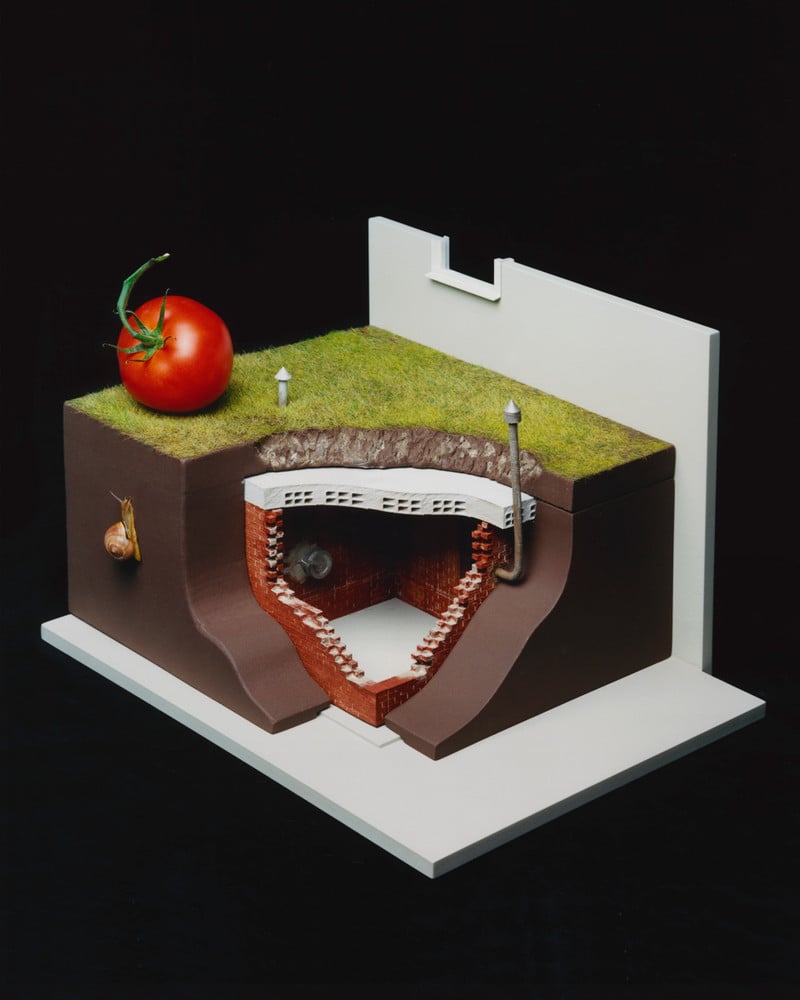
In this imaginary supermarket, aisles are separated by the themes of shelter, water, food, hygiene, skills, tools, energy and communication, offering a neat selection of everything you might need to survive. Originating in response to the threat of nuclear warfare in the Cold War era of the 60s, the fears driving the contemporary preppers movement encompass the burning matters of our own epoch—from the climate catastrophe to cyber attacks, wars, pandemics and societal breakdown via economic collapse and extreme solar storms.
The objects ‘on sale’ afford some sense of control over the overwhelming list of crises that define our time. Far from what Koivu describes as the “tinfoil-hat wearing woodsmen” stereotype of the survivalist, the preppers that make up this global movement are as diverse as the problems they are trying to solve. There are hyper-techy approaches to the end and then there are the resolute off-the-gridders who are looking backwards to learn the ways of old. Despite these different approaches, preppers are united by one belief: the end is nigh and no-one is coming to our rescue.
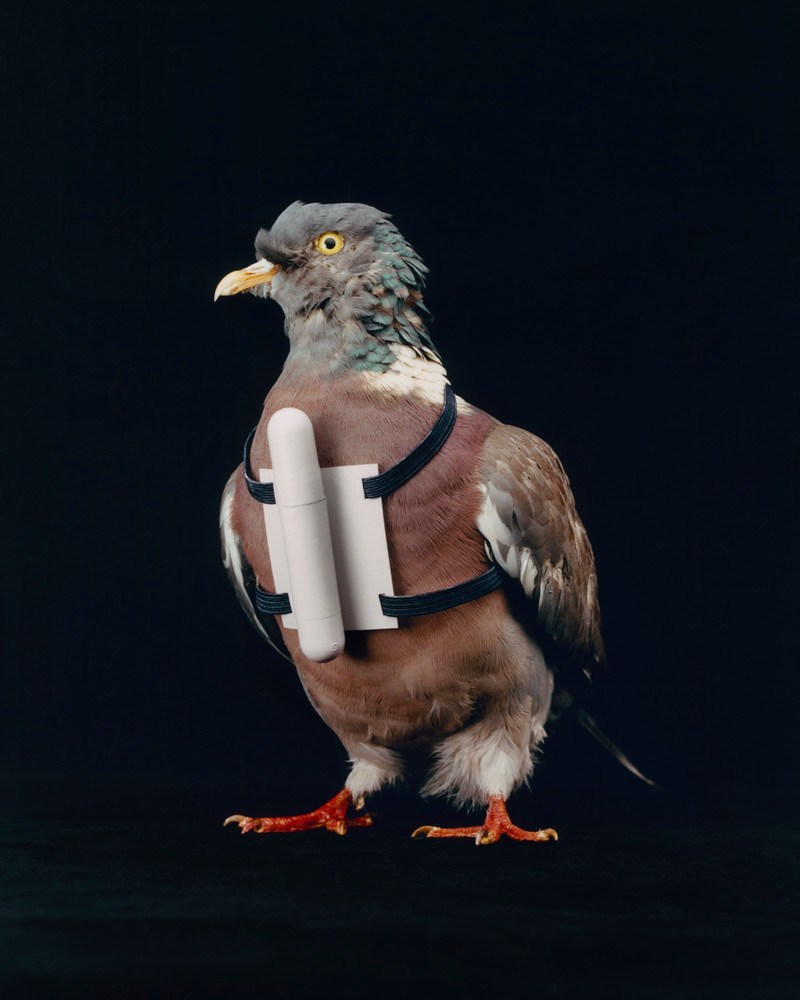
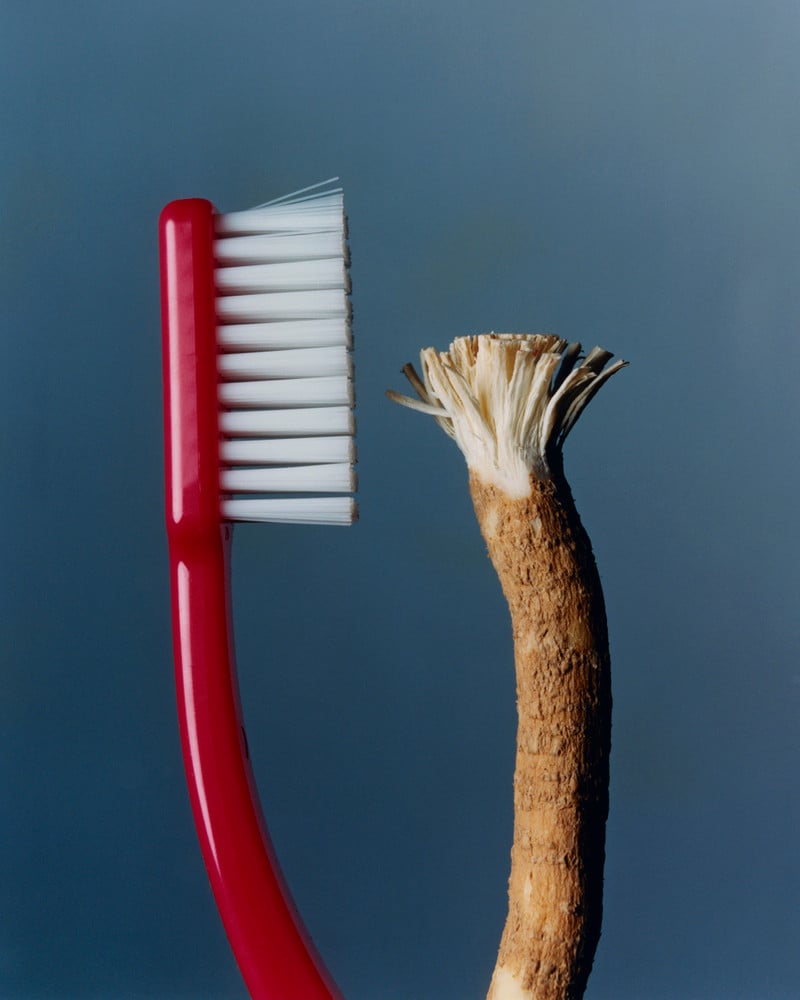
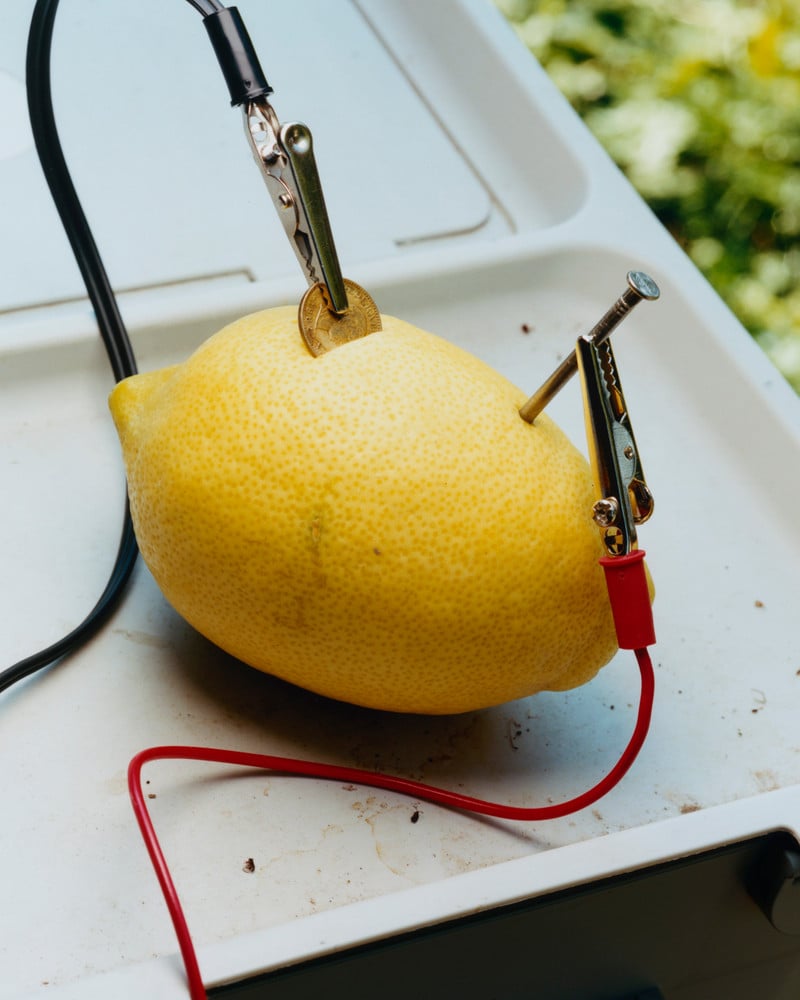
To gather the ingredients for each photograph, Negre did a deep dive into the objects the curators had collected, then began to make sketches of his compositions. Aided by his collaborator Ruede—gifted in the art of making things possible, like the sourcing of frogs and pigeons as well as model-making—each image proposes a standalone, enigmatic narrative. Sometimes the new comes face to face with its predecessor, like the shiny red toothbrush and its ancient counterpart. Or the old is given a slick update; shot like a packshot against a black background, the near-obsolete communication technology of the carrier pigeon is reformulated for a world where our reliance on the digital is no longer within reach. Other pictures are informative. Did you know a lemon can power a very, very low energy device?
Finding a photographic language for this dire yet unknown future that preppers have in mind posed a speculative problem to solve in itself. Because while they strongly agree its coming, there is no unified idea of what the apocalypse will look like. “Within this design exhibition, this was one of the projects that had to really create a concrete visual of how things look in the future,” Negre explains. “As a photographer, you have to actually make the image—and it has to fall right in the middle, not too sci-fi. It’s not easy.” Steering away from a futuristic aesthetic, but also from the doom-laden, dark media imagery that has also come to define the dystopia that lies ahead of us, the photographs have a surreal lightness with uncanny undertones.

The resulting aesthetic is implacable, finding balance between the strange bedfellows of nostalgia and futurism that shape a lot of prepper activity, and the blend of ancient methods with the super basic and the hyper-technical. As viewers, the pictures are a bit like puzzles, inviting us to embark on our own act of problem solving rather than presenting us with familiar visual views of the apocalypse. Just like the diverging movement itself, the images show the breadth of human imagination. And rather than focusing on the very real fears fuelling this global wave of design, they leave us with proof of how creative we can be when faced with the unknown.
Editor’s note: We Will Survive is currently on view at mudac (Musée cantonal de design et d’arts appliqués contemporains) in Lausanne, Switzerland until 9 February 2025.