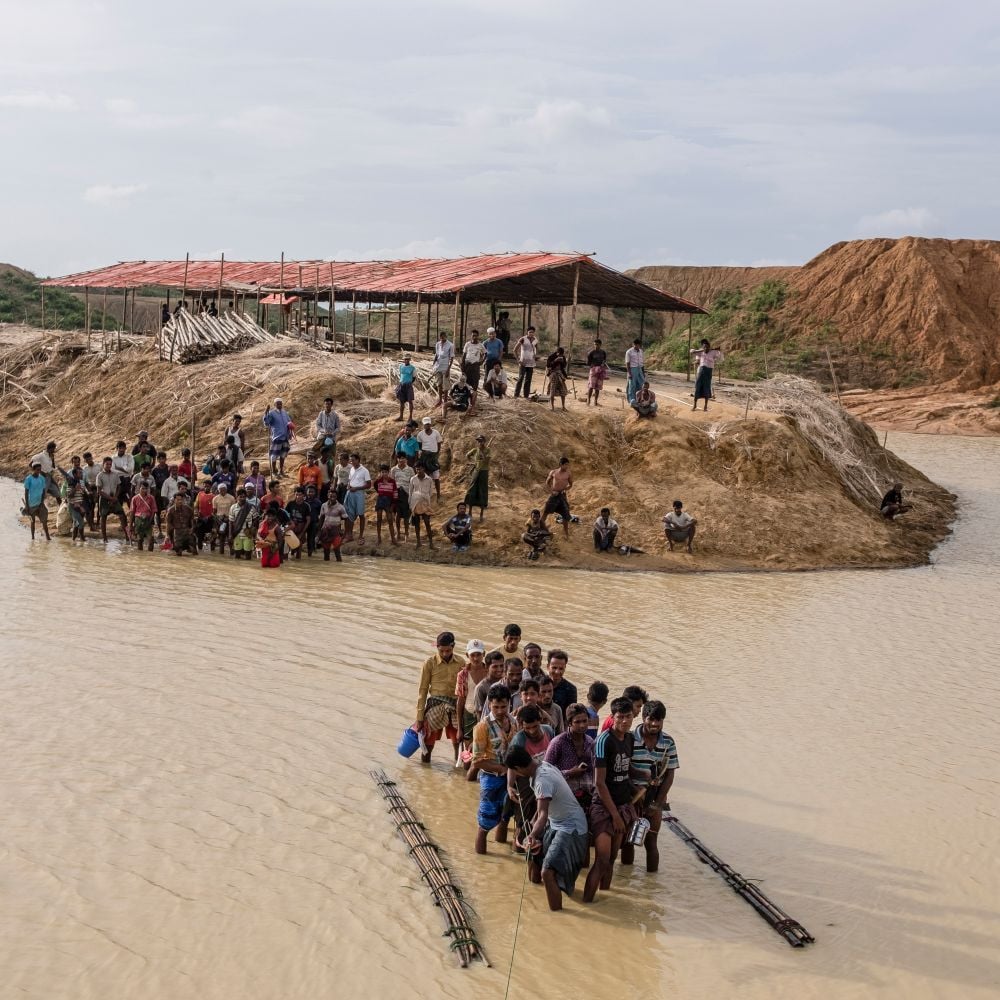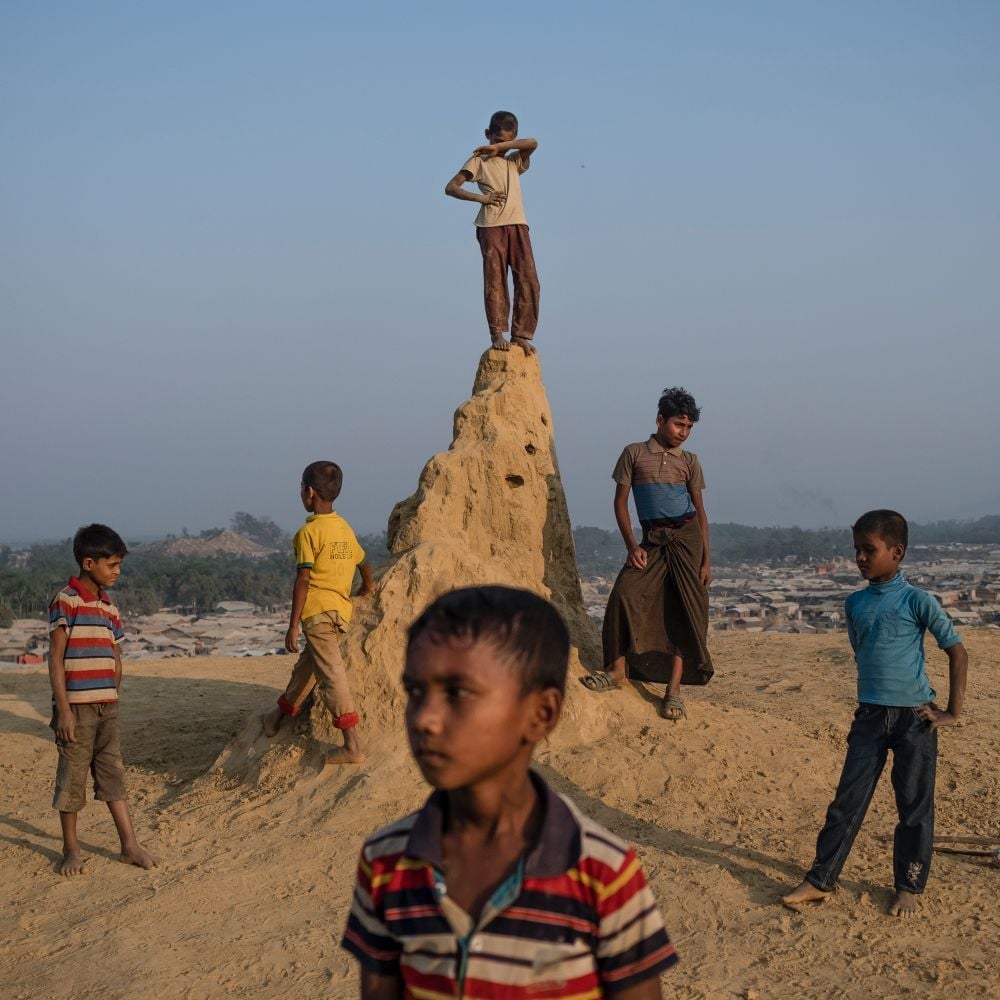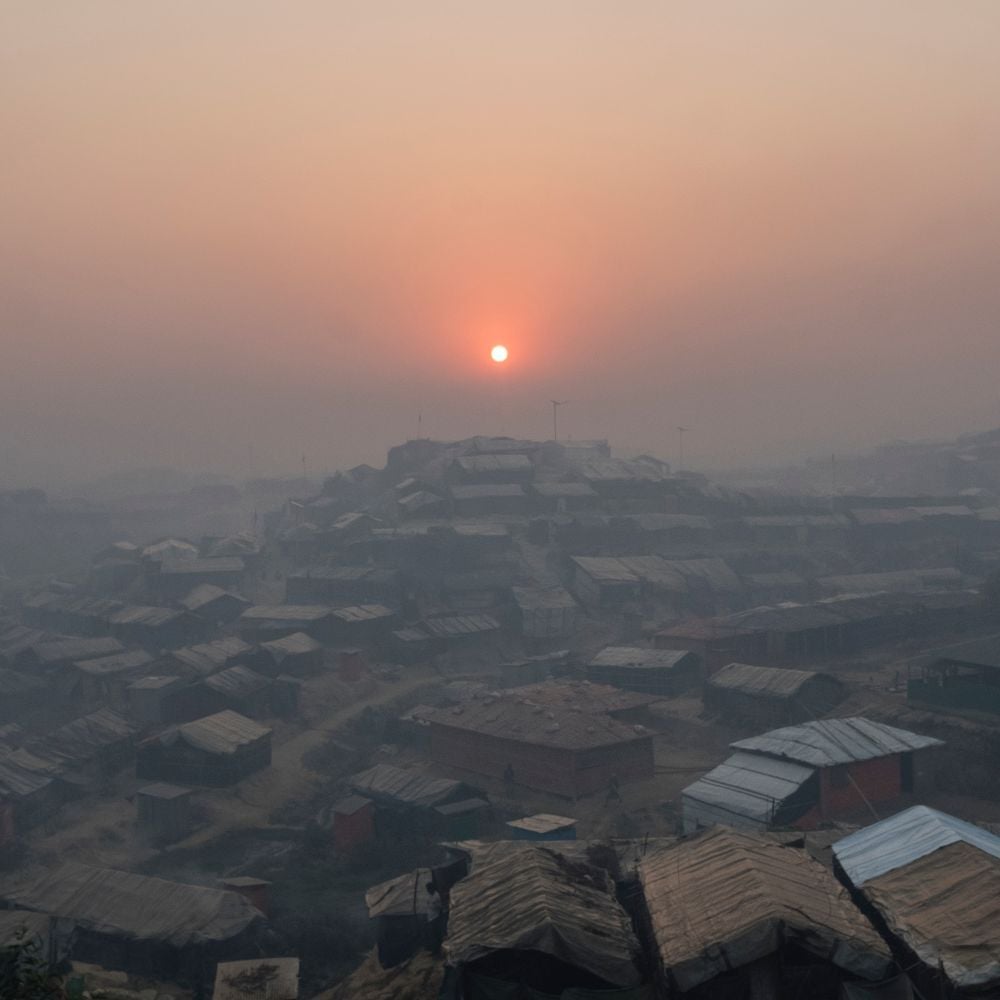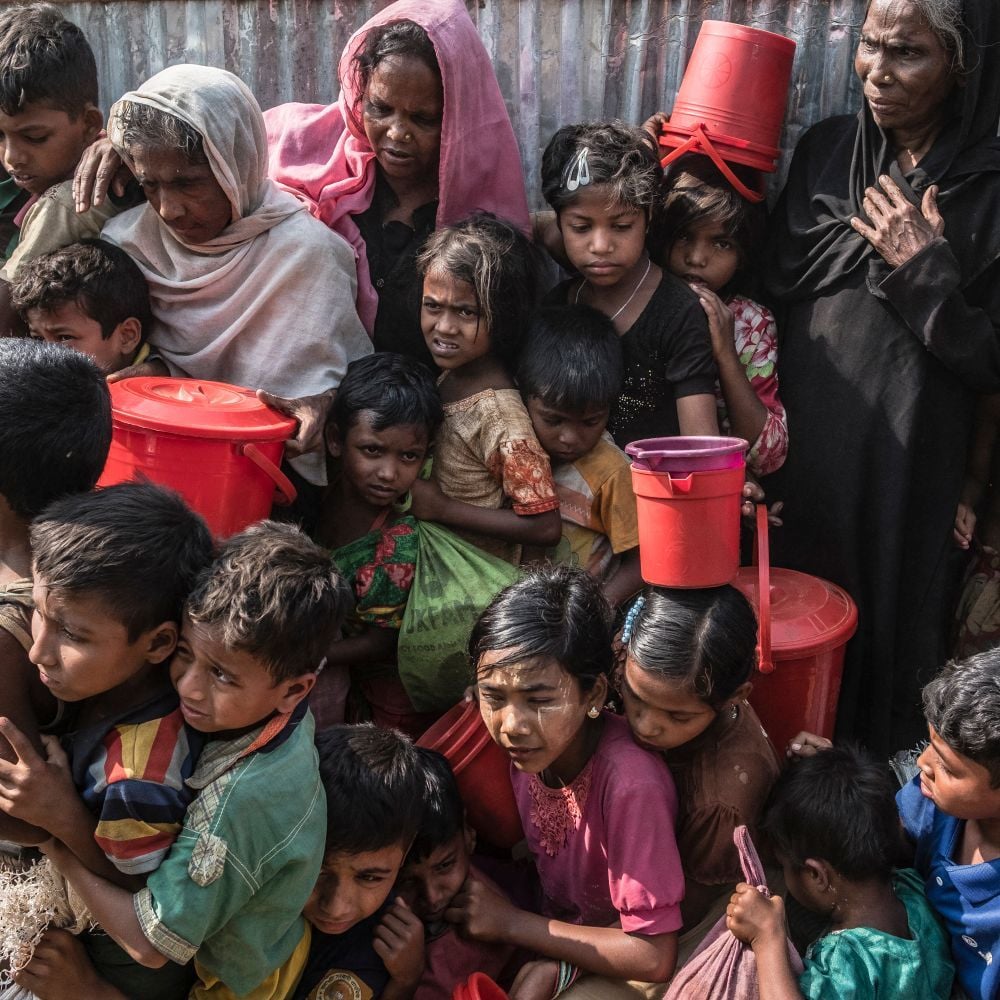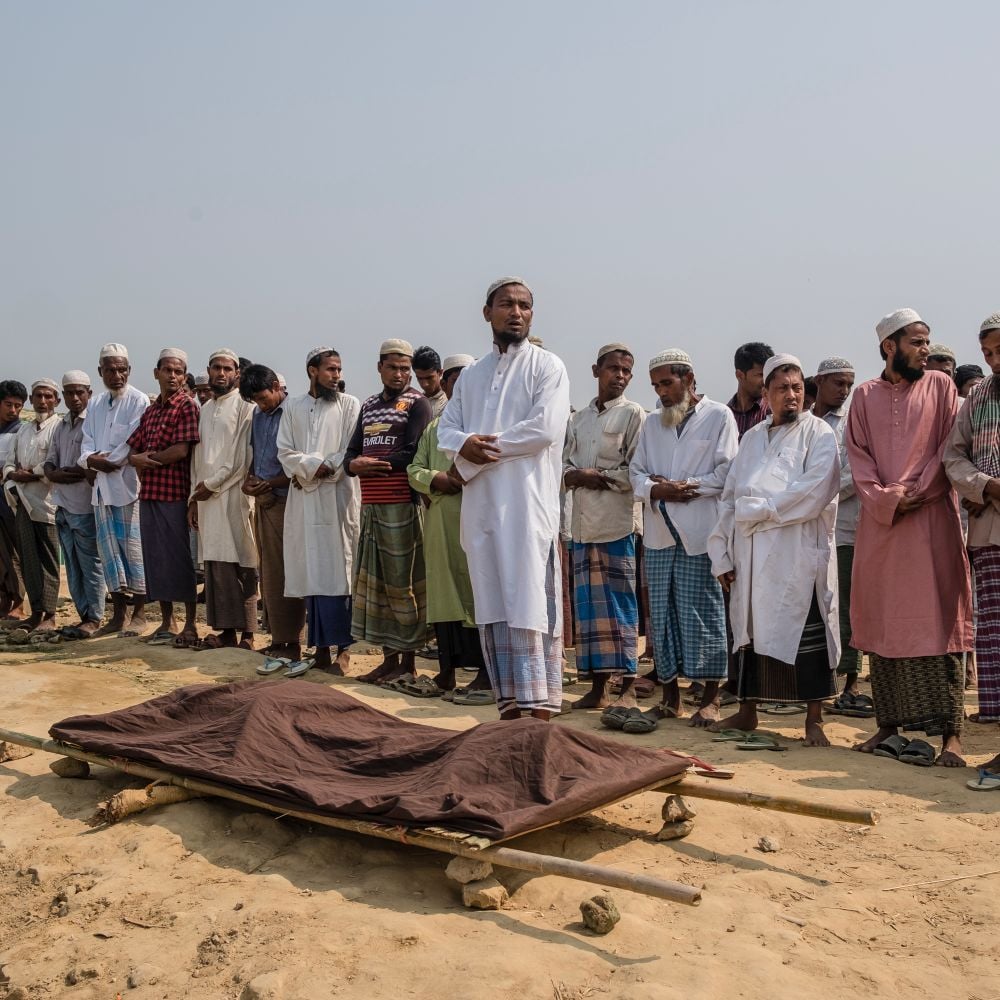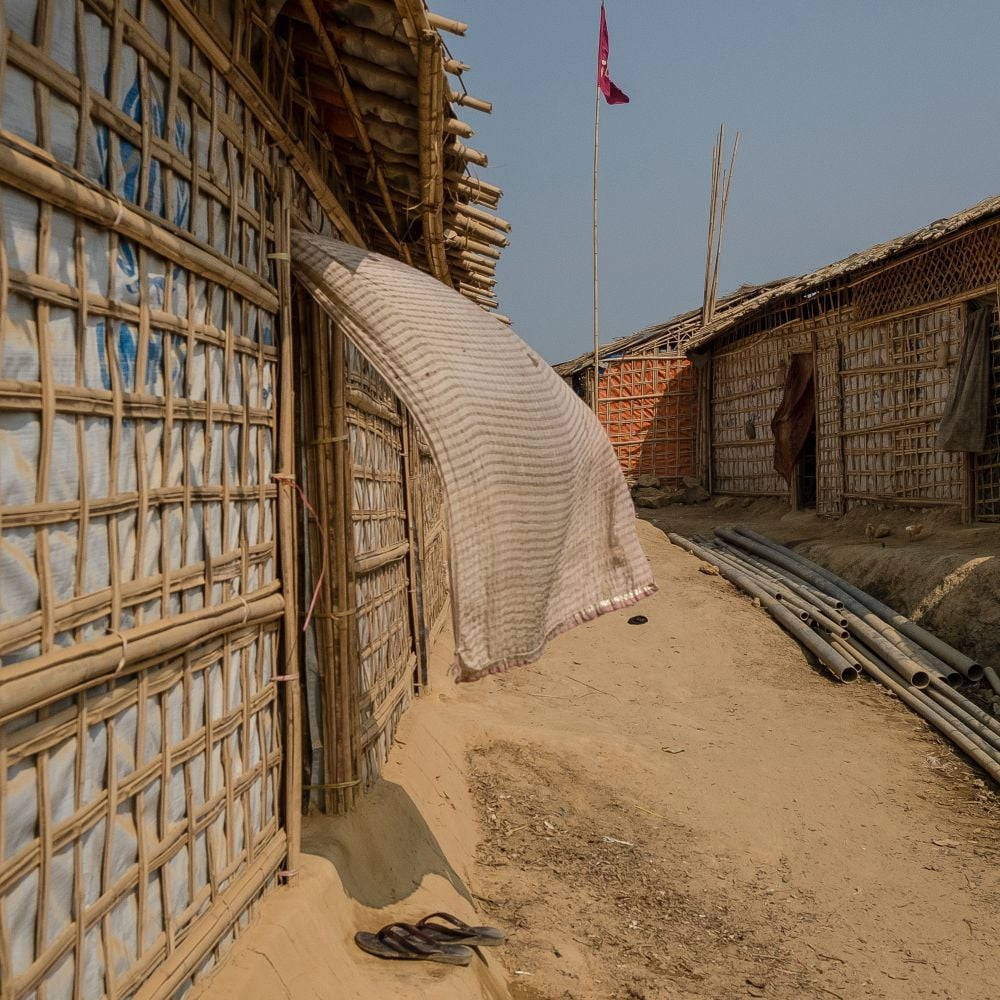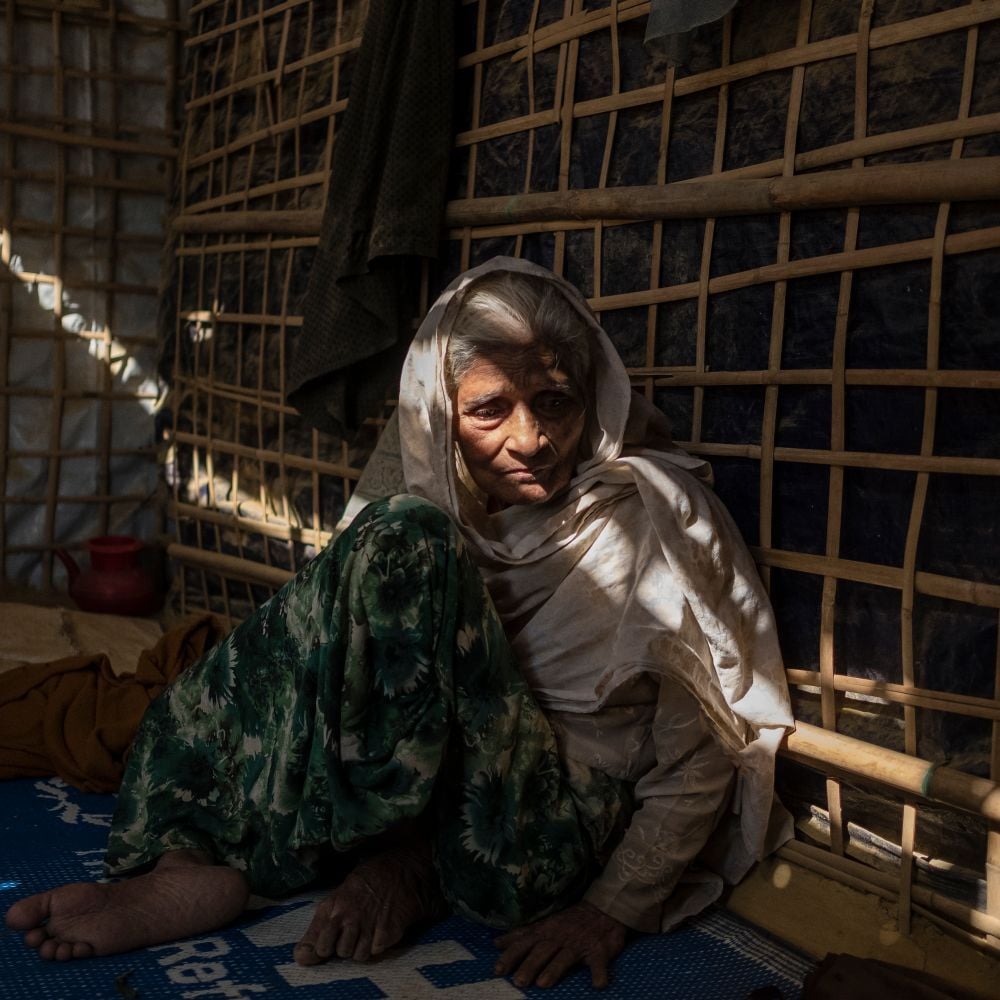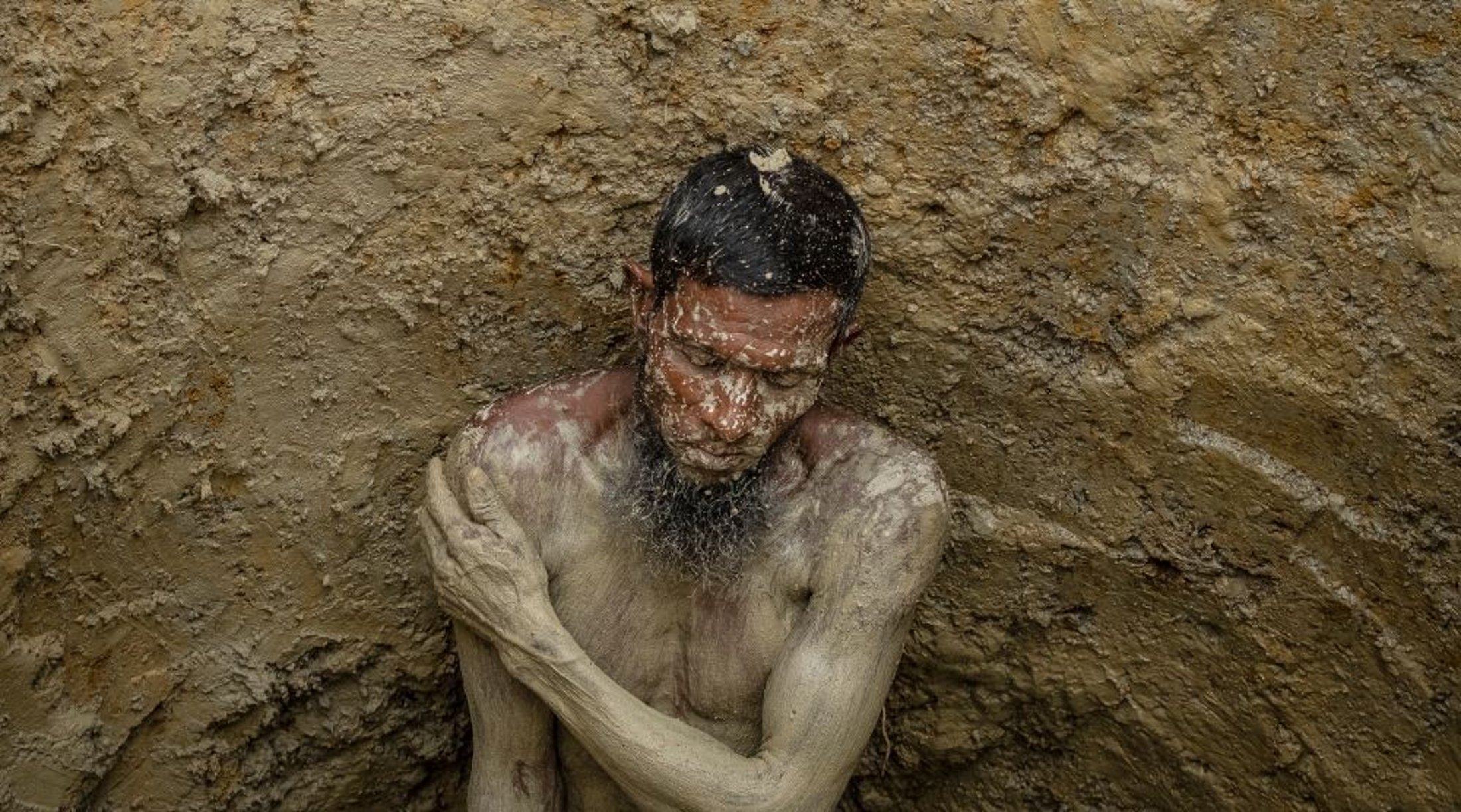
Balukhali-Kutupalong, located in Cox’s Bazar in south-eastern Bangladesh, is currently the world’s biggest refugee camp. Summer 2017 saw the latest mass exodus of the Rohingya people from neighbouring Myanmar, with over 1.3 million individuals displaced by targeted violence in their homeland. One of the country’s many ethnic minorities, the Rohingya Muslims, have faced persecution for decades, with a new wave of attacks in the Rakhine State provoking what the UN has described as the world’s fastest growing refugee crisis. The UNHCR estimates that following their journey from Myanmar, over 900,000 people have landed in makeshift camps in the city of Cox’s Bazar, where the two largest hubs have overflowed into the surrounding areas. It is not this plight of displacement that Italian photographer Gabriele Cecconi has focused on in his work on the area, but rather the complex and precarious living conditions that the refugees endure on arrival.
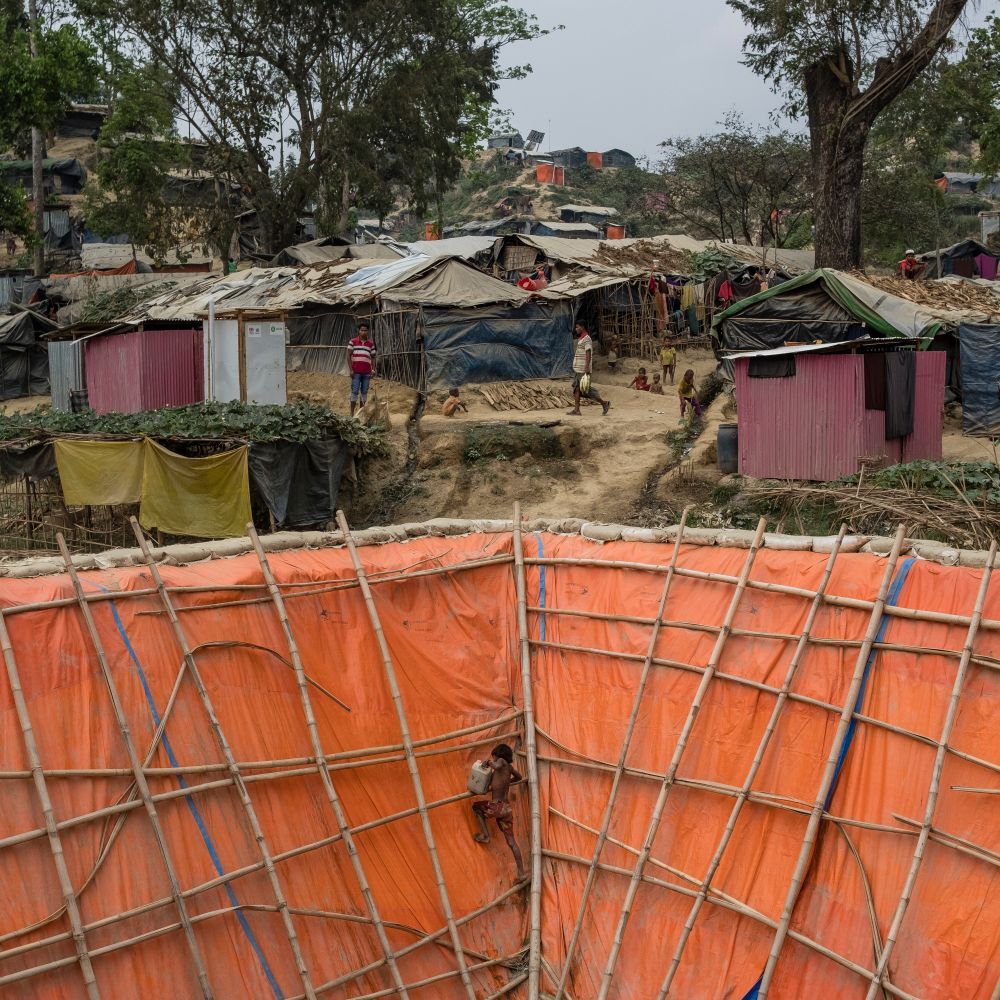
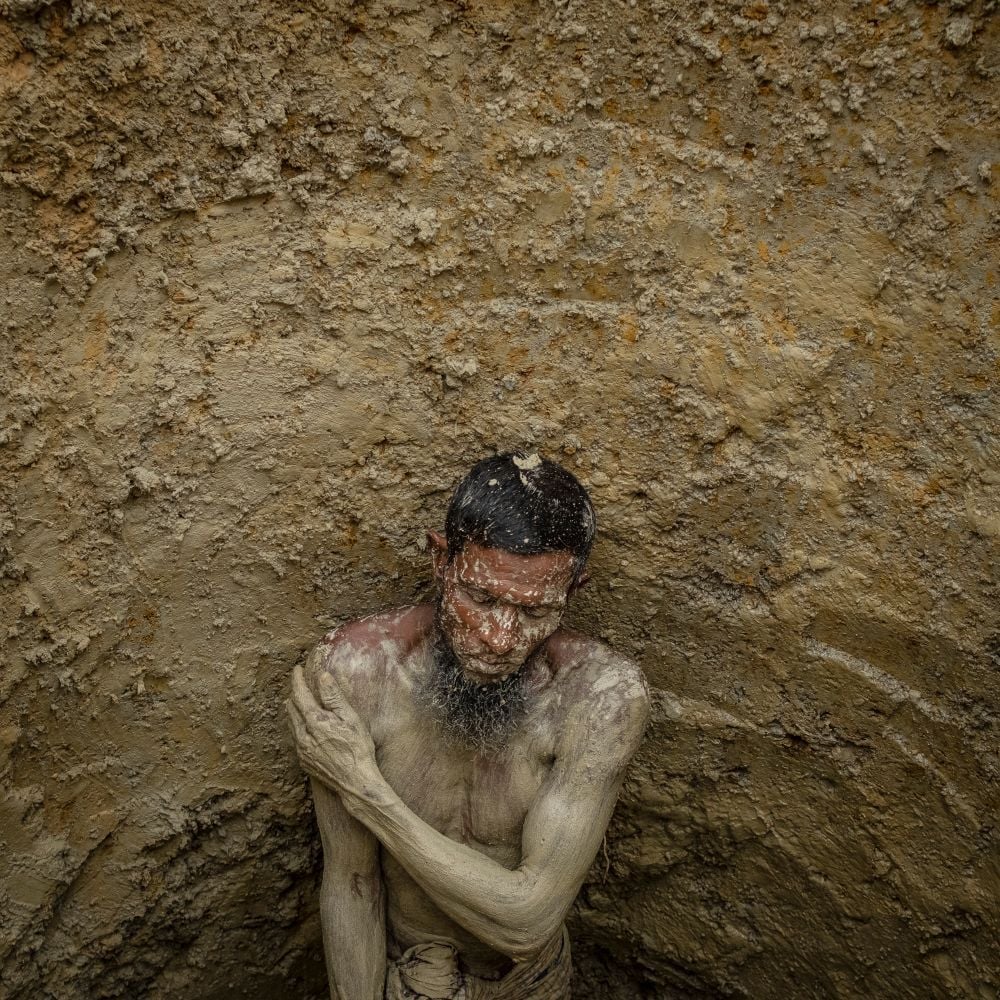
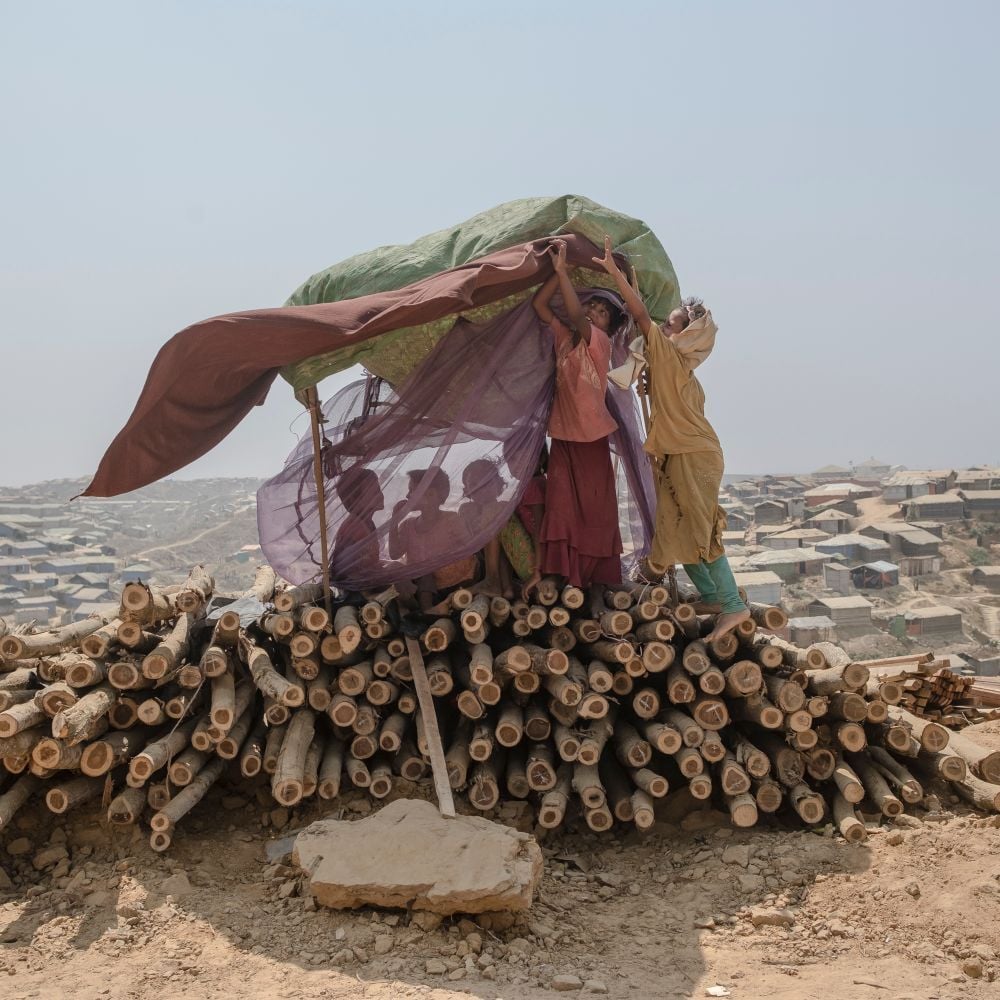
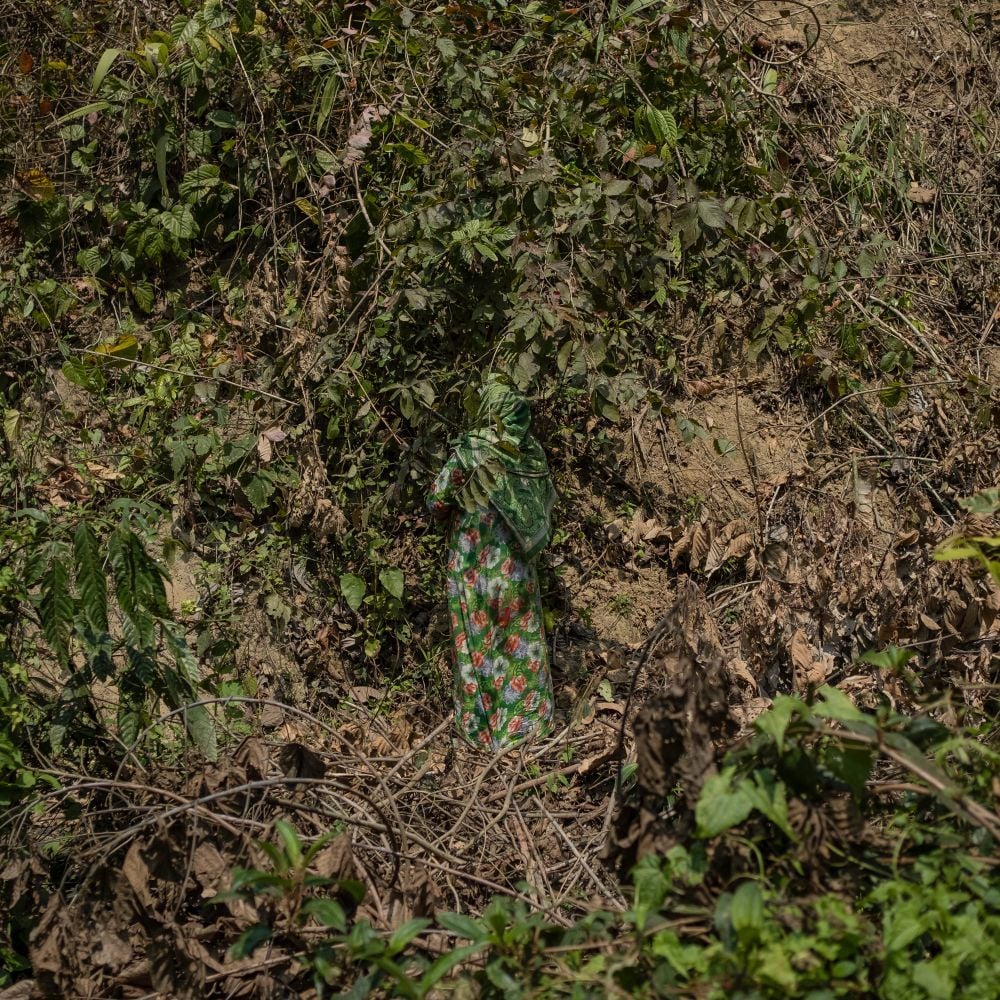
The Wretched of the Earth addresses the tragic bond between two narratives: that of a people displaced, struggling to survive, and the major repercussions of this crisis on the local ecosystem. Following large-scale deforestation to make way for the camps, it is predicted that the entire forest land of the densely-populated Cox’s Bazer will disappear later this year. A topic deemed overlooked by Cecconi, his images document the relationship between mass migration and the environmental crisis.
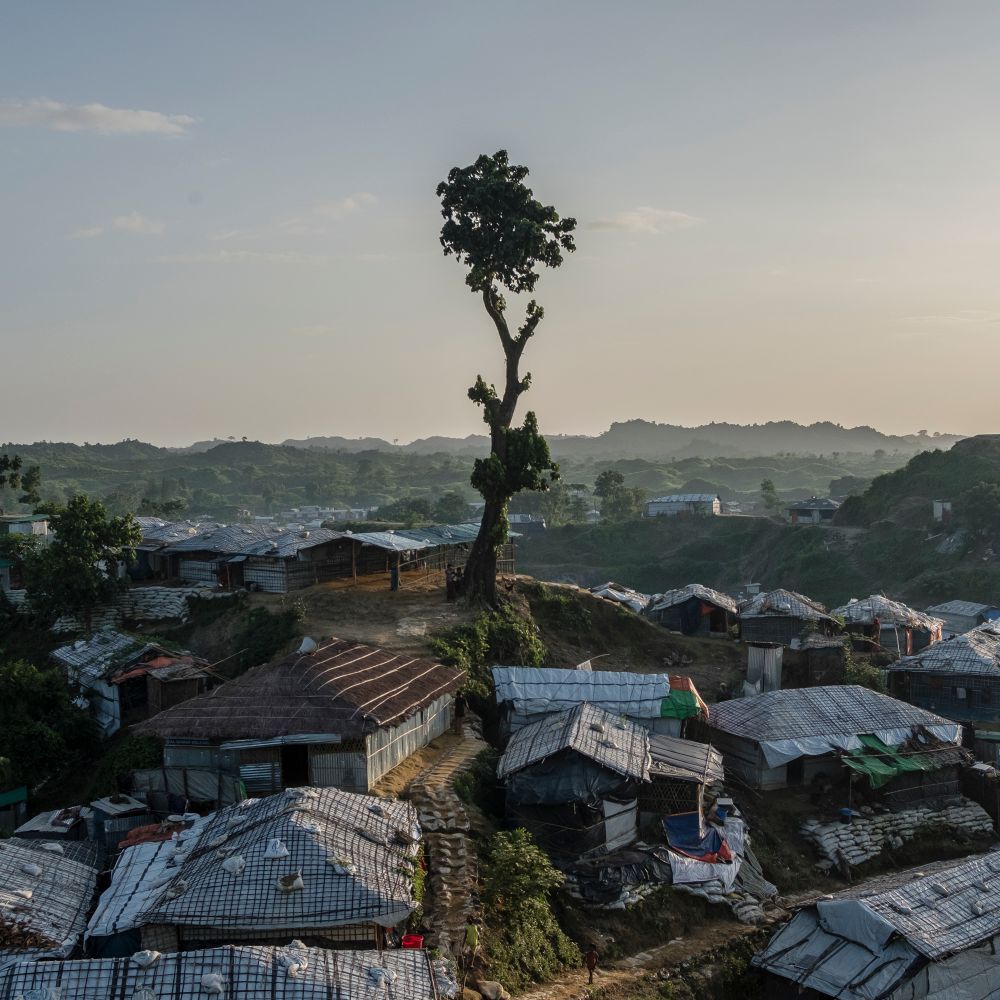
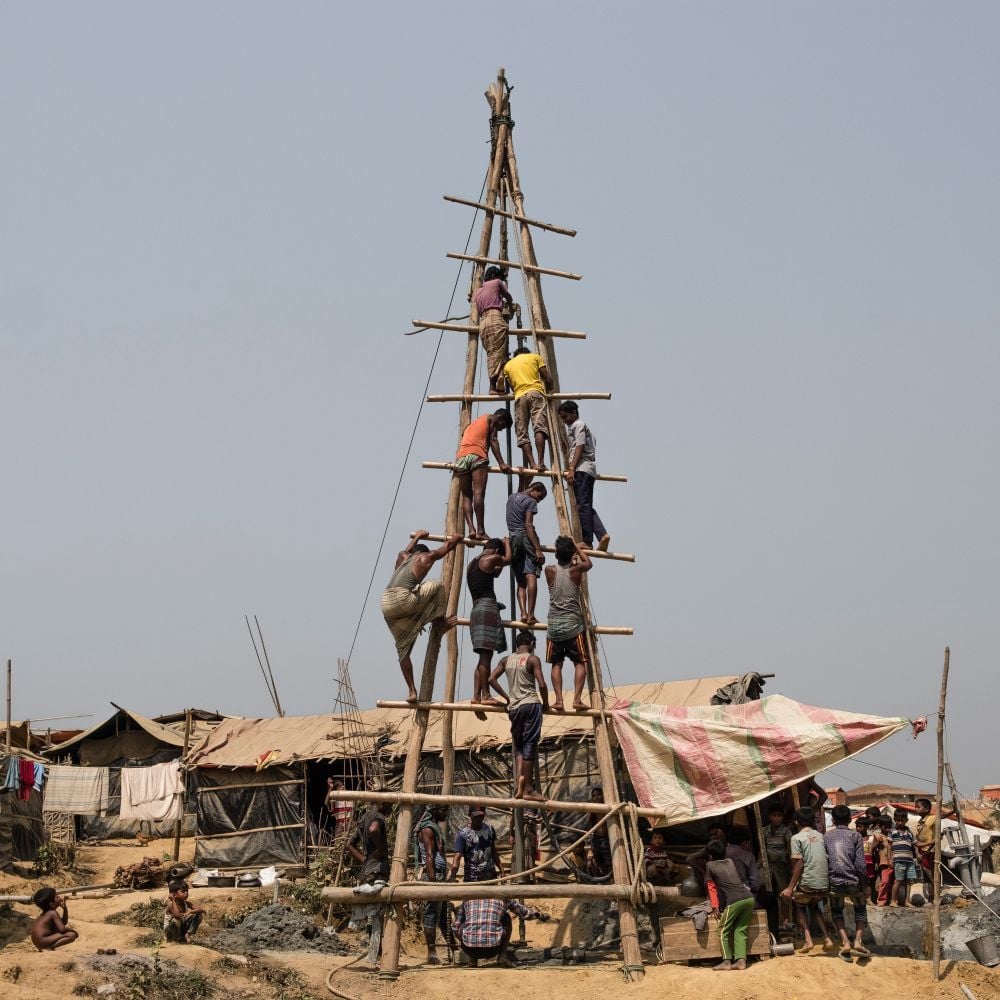
“Everybody knows the indissoluble but fragile bond between human being and his environment; during a mass migration this line is widely crossed,” he says. “This is a hidden issue never seriously faced by the international community especially during the emergency phases of the crisis, even if the consequences dramatically affect refugees themselves that are directly exposed to the host environment.” The cyclical effects of these twin crises have crushing consequences on the daily lives of the camp’s inhabitants, who depend wholly on the resources of their surroundings. The use of bamboo to build temporary shelters coupled with the collection of fuelwood for cooking have added to the dwindling of forests. This, in turn, has increased soil erosion and intensified the threat of landslides and flooding during Monsoon season, which lead to further displacement.
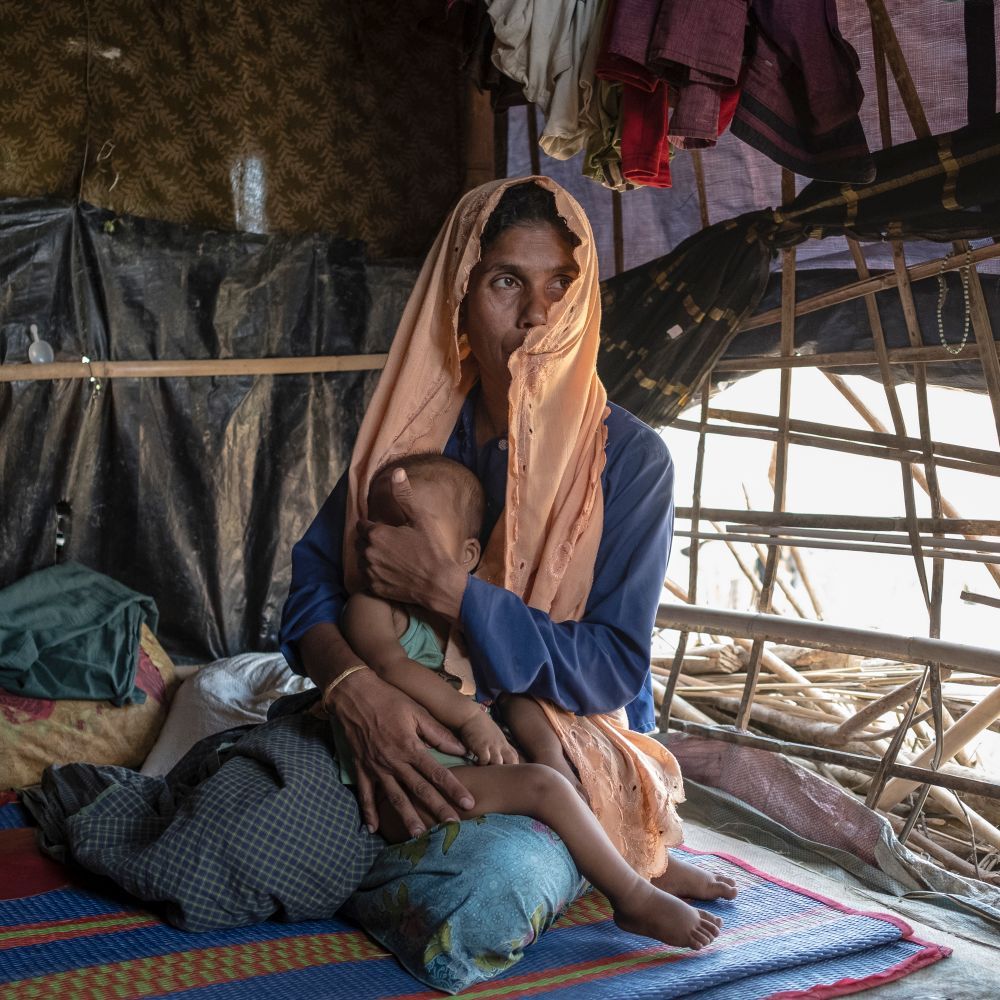
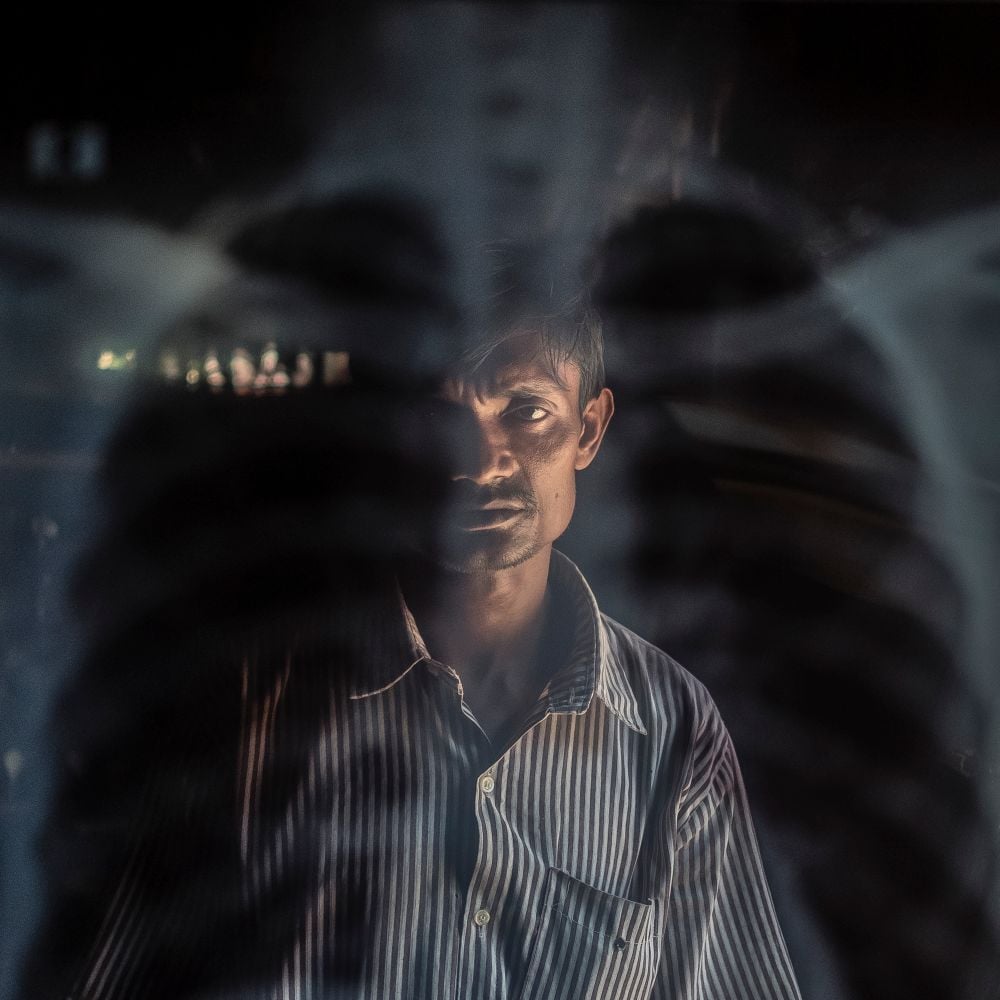
Procuring the basic sustenance of food and water also presents great danger. The use of fuelwood to cook in small living structures has resulted in an outbreak of acute respiratory infections—a leading cause of mortality among the Rohingya. Water resources are under duress, with many forced to drink polluted water. In a country already extremely vulnerable to climate change, the case of Cox’s Bazar points to a wider, omnipresent global challenge. “Today we have 68 million refugees in the world, the highest number ever—and many mass migrations have to deal with the same issues, Cecconi says.
The Wretched and the Earth will be featured this summer at Cortona On The Move, an insightful photo festival in Italy running from 11 July - 29 September, 2019. LensCulture is proud to be a partner with the festival for the special New Visions exhibitions.