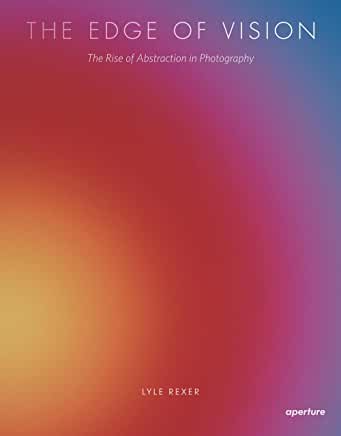
The Edge of Vision: The Rise of Abstraction in Photography
by Lyle Rexer
Abstraction has been, and remains, intrinsic to photography. The Edge of Vision: The Rise of Abstraction in Photography is the first book in English to document this phenomenon and to put it into historical context. Author Lyle Rexer examines abstraction at pivotal moments, starting with the inception of photography, when many of its pioneers believed the camera might reveal other aspects of reality.
He traces subsequent explorations—from the Photo Secessionists, who emphasized emotional expression over observed reality, to Modernist and Surrealist experiments. From the 1940s through the 1980s, a multitude of photographers—Edward Weston, Aaron Siskind, and Barbara Kasten, among them—took up abstraction. Finally, Rexer explores the influence the history of abstraction exerts on contemporary thinking about the medium.
Many contemporary artists—most prominently Silvio Wolf, Marco Breuer, and Ellen Carey—reject photography's documentary dimension in favor of other possibilities, somewhere between painting and sculpture, that include the manipulation of process and printing.
In addition to Rexer's engagingly written and richly illustrated history, this volume includes a selection of primary texts from key practitioners and critics, such as László Moholy-Nagy, and James Welling.
Lyle Rexer (editor) is a New York–based independent writer and critic. His previous books include Photography’s Antiquarian Avant-Garde (2002) and How to Look at Outsider Art (2005); he contributed an interview with Chuck Close and Bob Holman to A Couple of Ways of Doing Something (Aperture, 2006), and is the author of Edge of Vision (Aperture, 2010.)
Lyle Rexer is a writer, curator, critic and columnist, as well as a course leader at the School of Visual Arts. As well as being the author of numerous books on photography, he has also contributed to The New York Times, The New Yorker, Damn Magazine and Photograph Magazine. Lyle is the recipient of various prestigious awards, including the international Rhodes Scholar award.
He traces subsequent explorations—from the Photo Secessionists, who emphasized emotional expression over observed reality, to Modernist and Surrealist experiments. From the 1940s through the 1980s, a multitude of photographers—Edward Weston, Aaron Siskind, and Barbara Kasten, among them—took up abstraction. Finally, Rexer explores the influence the history of abstraction exerts on contemporary thinking about the medium.
Many contemporary artists—most prominently Silvio Wolf, Marco Breuer, and Ellen Carey—reject photography's documentary dimension in favor of other possibilities, somewhere between painting and sculpture, that include the manipulation of process and printing.
In addition to Rexer's engagingly written and richly illustrated history, this volume includes a selection of primary texts from key practitioners and critics, such as László Moholy-Nagy, and James Welling.
Lyle Rexer (editor) is a New York–based independent writer and critic. His previous books include Photography’s Antiquarian Avant-Garde (2002) and How to Look at Outsider Art (2005); he contributed an interview with Chuck Close and Bob Holman to A Couple of Ways of Doing Something (Aperture, 2006), and is the author of Edge of Vision (Aperture, 2010.)
Lyle Rexer is a writer, curator, critic and columnist, as well as a course leader at the School of Visual Arts. As well as being the author of numerous books on photography, he has also contributed to The New York Times, The New Yorker, Damn Magazine and Photograph Magazine. Lyle is the recipient of various prestigious awards, including the international Rhodes Scholar award.
Book Information
ISBN:
978-1-59711-100-3
Publisher:
Aperture