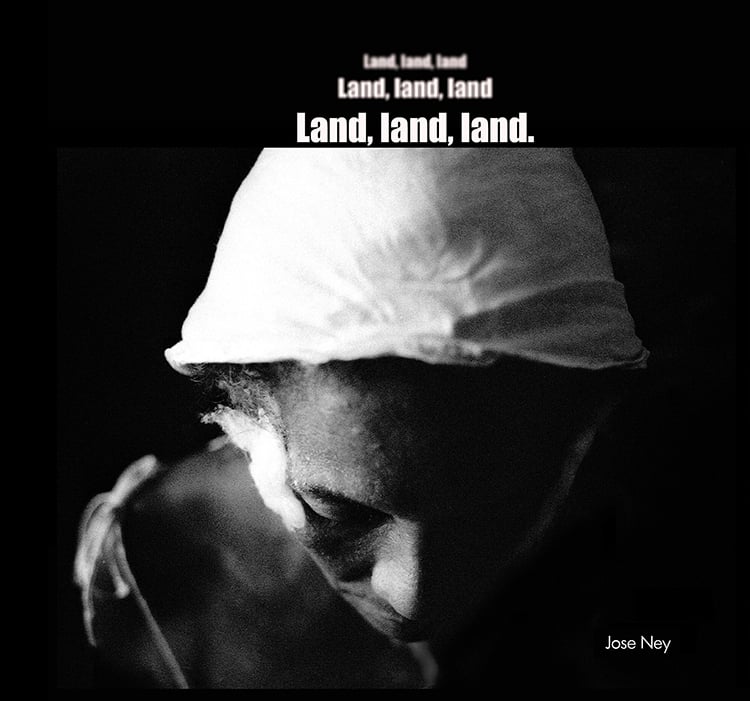
Land, land, land.
by jose ney mila espinosa
My work is generally based on documentary photography, in several of my series I delve into ethnography and anthropology, as in this case. As we all know, black slaves were brought from Africa in a violent and dehumanized. Possibly more than 14 million without counting those who died during the crossing of the Atlantic Ocean, according to studies. They were totally stripped of their identities, from the religions imposed by their owners, to the very own name.
The images that I present do not belong to a tourist show, nor are they plays or dances performed by a group of artists. They are real images of two cultures, the "Yorubá" also called "Regla de Ochá", (Afro-Cuban Santeria) the most popular in the towns of Havana and Santiago de Cuba and the "Kimbiza, Santo Cristo del Buen Viaje", one of the least known, founded in Cuba in the 18th century, including within itself, the knowledge of all the practiced religions of that time (European and African).
Both star in the images of disease processes of healing. The sacrifice of animals and the land is one of the key elements for the neutralization of the various negative energies that cause the evils that have treaties in these ceremonies.
Afro-Cuban religions have generally functioned secretly to one degree or another since their inception when they arrived in America with slaves brought from Africa. Being considered pagan by the dominant religions implanted in the European colonies, they were forced to create new forms of subsistence through secrecy and in other cases by him syncretism or adaptation of their religious concepts to those of their settlers.
In Cuba there are several important cultures of different connotations from at least over 5 regions of Africa. These practices were gradually less secret since the beginning of the dictatorship of 1959. The dictatorship gradually allowed the prominence of the religions of African origin when it was reneged as legitimate authority by the churches of European tradition.
The images that I present do not belong to a tourist show, nor are they plays or dances performed by a group of artists. They are real images of two cultures, the "Yorubá" also called "Regla de Ochá", (Afro-Cuban Santeria) the most popular in the towns of Havana and Santiago de Cuba and the "Kimbiza, Santo Cristo del Buen Viaje", one of the least known, founded in Cuba in the 18th century, including within itself, the knowledge of all the practiced religions of that time (European and African).
Both star in the images of disease processes of healing. The sacrifice of animals and the land is one of the key elements for the neutralization of the various negative energies that cause the evils that have treaties in these ceremonies.
Afro-Cuban religions have generally functioned secretly to one degree or another since their inception when they arrived in America with slaves brought from Africa. Being considered pagan by the dominant religions implanted in the European colonies, they were forced to create new forms of subsistence through secrecy and in other cases by him syncretism or adaptation of their religious concepts to those of their settlers.
In Cuba there are several important cultures of different connotations from at least over 5 regions of Africa. These practices were gradually less secret since the beginning of the dictatorship of 1959. The dictatorship gradually allowed the prominence of the religions of African origin when it was reneged as legitimate authority by the churches of European tradition.
Book Information
Publisher:
self-published