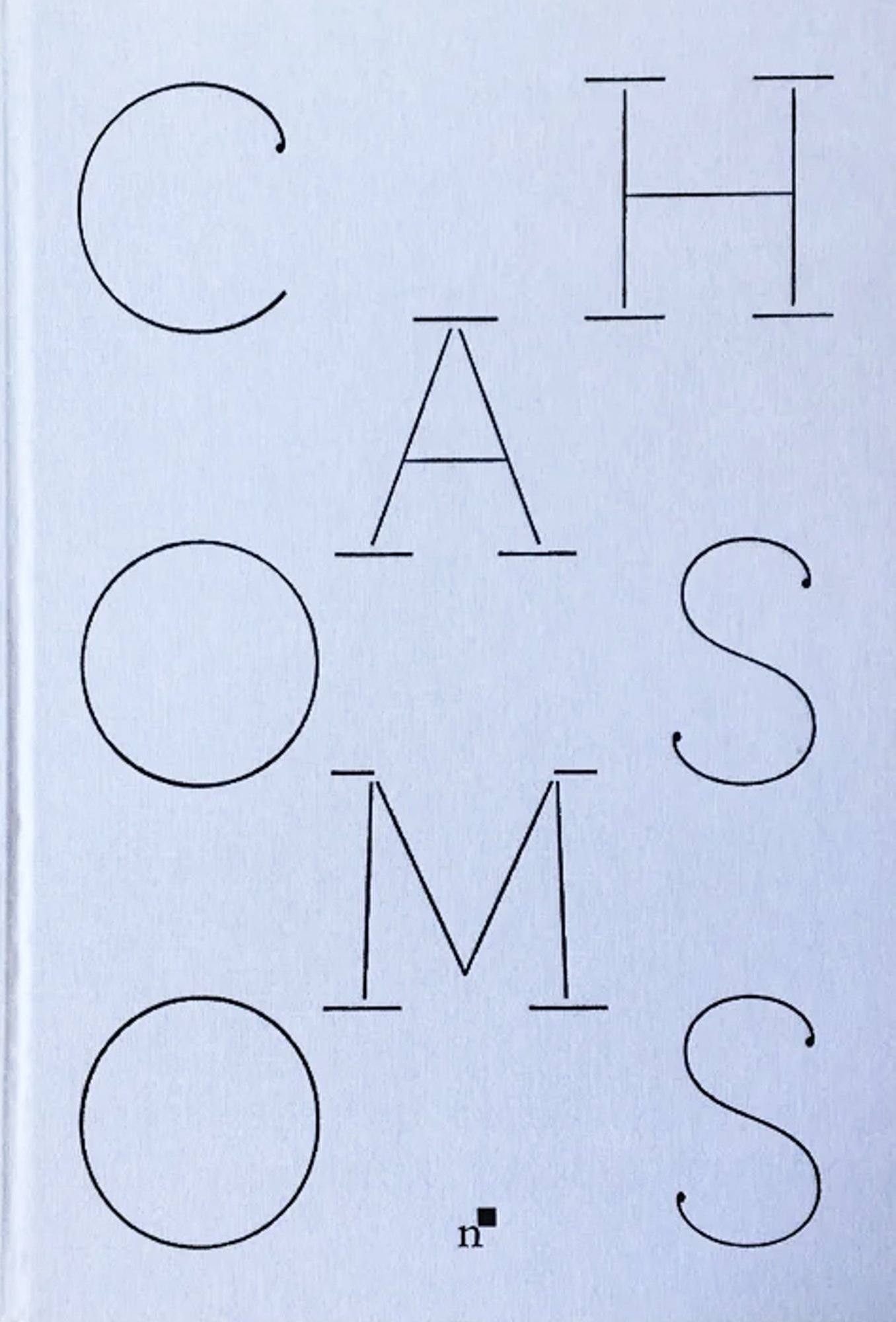
CHAOSMOS
by Emin Altan
CHAOSMOS
“… That the zero panorama seemed to contain ruins in reserve. That is – all the new construction that would eventually be built. This is the opposite of the ‘Romantic ruin’ because the buildings don’t fall into ruin after thay are built but rather rise into ruin before they are built…” Robert Smithson A Tour of the Monuments of Passaic
The Chaosmos project, which I started in 2012, was a quest to confront with a dystopic fiction based on subjective perception and personal observations, as opposed to a documentaristic one, and which focused on the traces of the post-industrial crisis and the ensuing collapse.
It was a work that combed through the traces of a process in which humankind’s unbounded urge to dominate nature and the “other”, triggers their alienation from their labor along with themselves, which ultimately causes the destruction of all humankind.
For me, Chaosmos simultaneously contained Narcissus within itself. With a slightly different reading, I could envision humankind’s glorification of his/her own production causing its eventual demise.
Chaosmos was a work that evaluated the photographs as present day reflections of the absolute end of nature and humanity quickly brought forth in a world where existence is equated with the concept of growth, and where the process of producing more, consuming more and even reproducing more as a result of competitive policies becomes increasingly restrictive.
The photographs taken across a worldwide journey ending in 2017, and spanning 25 countries extending from the Aral Lake, which has become a desert due to the agricultural policies implemented in Kazakhstan to Detroit, which has transformed into a ghost city as a result of the American automotive industry’s inability to survive against the competitive world markets, from the abandoned Iwate coal mines of Japan, dwarfed by global competition to the remnants of nuclear disasters in Chornobyl, Ukraine and Fukushima, Japan, and from the traces of the Cold War across the Balkans, in former Yugoslavia, to the mental hospitals in Northern Italy shut down following the reactions to alleged human rights violations, and to many other locations in pursuit of fallen civilizations.
I intended to access the viewer’s emotions through my photographs rather than to convey information, introduce a location or witness a process. I chose not to tell the story of these photographs or disclose information regarding where and when they were taken. I sought to collate the photographs in which I could find common aspects of different places. I wanted these photographs taken in distant lands to affect the viewer in a way that prevents them from sheltering in the comfort of looking at the pain of the so-called “other”.
Another common feature of my chosen locations was that many of these places bore traces of the developments of my childhood (late 60's, early 70's), and the times when we looked forward to the future.
“… That the zero panorama seemed to contain ruins in reserve. That is – all the new construction that would eventually be built. This is the opposite of the ‘Romantic ruin’ because the buildings don’t fall into ruin after thay are built but rather rise into ruin before they are built…” Robert Smithson A Tour of the Monuments of Passaic
The Chaosmos project, which I started in 2012, was a quest to confront with a dystopic fiction based on subjective perception and personal observations, as opposed to a documentaristic one, and which focused on the traces of the post-industrial crisis and the ensuing collapse.
It was a work that combed through the traces of a process in which humankind’s unbounded urge to dominate nature and the “other”, triggers their alienation from their labor along with themselves, which ultimately causes the destruction of all humankind.
For me, Chaosmos simultaneously contained Narcissus within itself. With a slightly different reading, I could envision humankind’s glorification of his/her own production causing its eventual demise.
Chaosmos was a work that evaluated the photographs as present day reflections of the absolute end of nature and humanity quickly brought forth in a world where existence is equated with the concept of growth, and where the process of producing more, consuming more and even reproducing more as a result of competitive policies becomes increasingly restrictive.
The photographs taken across a worldwide journey ending in 2017, and spanning 25 countries extending from the Aral Lake, which has become a desert due to the agricultural policies implemented in Kazakhstan to Detroit, which has transformed into a ghost city as a result of the American automotive industry’s inability to survive against the competitive world markets, from the abandoned Iwate coal mines of Japan, dwarfed by global competition to the remnants of nuclear disasters in Chornobyl, Ukraine and Fukushima, Japan, and from the traces of the Cold War across the Balkans, in former Yugoslavia, to the mental hospitals in Northern Italy shut down following the reactions to alleged human rights violations, and to many other locations in pursuit of fallen civilizations.
I intended to access the viewer’s emotions through my photographs rather than to convey information, introduce a location or witness a process. I chose not to tell the story of these photographs or disclose information regarding where and when they were taken. I sought to collate the photographs in which I could find common aspects of different places. I wanted these photographs taken in distant lands to affect the viewer in a way that prevents them from sheltering in the comfort of looking at the pain of the so-called “other”.
Another common feature of my chosen locations was that many of these places bore traces of the developments of my childhood (late 60's, early 70's), and the times when we looked forward to the future.
Book Information
ISBN:
978-975-8686-92-6
Publisher:
NORGUNK