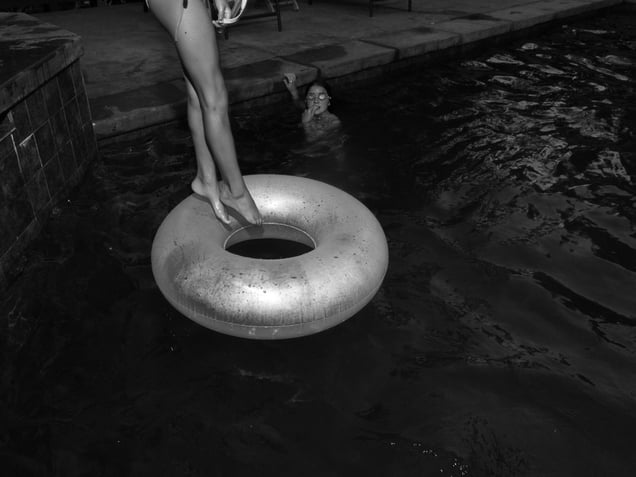
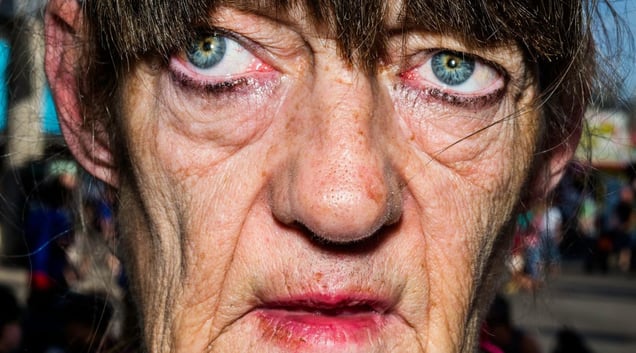
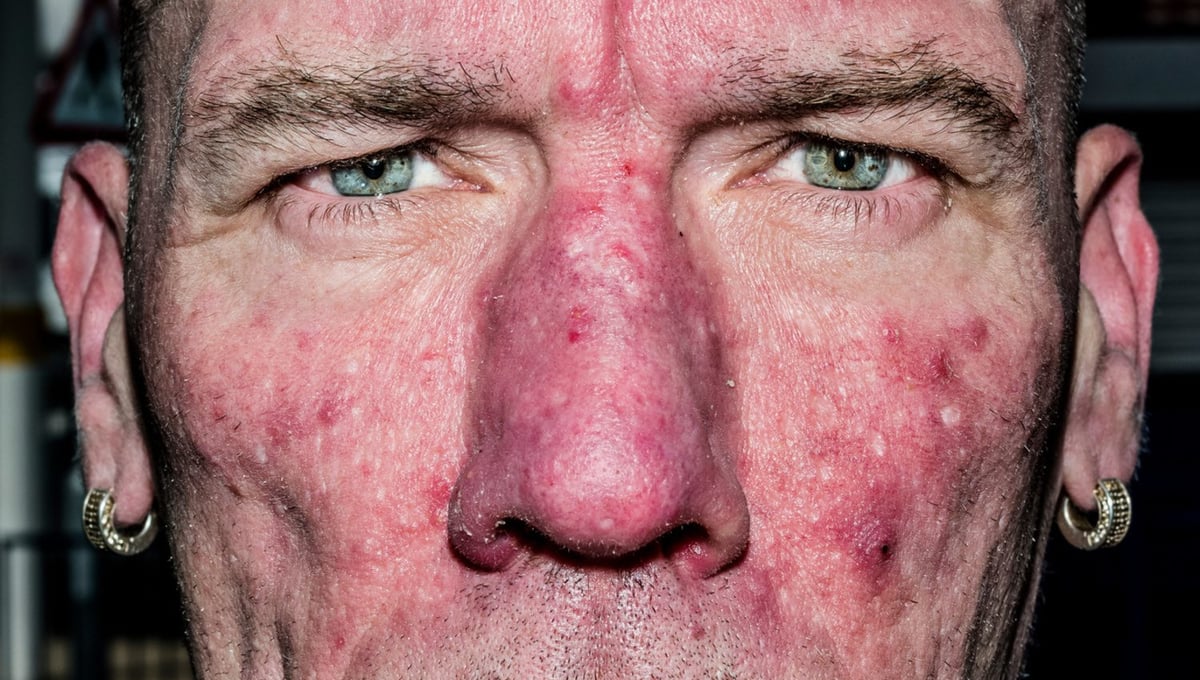
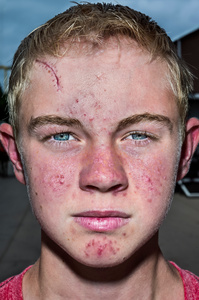
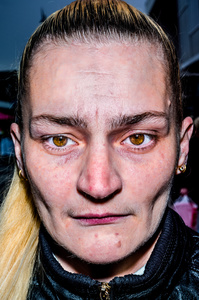
Like all artists, Bruce Gilden’s life bleeds into and informs every piece of work he’s ever created. Growing up in Brooklyn with what he describes as a “tough guy” of a father, Bruce developed a love of the streets, often calling them his “second home.” But the love was more than just a simple connection — it was a creative fascination. It was the unique energy of the streets that mesmerized Bruce, an energy that can momentarily expose something inside people that generally stays hidden. Bruce made it his life’s work to capture those moments.
Another defining characteristic of Gilden’s photography is his creative attraction to what he calls “characters,” and he has been tracking them down all through his career. His first major project, which he worked on until 1986, focused on Coney Island, the legendary Brooklyn beach where New Yorkers who cannot escape the city heat have been going for cheap thrills summer after summer.
In his early years, Gilden also photographed in New Orleans during its famous Mardi Gras festival. Then, in 1984, Bruce made his first trip to Haiti where he worked for ten years. His book Haiti, published in 1995, won the European Award for Photography. It could have marked the end of his professional and personal story with Haiti, but after the earthquake of January 2010, Bruce went back three times, and he has decided to continue documenting the endless hardships of the Haitian people, and “keep the light burning.”
Since 1981, Gilden had tackled a new approach to urban spaces, specifically the streets of New York City. It became a major ongoing project for more than twenty years, and his work culminated in the publication of Facing New York (1992), and later A Beautiful Catastrophe (2005).
His next project, After the Off, explored rural Ireland and its passion for horseracing. Gilden also carried out personal projects in India and Russia.
Published in 2000, Gilden’s next book, Go, is a penetrating look at Japan’s hidden side. His images of the homeless and of Japan’s mafia gangs strongly bypass the conventional visual clichés of Japanese culture.
In 2008, Bruce Gilden felt the need to photograph in his own country and draw a social portrait of America in this time of great recession. By November 2011, in Nevada, Gilden had completed the fourth segment of “No Place Like Home,” his extended personal project on foreclosures in America, which had previously led him to Florida, Detroit, and Fresno, California.
In the summer of 2011, Gilden traveled to Melbourne, Australia to photograph Mick Gatto and his friends for his ongoing project on special characters. Gilden will also carry out a commission for the Archive of Modern Conflict in London that he started in 2010.
Gilden, who has travelled and exhibited widely around the world, has received numerous awards, including the European Award for Photography, three National Endowment for the Arts fellowships, and a Japan Foundation fellowship. But what truly sets Bruce apart from other photographers is not his accolades or his experience, but his ability to see and capture the essence of a character, a place or a moment. It’s a sixth sense that can’t be taught, but simply learned by years of walking the streets with your eyes wide open.
Bruce Gilden joined Magnum Photos in 1998. He lives in New York City.