Ken Schles's Projects
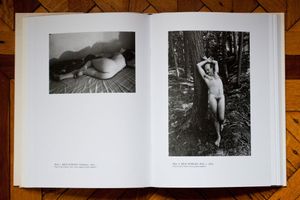
T.S. Eliot observed: 'Immature poets imitate; mature poets steal; bad poets deface what they take, and good poets make it into something better, or at least something different.' A simple truth: we reflect ideas that influence us. What we love-our fixations and our obsessions-all are to be seen in the things we do and can be found in the things we create. History is a repository for those influences and obsessions. In history we clearly see the wreckage and reasoning of bygone eras. But the telling of history is not a static enterprise. History evolves over time to explain the past to a contemporary audience eager to understand the origin of its own obsessions and perceptions. As our influences become codified and embodied in the canons we create, we emphasize ways to comprehend the present by way of reconfiguring the past. Ken Schles examines the photographic work he's made over the last 25 years and recognizes within it a slew of antecedents and influences.
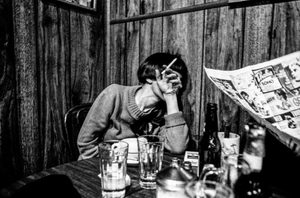
Twenty-five years after the printing of his seminal 1988 book, Invisible City, Ken Schles revisits his archive and fashions a narrative of lost youth: a delirious, peripatetic walk in the evening air of an irretrievable Downtown New York as he saw and experienced it. Night Walk is a substantive and intimate chronicle of New York's last pre-Internet bohemian outpost, a stream of consciousness portrayal that peels back layers of petulance and squalor to find the frisson and striving of a life lived amongst the rubble. Here, Schles embodies the flâneur as Sontag defines it, as a "connoisseur of empathy," "cruising the urban inferno, the voyeuristic stroller who discovers the city as a landscape of voluptuous extremes." We see in Night Walk a new and revelatory Ulysses for the 21st century: a searching tale of wonder and desire, life and love in the dying hulk of a ruined American city.