Hailed by Terry Southern as the "Poet of Radical Photography" Miron Zownir's photographic work has been exhibited in galleries and museums in several countries from 1981 on. Some of his photographs were shown amongst artworks of the likes of Goya, Picasso, Alfred Kubin and Cindy Sherman in the exhibition ‘El salvaie europeo’ (2004) in Barcelona and Valencia.
In autumn 2008 Zownir’s photography was presented by the Fotomuseum Winterthur (CH) along with works of photographers like Robert Mapplethorpe, Man Ray, Nan Goldin, Larry Clark, Andy Warhol, Nobuyoshi Araki and others in DARKSIDE I, an outstanding exhibition which showcased a remarkable collection of photography that is dedicated to images of sexuality as a mostly central part of our existence.
Following Darkside I, the Fotomuseum Winterthur again presented Zownir’s work in Darkside II (2009) exploring the photographed human body as victim of impairment, disease, degeneration, violence and death with works by W. Eugene Smith, Weegee, Robert Capa, Don Mc Cullin and others.
Zownir took up photography in the late 70s during the hey-days of the punk-phenomenon in West- Berlin and London, delivering a tight portrayal of the movement and its peculiar attitude towards life in limbo between a utopian vision of anarchy and nihilistic self-destruction.
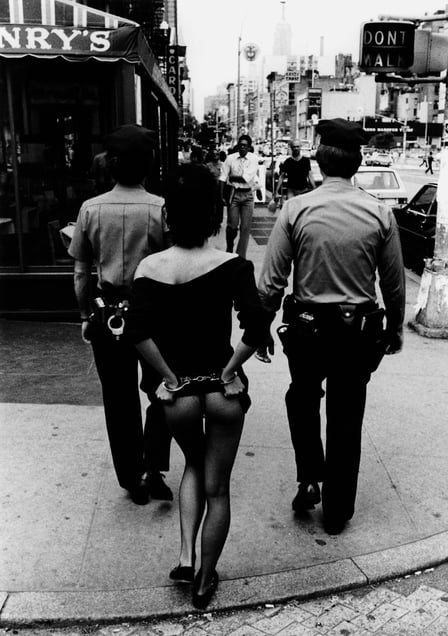
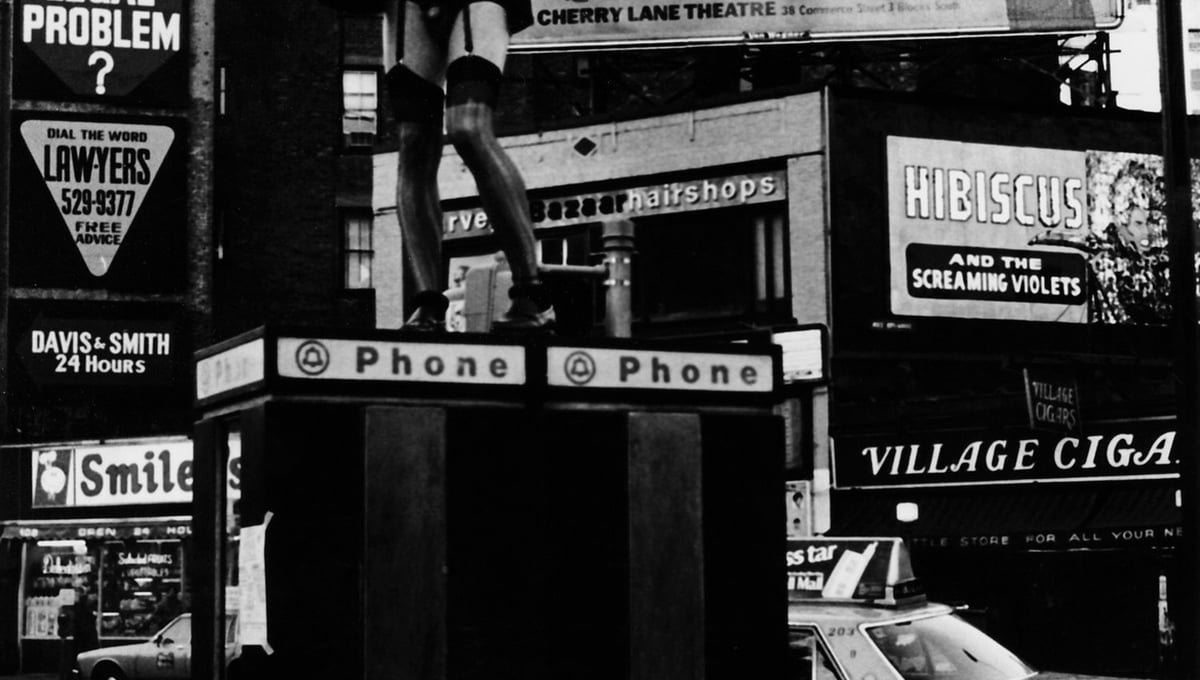
In 1980, Miron Zownir emigrated to the USA, where he lived for the next fifteen years; first in New York, then in Los Angeles, and Pittsburgh. In New York, back then arguably the world's most fascinating and permissive metropolis, Zownir's peculiar approach to cover the city's multiple-layered day-to-day lunacy was quickly recognised by the local scene as the TEUTONIC PHENOMENOGRAPHER (Village Voice). Shot in moody, expressionistic b/w, Zownir's pictures from that period give a penetrating insight to inner-city sub-cultural spheres, which, in their original local context, have since perished in the boom of the 90s. His lens captured the untamed lust at the gay-parties, just shortly before Aids massively claimed its victims; the futile protest of artists and offbeat performers; the hopelessness on the Bowery; the shadowy world of hookers or junkies.
Zownir's photographs of the 'Sex Piers' have become legendary documents by now. The shut-down and dilapidated port area located between the Westside Highway and the Hudson River, with its sunbathing section for nudists and the surrounding 'halls of the anonymous lust', was a popular meeting place among the gay-scene.
Zownir meanwhile has gained the reputation of being one of the most uncompromising contemporary photographers. Some critics claim that Zownir, in his own characteristic manner, ties on where Diane Arbus and Weegee had stopped. But when it comes to the basis of his artistic intention, Miron Zownir would rather point to a quote from Kafka’s ‘The Castle’ then being compared to other photographers: “If one has the strength to look at the things incessantly, more or less without ever closing the eyes, one sees much. But if one lessens the effort only once and closes the eyes, it all immediately vanishes into darkness.”
In summer 1995, Zownir traveled to Russia. Focused on street photography he took pictures of homeless, dying and dead people. According to Zownir, he experienced Moscow as “the most aggressive and dangerous city I’ve ever been to.” Yet even Russian militia couldn’t keep him away from depicting the blatant social and moral decline in the former Soviet Union. Zownir’s images from Russia are bitter and brutal, and highly distressing to view. The human tragic of radical poverty, that they reveal, ultimately climaxes in the utterly undignified act of dying in public. “It was Dante’s inferno,” Zownir would state when he returned to Berlin after three months of a terrifying descend into the lower depths of the Post-Soviet society.
His photographs from Moscow and St. Petersburg had been published among 150 other works from 1979-1997 in RADICAL EYE – THE PHOTOGRAPHY OF MIRON ZOWNIR (Gestalten Verlag, Berlin, 1997).
Zownir’s focus on extreme subjects and extraordinary forms of the human condition continued to be the central motivation of his work. In the ‘Holy Year’ 2000, he went to picture pilgrims in Lourdes and accompanied a fraternity of Christian flagellants in Spain.
Another photo book, THE VALLEY OF THE SHADOW (2010), was again published by Gestalten Verlag . “As in life, there is simply no room for this kind of photography in traditional lifestyle media - or for Miron Zownir’s chosen subjects”, publisher Robert Klanten stated in his preface. “While mainstream photography has thrown off its original reportage mandate to become the vicarious agent of the advertising business – glossy and glam, even in its grittier incarnations – or to supply us with iconic images of historic events, with instant placeholders destined to become part of our collective memories and lore, Miron does not seek out such landmark visions or events, but prefers to hunt down personal obsessions and the inherent existential state of his protagonists.“
In 2012 Zownir received the “Grenzgänger”- grant from the Robert Bosch Foundation, providing the possibility for him and the author and editor of Ukrainian art and literary magazine of social criticism "Prostory" Kateryna Mishchenko to start a photographic research throughout the Ukraine. A project that is called “Okra?na” (Outskirts) and realized in 2012/13.