


Announcing 38 Award-Winning Black & White Photographers!


I was deeply impressed by the emotional depth and technical mastery displayed across the board. From intimate personal stories to bold, conceptual work, the photographers demonstrated the powerful ability of monochrome to evoke timeless narratives. It was inspiring to see how each artist used the medium to explore complex themes and bring unique perspectives to life. ”


picks
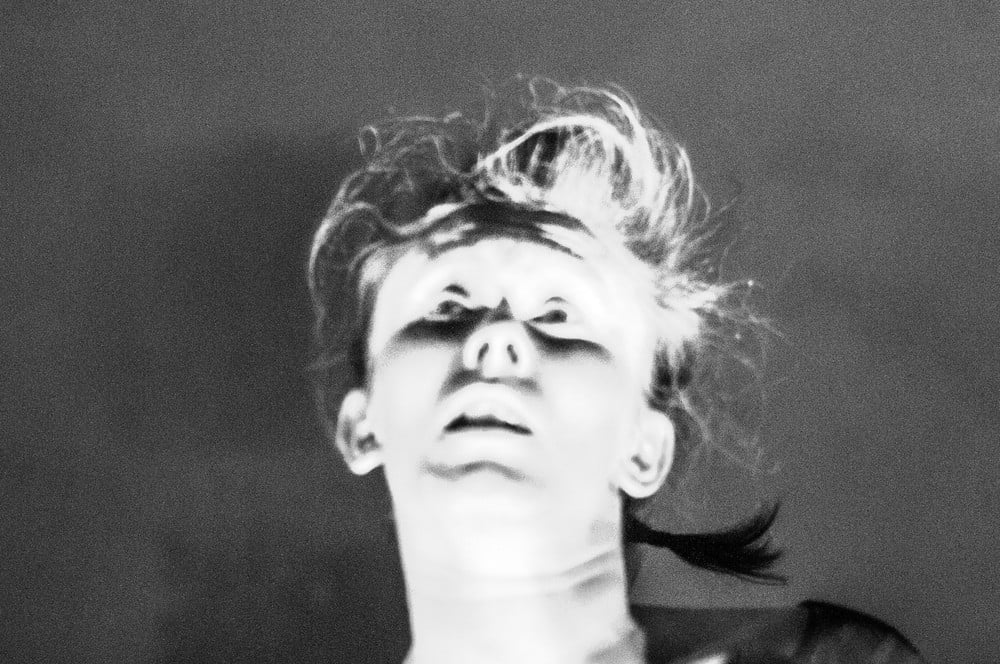
Luiza Kons’ photographs are full of personality, intimacy, humor, and carefree, tender moments. With a snapshot aesthetic, the work comes across as fresh, casual, and real. Kons combines photos that are not bounded by linear storytelling logic, nor are they limited to a specific style of imagery. In fact, it is this jumble of artistic approaches that makes the work feel very real and un-self-conscious. The group of pictures creates a mood and sensibility that feels intimate, random, impromptu and authentic.
In her statement about the project, Kons writes: “The outcome is a chaotic universe bound by strangeness, mistakes, imperfections. In a journey to invent life on our own terms.” Bravo!

Drew Waters' garden is a cultural stage, a theatre where the vices and whims of the bourgeoisie are staged.
A place that narrates the inhabitants of the house and their imagery, the choice of using flash shifts the narrative to a surreal level that allows the viewer to enter deeply into the world of the photographer.

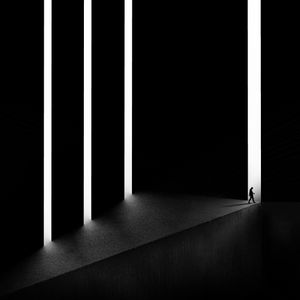
Astrid Verhoef's 'Human/Nature' series is bold and striking, yet lures you in with a sense of curiosity. An anonymous figure (of the artist herself) faces out into a constructed geometric landscape, drawing us towards her own perspective. This gives a sense of who Astrid is as an artist. Working independently, and at scale, to create meticulous still life setups (this is done without AI generated imagery - only basic montages were used when needed), she has balanced each element serenely to create a surreal sense of beauty.

Sangjin Kim is my Juror's pick for his powerful, intimate portrayal of Korean life in Los Angeles. His work offers a nuanced exploration of the complexities of race relations and the struggles of fitting in, while also revealing the communities' internal politics. Kim captures both the beauty and tension of cultural identity in a way that is deeply personal and universally resonant.

Two men. A hand on a shoulder. A gesture.
I feel the touch. I know what it is like when someone else put their hand on my shoulder. Everything in this image floats together in shapes and textures that fit so well. This is two wrestlers? I am surprised. Puzzled. How can a touch from a wrestler be that gentle? This is how I would touch my loved one.
Tell him that I am taking care of him no matter what. This is the image that touched me the most, this is the image that started as a knot in my stomach and finally made me shiver.

Photographers use AI tools for different purposes: idea generators, hybrid incubators, and simple editors. Norberto Pezzotta studies and questions the tool itself and how it shapes our beliefs and ideals. Augmented Reality puts AI, beauty, and humanness under the microscope, highlighting the importance of working outside the tool to maintain our integrity, authenticity, and diversity. In Pezzota’s laboratory-like settings, an experiment is underway that brings together the ever-sharp AI-generated creations, masking the softer presence of the human form, often dissolving, becoming a distant memory. Who makes up the algorithmic ideals that we prescribe to? This work asks us to step back, see the many possibilities of what we find beautiful, and question why.

Richard Cannon’s work effectively merges the personal memories of D-Day veterans with historical context, creating a powerful and moving piece. By overlaying their present-day portraits with archival images from their past experiences, the work transcends time and conveys a universal message. The contrast between the intensity of war and the peaceful demeanor of the veterans today creates a visually striking impact.
Moreover, the use of black-and-white photography plays an essential role in seamlessly connecting the past and present, highlighting the gravity of history while adding an emotional depth to the piece. The monochrome palette eliminates distractions and focuses the viewer's attention on the subject's story, enhancing the overall experience.
The Black & White Photography Awards 2024 reminded me of my first love for photography in my high school darkroom, where my teacher let me in early to start processing—a passion that carried me through college. The range of submissions this year was both inspiring and challenging to evaluate, as making selections can feel deeply personal. I aimed to choose work that invites introspection from a wide range of viewers, highlighting the power of monochrome to distill moments into their purest forms. ”












Our International Jury

Michael Foley opened his eponymous gallery in the fall of 2004 after fourteen years of working with notable photography galleries, including Fraenkel Gallery, Howard Greenberg Gallery, and Yancey Richardson Gallery.
In 2002, Foley continued his interest in educating and working with artists by serving on the faculty of the School of Visual Arts, Fashion Institute of Technology, and International Center of Photography, where he teaches and lectures on contemporary photography issues at the undergraduate and graduate levels.
He joined Leica in 2023 as the Gallery Director of the New York Meatpacking Store & Gallery.
Foley lives in Manhattan with his wife, Maya, and son, Jack.

Mee-Lai Stone is a Picture Editor, Culture for The Guardian. She is part of the international team that selects and produces daily online photography galleries, essays, features and single images to be shared with The Guardian’s global audience of readers.

Jacob Aue Sobol is an award-winning photographer and member of Magnum Photos. He has published several monographs of his unique, expressive style of black-and-white photography and exhibited his work widely. His images focus on the universality of human emotion and the search for love within oftentimes harsh surroundings.
Born in Copenhagen, Denmark in 1976, he has lived in Canada, Greenland and Tokyo, before returning to Denmark in 2008. He has traveled extensively in the years since, photographing in Siberia, Thailand, Mongolia, America, and China while staying based in Copenhagen.
His book "I, Tokyo” was awarded the Leica European Publishers Award in 2008. In 2012 he began photographing along the Trans-Siberian Railroad and spent the next five winters photographing in the remote Russian province of Yakutia for his project "Road of Bones." He has ongoing projects in Denmark ("Home") and the United States ("America").

Born in Cortona in 1981, after years spent taking photographs Antonio decided to turn a dream into a real project; and so, in 2011, Cortona On The Move was born, an international festival of photography and visual narrative created together with a group of friends. In ten years Cortona On The Move has become one of Europe’s most important photography festivals. Antonio is currently deputy director at the Gallerie d'Italia in Turin, situated in Piazza San Carlo: Intesa Sanpaolo's fourth museum alongside those of Milan, Naples and Vicenza. An exhibition space dedicated to photography covering 9,000 m2 in Palazzo Turinetti, right in the heart of Turin.

Kris Graves is an artist and publisher based in New York and California. He is founder of MONOLITH EDITIONS, a Black-owned publishing house dedicated to showcasing work from artists of color across mediums that address issues of race, identity, equity, gender, sexuality, and class.
In his own photography, he uses a mix of conceptual and documentary practices to explore the subtleties of societal power and capitalism, among other important topics.
Graves also sits on the board of Blue Sky Gallery: Oregon Center for the Photographic Arts, Portland; and The Architectural League of New York as Vice President of Photography.

Yumi Goto, an independent curator based in Japan, specializes in comprehensive production, curation, photo editing, publishing, research, consulting, education, and talent development related to photography. Her main interests lie in conflict, contemporary social issues, human rights violations, and women's issues. Yumi has been involved in photography campaigns and publications for humanitarian and human rights organizations, as well as judging, nominations, curation, and production for international photography awards, photo festivals, and events. She also serves as a co-founder and curator for "Reminders Photography Stronghold" (RPS), facilitating versatile activities related to photography. Additionally, she established the “RPS KYOTO PAPEROLES" in 2020 and has been actively involved since then.

Jim Casper is the editor-in-chief of LensCulture, one of the leading online destinations to discover new contemporary photography from around the world. As an active member in the contemporary photography world, Casper loves to meet with photographers and talk about photography. He curates art exhibitions, publishes books, conducts workshops, serves as an international juror, nominates photographers for key awards, and is an advisor to arts and education organizations.
