Jeremy Bentham's Panopticon was, in principle, an architectural form that condensed the ideas of
separation, correction and control of the abnormal. Quoting from M. Foucault's Discipline and
Punish:
"...We know the principle on which it was based: at the periphery, an annular building at the centre, a tower this
tower is pierced with wide windows that open onto the inner side of the ring the peripheric building is divided
into cells, each of which extends the whole width of the building they have two windows, one on the inside,
corresponding to the windows of the tower the other, on the outside, allows the light to cross the cell from one
end to the other..."
This seemingly simple system has ensured that not only prisoners can be seen all at once and each
one apart, but themselves can not see if someone is watching in the main tower:
"….All that is needed, then, is to place a supervisor in a central tower and to shut up in each cell a madman, a
patient, a condemned man, a worker or a schoolboy. By the effect of backlighting, one can observe from the tower,
standing out precisely against the light, the small captive shadows in the cells of the periphery. They are like so
many cages, so many small theatres, in which each actor is alone, perfectly individualized and constantly visible.
He is seen, but he does not see; he is the object of information, never a subject in communication....
….The panoptic system creates space units that allow for uninterrupted surveillance and instant recognition.....”
It was and is the aim of any form of power, whether it establishes itself with consensus or through
fear and violence, to control people. Surveillance serves both. If we take a historical look, we will
find that surveillance was an integral part of the enforcement and has deep roots. From the
theocratic perceptions and the “Eye of God” symbol which sees everything/everywhere even ones
thoughts, up to the modern western and eastern regimes that have invented new and upgraded old
methods, surveillance remains the basic tool for educating and disciplining populations to an
anonymous power. The technological revolution offered even more tools and possibilities, setting a
new ground in the science of control. These technologies knit a net that constantly densifies and
leaves no ground unexploited. More and more, we realize that people's intimate and sensitive
personal data, what we call private sphere, have been violated in all sorts of ways. Our moments are
recorded and turned into “data” within the cyberspace. Perhaps, we are not far from that dystopian
future in which security cameras will scan our biometric points and, by searching their databases,
will allow us (or not) access to a city which will be controlled by a modern, sophisticated
Panoptikon.
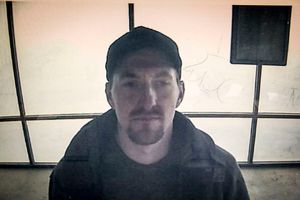
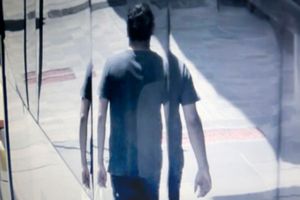
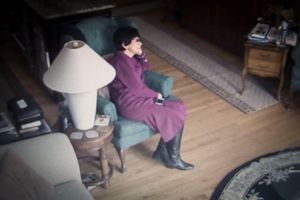
I photographed, from the computer screen, moments of people from all over the world, transmitted
through thousands of cameras connected to the Internet and accessed free by anyone. Besides the
shock and beyond the obvious, to highlight the emerging issue of recording people's moments and
diffuse their image on the Internet without their consent, these pictures have another aspect.
Reversing the surveillance context from which they were excerpted, they highlight people and their
life without local segregations and delicate make-ups. The photos are self-explanatory and
subordinate us to the stories of these unknown people. These snapshots, taken out of the
authenticity of everyday life, demand our interpretation and eventually our identification with their
protagonists. As long as we understand that from these individual stories we can compose a wider
and ecumenical part of the human condition that includes us as well.
All references are from Michel Foucault's “Discipline and Punish”, translated from french by Alan
Sheridan Vintage Books.