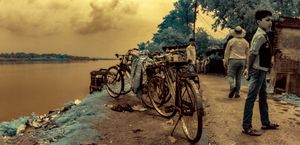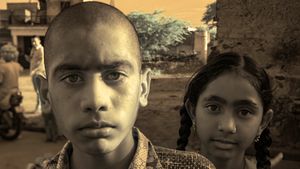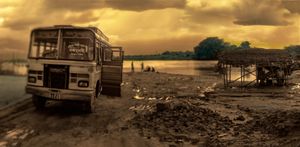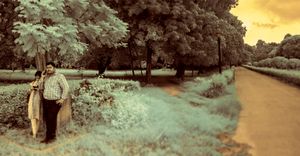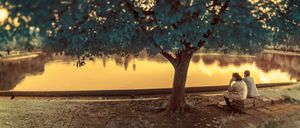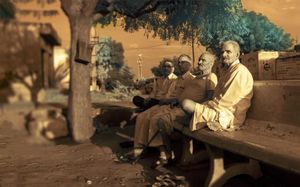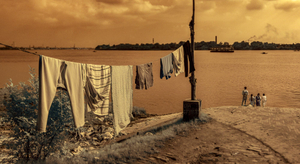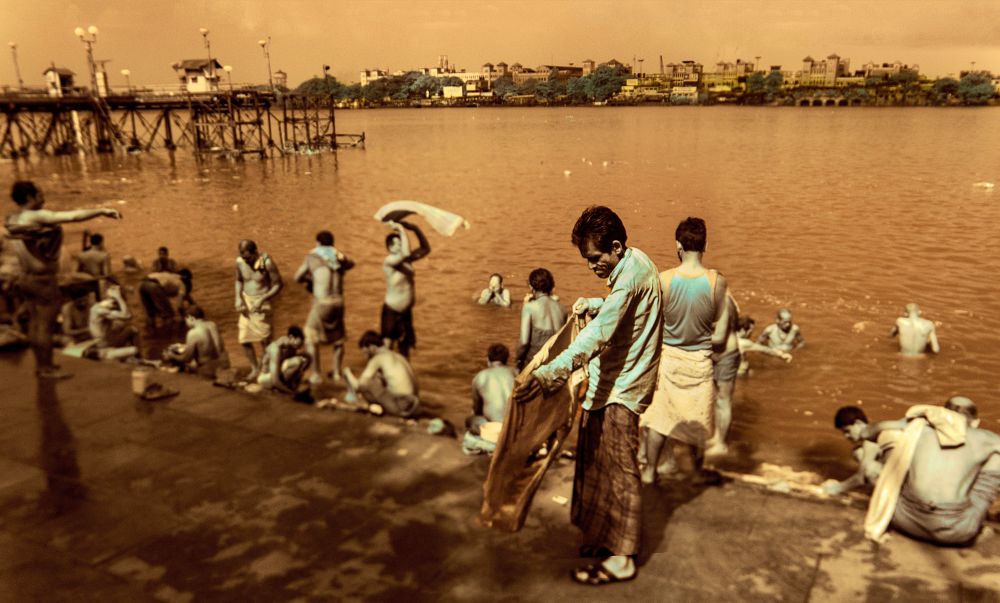
With the series "Infrared India", a mirrorless camera outfitted with a tilt-shift lens and converted to capture infrared light was used to record the dense atmospheric landscapes and intense street life of India. Inspired by early 18th and 19th century landscape paintings of India, each photograph was colorized using Abobe Photoshop.
Infrared light extends from the red edge of the visible light spectrum and is invisible to the human eye, however, specialized photographic film and sensors can record the infrared spectrum. The colors assigned to infrared recordings are referred to as "false color" meaning the colors do not conform to a natural color rendition and are derived from a grayscale mapping of the intensity of the infrared radiation present in the scene. Working counter-intuitively, these recording limitations felt like the perfect match for recording the rich and chaotic colors of India.