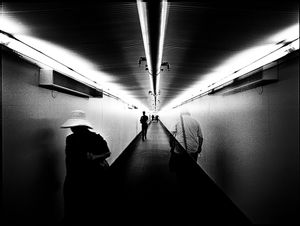
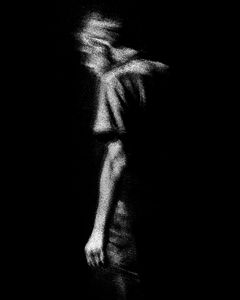
The lens that is used to view a new place is skewed by comparisons to the former place you called home. I will be honest in saying, that I struggled to love this place; I failed to see the poetry in it. I was new to not only a big city, but also to long commutes. And, at the time, I was asking myself a lot of questions about my own choices and also about the quality of life of the people who were traveling with me. It would have been easy for me to tune out. Instead, I used the time to meditate and to take photos. David Alan Harvey, said: “photographers can either look out the window at the world or they can look in the mirror.” I really felt that I was doing both at the same time. The landscapes in my photos became cold and industrial to an extreme, while the characters started to resemble how I was feeling day today. The line, “Why did they make birds so delicate and fine as those sea swallows when the ocean can be so cruel,” from Hemingway’s The Old Man and the Sea, used to run through my mind as I’d watch people struggling with their daily routines – tired, exhausted, and disconnected, the landscape becoming the only permanence in the day to day scenes.
I feel incredibly lucky to have arrived in this country when I did. I genuinely worry about Sydney and the future for those who will call it home. Many of my photos are abstractions of my personal subjective view of what I see - the impermanence of our existence in this space and time and the struggles of those trying to cope. My photos have changed in the decade that I have been working on this project, from fellow commuters to those now passing me by. My lens has changed as well, no longer considering myself a foreigner. Many of my photos are abstracts and represent my own subjective views. Others are portraits of the people occupying this space and time. Either way, I hope they are more questions than answers about how we are living and where we are heading.