"This Place Looks Like a Paradise; This is Paradise"
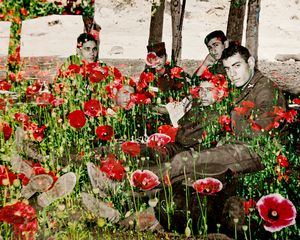
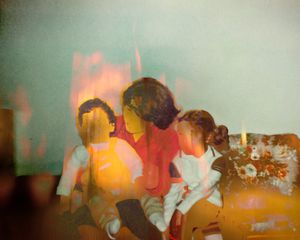
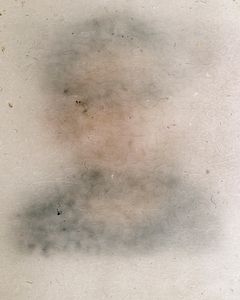
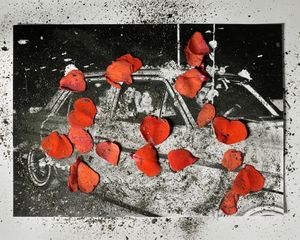
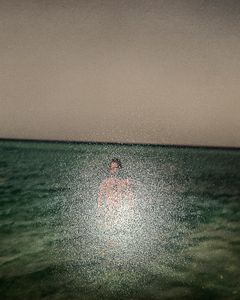
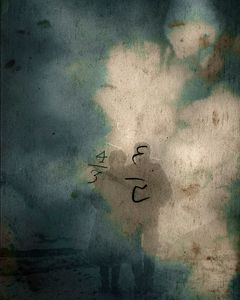
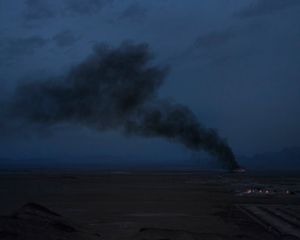
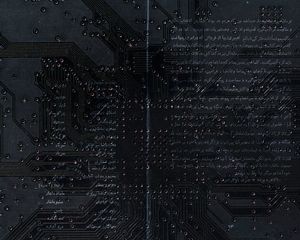
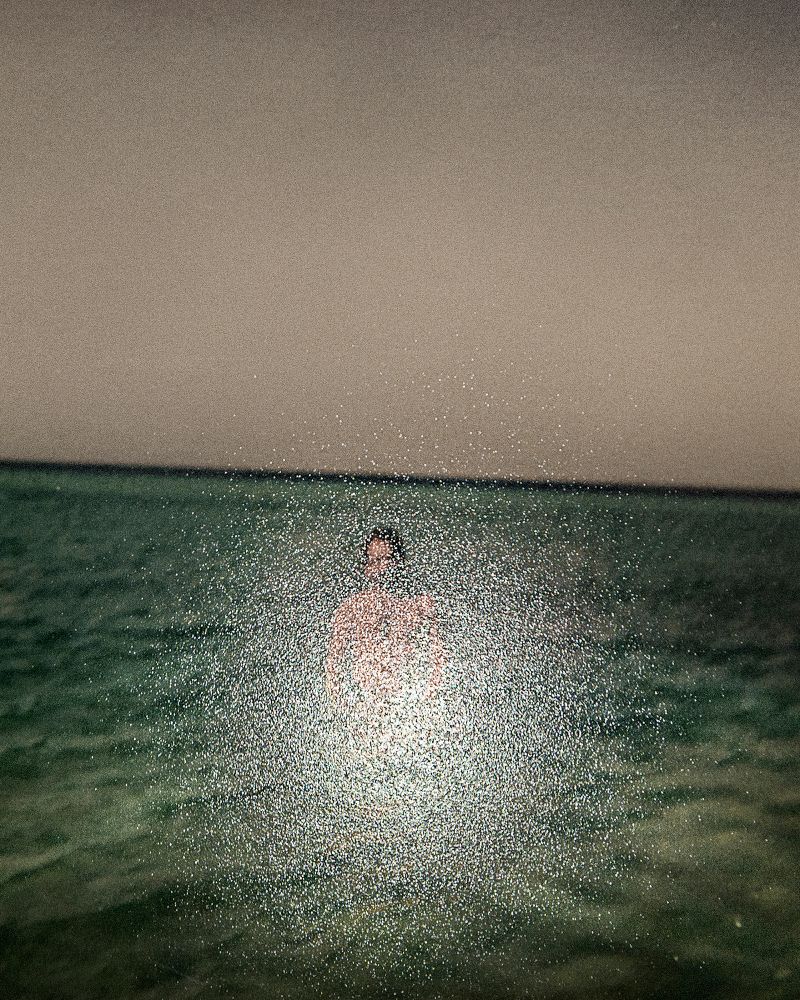
"This Place Looks Like a Paradise; This is Paradise" When a father dies before his time, he remains for his son an eternal shadow, and an unstable memory that fades. The unresolved tension between remembering and forgetting keeps constant company with the present. My obsession with remained photograph of my father, and with the reality that one never fully knows one’s parents, led me to this project: “This Place Looks Like a Paradise; This is Paradise.” A quote extracted from found family footage. I selected my family archive taken before and after Islamic revolution in Iran as a starting point. The era that fear and anxiety experienced by society was acute. I integrate my personal photographs with remained archive in relation to examine the nature of the photographic medium, particularly that of personal and family archive related to history, memory and records. I found traces from missing that intentionally ripped off, my father’s mystical phonebook which I proceeded to call each person listed in it and a play by Brecht which he played a role to support the activist and director who later got arrested and executed few years after the revolution. I chose photos taken in this particular time frame because of distinct imbalance between what the photograph depicts on the surface and memories of bitterness he had been hiding for years to protect his family. To create this work, those disappearing moments were tangible and unique resources to build an elliptical narrative. I re-discover and interpret his life by looking closely to available archives. I am making this work based on true story that has happened for different nations, often after revolutions. Just before my father’s death, he woke from a dream and spoke a few words to me, but I struggle to recall what he said. Since that time, I have been pre-occupied with imagining his last dream. I search through fragments of personal and family archives, moments that emerge from thinness an banality of one’s trace. I travel the roads we drove when I was young. I visit the places where he was photographed, strong and alive. A photograph can be a tool we use to remember a face, a place once understood and there is always something melancholic about a photograph with which by the act of layering and reproducing images I reinforce that quality. These photographs demand the viewers to see not with presumptions of family photograph but as constructed pictures and how does self-censorship affect our memory and personal history? I seek to reveal the most distant place to explore idiosyncratic forms of memory. The subject is disappearance; its permanence and totality. I cannot find my father, a man who loved the ocean, a man who feared the ocean.
No categories selected
Photos (10)