Matière Numérique (Horizons Domestiques)
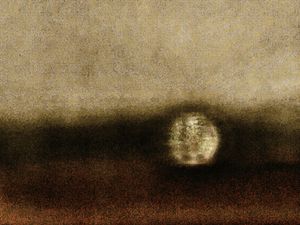
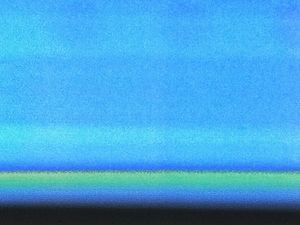
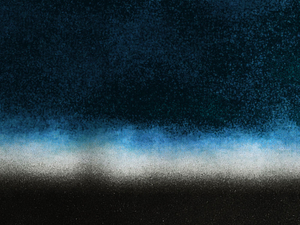
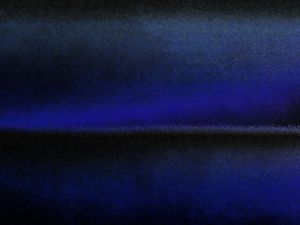
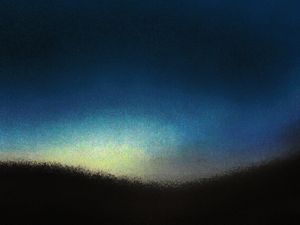
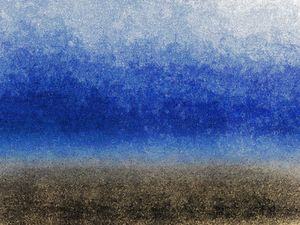
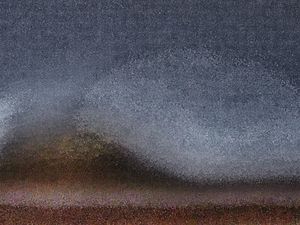
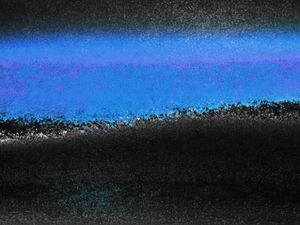
FR Mon étude de la Matière Numérique commence en 2011. C'est à ce moment-là que j'ai débuté l'exploration du potentiel photographique et poétique du processus de prise de vue numérique, indépendamment du réel photographié. Cette recherche s'inscrit dans la suite de ma longue pratique de la photographie argentique (dès le milieu des années 1980), de la photographie de synthèse (dès la fin des années 1990) et de la photographie numérique (dès le début des années 2000). Avec cette étude, je prends le contrepieds de la photographie hyperréaliste qui tend à rendre le réel fantastique, idéalisé, à le faire paraitre plus réel qu'il n'est, plus présent même que n'est la réalité. En effet, le développement technologique actuel de la photographie et des outils de post-production vise à masquer les «défauts» de la réalité photographiée afin d'en augmenter sa valeur esthétique fantasmée. Cette tendance va de paire avec la volonté de faire disparaitre la matérialité du processus de prise de vue pour ne plus voir ni flare, ni pixel, ni artefact algorithmique sur les images. Pourtant, de cette réalité matérielle (optique et capteur) et logicielle (algorithmes), de cette «matière numérique», peut surgir une photographie abstraite et poétique où ni le lieu, ni la date ne sont importants. Seule compte la diversité des émotions provoquées par ce nouvel imaginaire photographique car, oui, mes images sont encore de la photographie, bien que leur esthétique se rapproche de l’impressionnisme et, plus particulièrement, du pointillisme picturale. En fait, techniquement, ce sont de simples captures d'une réalité quelconque prises d'un point de vue très rapproché avec un smartphone, une mise au point à l'infini et un zoom numérique, ainsi que, parfois, une double exposition; la post-production se résumant à quelques réglages de luminosité, contraste et colorimétrie, sans adjonction de filtre artificiel. Ce processus photographique fait ainsi appel à l'imaginaire afin de reconstruire, pour chaque image, avec chaque émotion ressentie, un lieu et un moment car, du réel, je ne retiens qu’un schéma, un fantôme, une ossature. Ce qui est vu n'a plus de lien avec le réel photographié, mais seulement avec l'imagination du spectateur, avec ses propres paysages intérieurs, ses «horizons domestiques». Ainsi, mes Horizons Domestiques n’appartiennent plus à un réel qui aurait été, mais à la matière-même du procédé photographique. Mon travail est alors une simple tentative poétique de libérer et rendre visible les paysages déjà contenus dans l’«émulsion» du capteur, dans sa matière numérique, à l'image du sculpteur qui révèle la forme déjà contenue dans le bloc de marbre brut. EN My investigation of Digital Matter began in 2011. It was at this point that I started to explore the photographic and poetic potential of the digital photography process, regardless of the reality photographed. This research is part of my long practice of analog photography (since mid-1980s), of synthesis photography (since late 1990s), and of digital photography (since early 2000s). With this investigation, I take the opposite of hyperrealist photography which tends to make the real fantastic, idealized, to make it seem more real than it is, more present even than is the reality. It's true that the current technological development of photography and post-production tools aim to hide the "defects" of the photographed reality in order to increase its aesthetic value fantasized. This trend goes hand in hand with the desire to make disappear the materiality of the process of shooting to no longer see neither flare, nor pixel, nor algorithmic artifact on the images. However, from this material reality (lens and sensor) and software (algorithms), from this "digital matter", an abstract and poetic photograph where neither the place nor the date is important can appear. Only the diversity of the emotions provoked by this new photographic imagination counts, because, yes, my images are still photography, although their aesthetics is close to the impressionism and, more particularly, the pictorial pointillism. In fact, technically, they are simple captures of a reality taken from a very close point of view with a smartphone, an infinite focus and a digital zoom, as well as, sometimes, a double exposure; the post-production is summed up to a few adjustments of brightness, contrast and colorimetry, without additional artificial filter. This photographic process thus calls upon the imaginary to reconstruct, for each image, with each felt emotion, a place and a moment because I retain only a schema, a ghost, a frame, from reality. What is seen has no connection with the reality photographed, but only with the viewer's imagination, with its own interior landscapes, its "domestic horizons". Hence, my Domestic Horizons are no longer part of a reality that would have been, but of the matter itself of the photographic process. My work is then a simple poetic attempt to release and make visible the landscapes already contained in the "emulsion" of the sensor, in its digital matter, like the sculptor who reveals the shape already contained in the block of raw marble.
No categories selected
Photos (10)