Partisans: There was no time for fear

Photos (31)
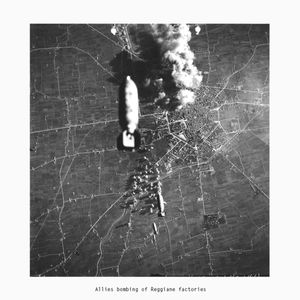
American bombing of the Officine Reggiane in Reggio Emilia. The Officine Reggiane were a key factory for the production of military aircrafts.
File: as_resist-1.jpg
American bombing of the Officine Reggiane in Reggio Emilia. The Officine Reggiane were a key factory for the production of military aircrafts.
File: as_resist-2.jpg
American bombing of the Officine Reggiane in Reggio Emilia. The Officine Reggiane were a key factory for the production of military aircrafts.
File: as_resist-3.jpg
Cover
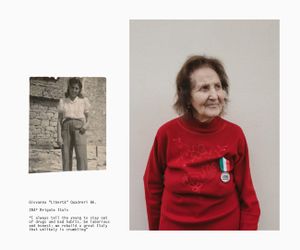
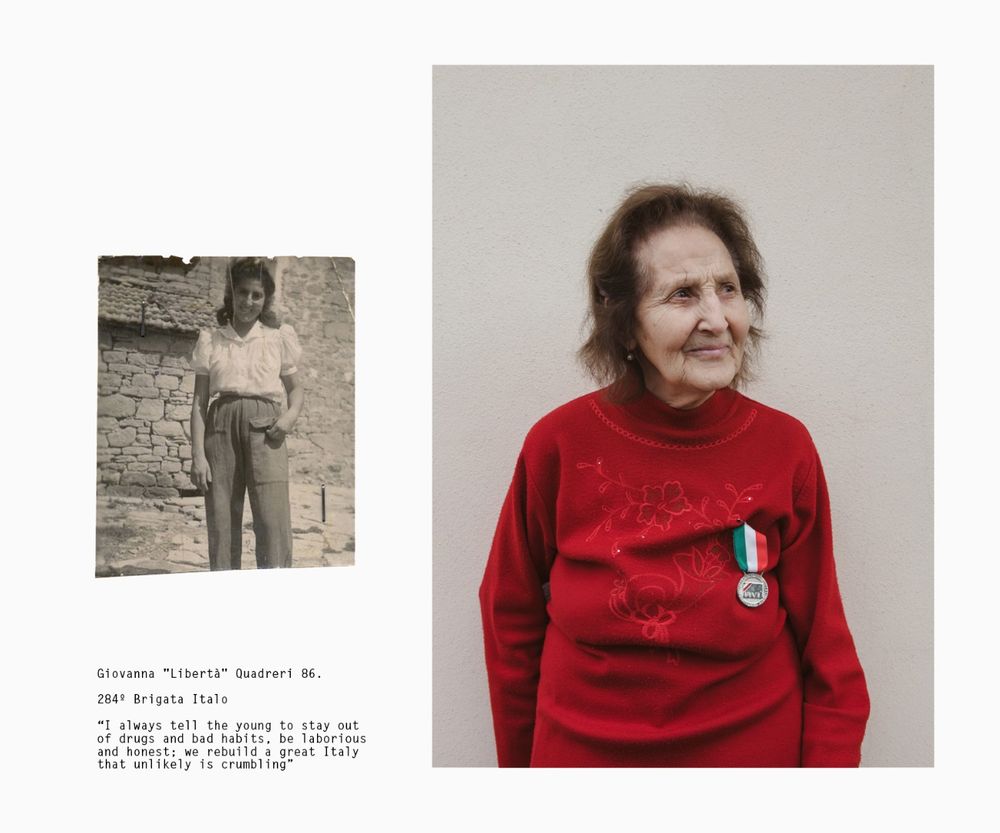
Giovanna Quadreri, 86 years old. Nome de guerre: Liberta’, Giorgio. Giovanna was a so called “staffetta partigiana”. She was responsible of delivering important messages to the troops, travelling daily from the town of Reggio Emilia till the villages in the nearby mountains. Giovanna has also collaborated with British forces in many operations, especially close to the day of Italy liberation.
File: as_resist-4.jpg
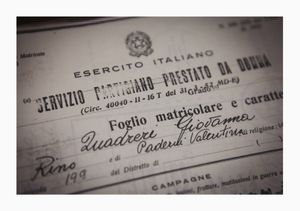
Giovanna’s official document which testifies that she served as a Partisan during the liberation war.
File: as_resist-5.jpg
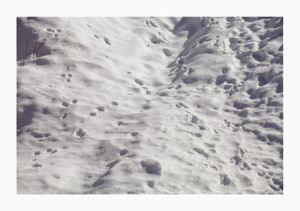
A mountain path covered with snow nearby Lama Golese (Febbio, ReggioEmilia). Lama Golese is a pick where the first partisans troops trained and received supplies by the Allies. Most battles between the resistance and the Axis forces, took part in the Tuscan-Emilian Appenine, the mountain range situated between Tuscany and Emilia-Romagna.
File: as_resist-6.jpg
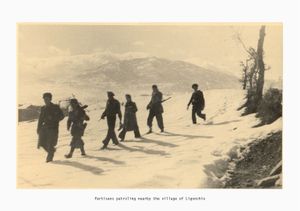
Partisans patrol the area nearby the powerhouse of Ligonchio (Reggio Emilia).  Most battles between the resistance and the Axis forces, took part in the Tuscan-Emilian Appenine, the mountain range situated between Tuscany and Emilia-Romagna. Fototeca Istoreco, Reggio Emilia
File: as_resist-7.jpg
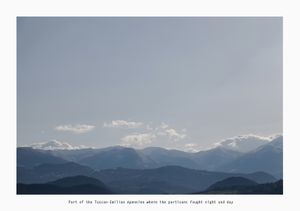
A panorama of the Tuscan-Emilian Apennines nearby the town of Castelnovo Ne’ Monti. ).  Most battles between the resistance and the Axis forces, took part in the Tuscan-Emilian Apennine, the mountain range situated between Tuscany and Emilia-Romagna.
File: as_resist-8.jpg
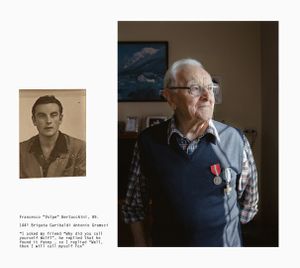
Francesco Bertacchini, 89 years old. 144º Brigata Garibaldi Antonio Gramsci. Nome de guerre: Volpe. Francesco has actively participated at the resistance, fighting in the mountains between Parma and Reggio Emilia. He also very clearly remembers all the parties he tried to set up, but which were ceased by the fascist officers.
File: as_resist-12.jpg
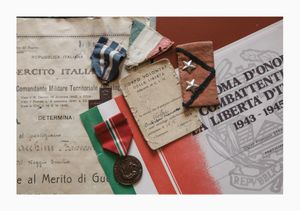
Francesco’s medals and documents, memorabilia from his service as a partisan during the second world war.
File: as_resist-13.jpg
Gathering of Nazi-fascists officers in Piazza della Vittoria on the 28th of October 1944.
File: as_resist-10.jpg
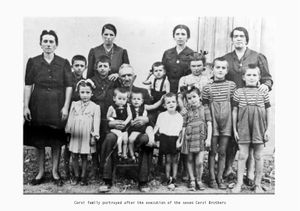
A photograph of the Cervi family before the execution of its seven brothers: Gelindo, Antenore, Aldo, Ferdinando, Agostino, Ovidio ed Ettore. The  Cervi brothers have been a symbol of social justice and freedom; just after taking part in the resistance, they have been taken prisoners and later all executed by fascist officers on the 28/12/1943.
File: as_resist-15.jpg
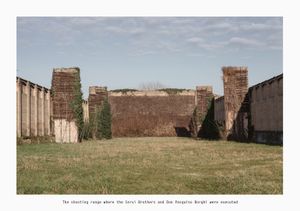
The shooting range situated in Reggio Emilia, where the Cervi brothers were executed on 28th December 1943, and also Don Pasquino Borghi “Albertario” on the 30th January 1944.
File: as_resist-16.jpg
A photograph that shows the remaining members of the Cervi family, after the execution of the seven brothers (28th December 1943).
File: as_resist-17.jpg
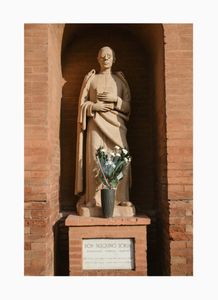
Don Pasquino Borghi “Albertario” was a heroic priest and partisan, awarded with the gold medal for military valour. Meanwhile practising his religious vote in the areas of Reggio Emilia, took part in the resistance just after the signing of the Armistice. Don Pasquino Borghi was executed by fascist officers at Reggio Emilia shooting range exactly where the Cervi brothers were killed a year ago.
File: as_resist-19.jpg
A statue of Don Pasquino Borghi in the rear of the church of Canolo (Reggio Emilia), where he practiced.
File: as_resist-18.jpg
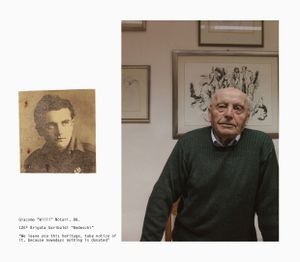
Giacomo Notari, 88 years old. Nome de guerre: Willi. Giacomo became a partisan at the early age of 17, taking part in the resistance in 1944, by joining the 126º Brigata Garibaldi. Having growing up in the villages of the Tuscan-Emilian Apennine, he had a great knowledge of the mountains and so was a great resource for the troop. Giacomo has now completed his autobiography.
File: as_resist-22.jpg
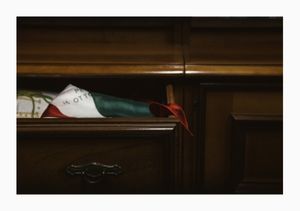
An Italian flag in the drawer of an ex partisan.
File: as_resist-23.jpg
The ruins of Fossoli Camp, nearby Carpi (Reggio Emilia). The camp of Fossoli was build initially in order to be a prison camp for British, South Africans and New Zeeland’s prisoners, captured in the military operations in North Africa. After the 8th September, the camp managed by Fascists and Nazi personnel became a deportation camp for Italian Jews and political prisoners.
File: as_resist-24.jpg
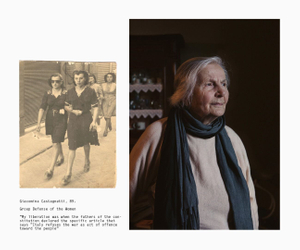
Giacomina Castagnetti, 89 years old. Group Defense of the Women. Giacomina grew up with the value of antifascism, thanks her family and especially his brother, an activist against the fascist regime. Giacomina joined the resistance as a “staffetta partigiana”, and was responsible of communicating with the families and the partisan forces in the plain of Reggio Emilia, often bringing food and guns.
File: as_resist-25.jpg
Giacomina shows the tricolour flag of the Repubblica Cispadana which was given to her as a gift; this flag symbolises the origin of the first Italian republic and its flag.
File: as_resist-26.jpg
First airborne supplies from the Allies aimed to support the partisan troops, in the mountains nearby Reggio Emilia.
File: as_resist-27.jpg
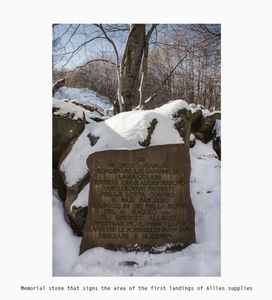
Memorial stone which signs the pick of Lama Golese, where the first partisan troops trained for the liberation war, and the Allies parachuted the first supplies to the partisans brigades.
File: as_resist-28.jpg
Allied supplies parachuted to the partisan forces.
File: as_resist-29.jpg
Bruno Valcavi, 90 years old. Nome de guerre: Kira. Bruno was on his early 20s when he joined the first partisan forces nearby the mountains of Reggio Emilia. He escaped from his military service as a Carabiniere, to join the resistance just after the Armistice. After the war he encountered several occupations alongside his main occupation as mayor of the town of Carpineti (Reggio Emilia).
File: as_resist-30.jpg
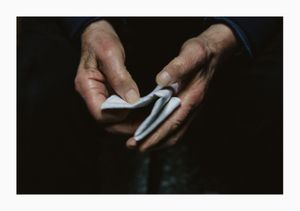
Bruno’s hands while talking trough his stories as a partisan in the mountains nearby Reggio Emilia.
File: as_resist-31.jpg
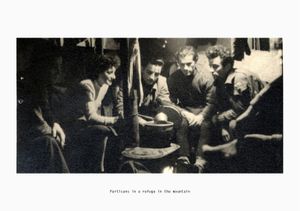
A night scene of a group of partisans in a refuge in the mountains.
File: as_resist-32.jpg
Nocturne panorama of Tuscan-Emilian Apennine, nearby the town of Marola (Reggio Emilia).
File: as_resist-33.jpg
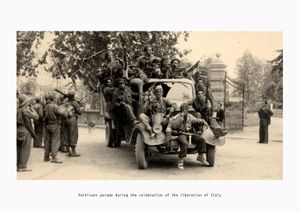
Partisan troops on a parade trough the streets of Reggio Emilia, during the 25th April 1945, the day that signs the liberation of Italy.
File: as_resist-34.jpg
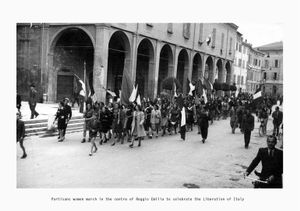
A group of partisan women on a parade trough the centre of Reggio Emilia, celebrating the liberation of Italy.
File: as_resist-35.jpg
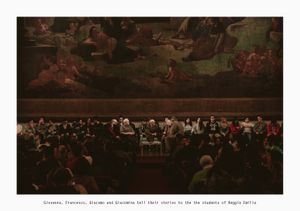
Giovanna, Francesco, Giacomo and Giacomina meet the students of Reggio Emilia to discuss their stories from the liberation war. The young students meet annually at Teatro Valli in Reggio Emilia, before their annual guided tour at Auschwitz Birkenau concentration camp.
File: as_resist-36.jpg