In Silence and In Sorrow

Photos (14)

Cover
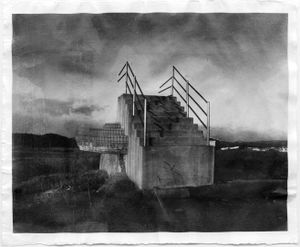
Minami-souma City. People used to come through fields and a small pine tree forest and up and down these stairways and reached the beach. Now it is hard even to climb up onto the first step, and after few more steps, I am already at a loss.
File: washi_fin_01.jpg
Iitate Village. The village is located about 40 km northwest of the exploded nuclear power plant, but the radioactive particles were carried by wind and fell all over the village. All the villagers had to evacuate and they are still living in temporary houses.
File: washi_fin_0203.jpg
Namie Town. Even after 2 years had passed, the ship remained ashore, tilting and heading for mountains. It is not a surprise that debris clearing work was not started, for this is within 10 km from the exploded nuclear power plant.
File: washi_fin_0303.jpg
Namie Town. When people had to evacuate, animals were left behind. The owners expected that they would come back soon, but they could not (and still cannot), and the cattle starved to dearth. After being exposed to radiation inside and out, they are now returning to the soil without any voice, and what is rejected by the nature remains there.
File: washi_fin_05.jpg
Naraha Town. Sunflowers with fairly strange shapes. A local resident (an evacuee who came to visit his ancestors' grave) approached me and said that this had not been found before, indicating there might be an influence from the nuclear power plant accident. In fact, scientists have found some abnormalities in plants and insects.
File: washi_fin_06.jpg
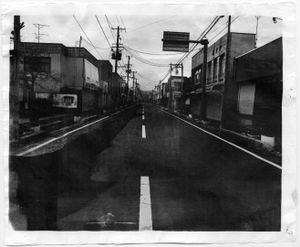
Minami-souma City. This used to be the busiest shopping street in the town. Cheerful music for crime prevention sounded particularly loud.
File: washi_fin_08.jpg
Namie Town. About 10 km from the exploded nuclear power station. Also affected by the earthquake and tsunami.
File: washi_fin_07.jpg
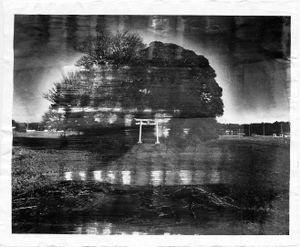
Naraha Town. When I started to visit the coastal areas of Fukushima, I was impressed by the fact that local religion plays a very important role in people's daily lives. Each community has its own shrine and the shrine is a symbol of the community unity and resilience. But now this shrine has lost its community to protect and just stands still.
File: 1396_074.jpg
Minami-souma City. Water gate, broken but standing still by a former rice field. Almost covered with silver grasses.
File: 1396_073_02.jpg
Futaba Town.  No-go zone. 2 of the 6 reactor units are located here. As the town was a needy area, it accepted the offer from TEPCO about 50 years ago and developed since then almost totally depending on the nuclear power industry.This is the gate of the main street. The phrase says "Nuclear Power, Energy for Bright Future." This slogan was proposed by a then-10-year-old boy.
File: 1396_069.jpg
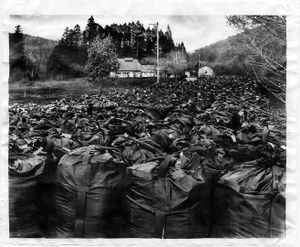
IItate Village. This village was known as one of the most beautiful villages at home and abroad. I just lose words to see the current sight of the village., filled with black plastic bags with contaminated wastes.  I hear the land groaning without voice.
File: 1396_067_01.jpg
Date City. Abandoned kaki-persimmons. This city is famous for kaki-persimmons, but the shipment is restricted. Even when they are tested and proved to be no problem, consumers hesitate to buy.
File: 1396_070.jpg
Minami-souma City. It is getting more and more difficult to imagine what used to be here. Without anything blocking, wind blows from all directions to all directions.
File: washi_fin_09.jpg
Minami-souma City. This gracefully-shaped old cherry tree seems to guard the community's cemetery on behalf of the residents who were forced to evacuate.
File: washi_fin_10.jpg