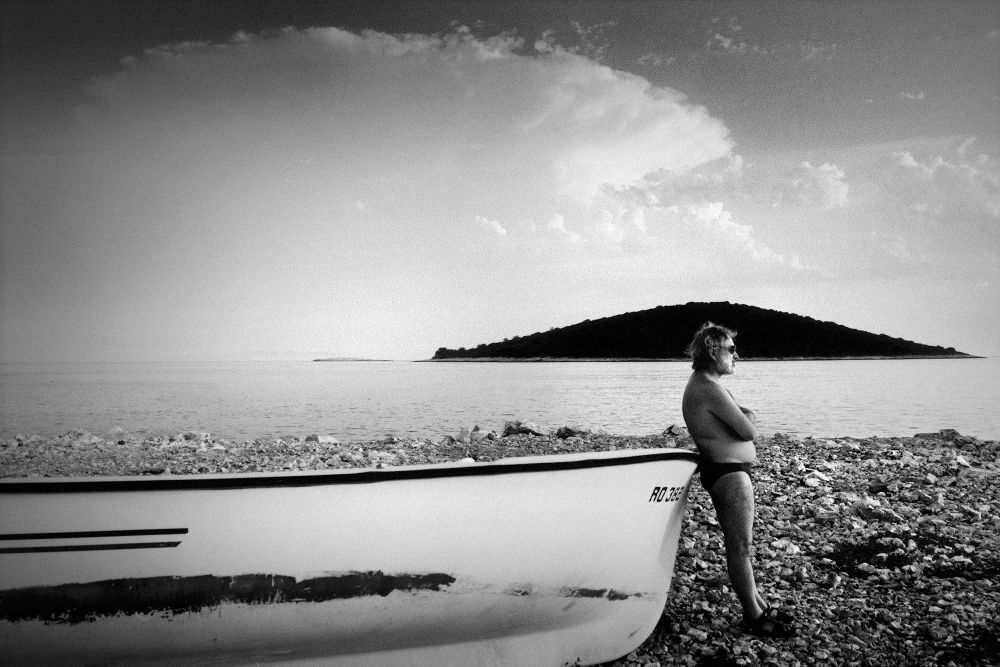
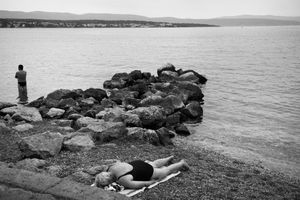
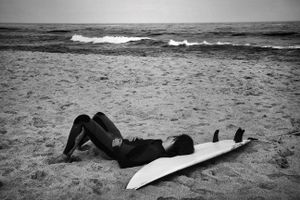
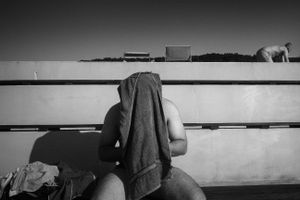
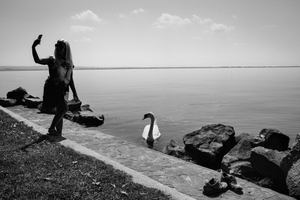
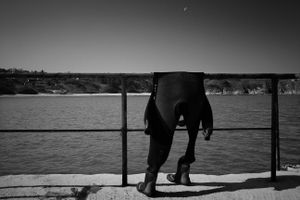
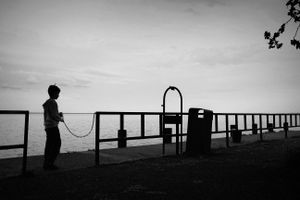
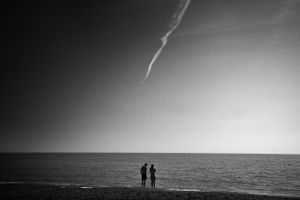
In recent years I have taken several pictures in holiday resorts after the end of the main season but before the start of the low season. I consider the low season a hoary old chestnut, its depiction is popular among amateur and professional photographers – it is a softball that can be served impressively –, while ordinary people only take after-images, boring and uninteresting to outsiders, during their holidays.
However, there is hardly any serious, extensive photographic material on the in-between period stretching between the two.
I photograph the calm surrounding this transition, the potential power of waiting and the visually rich metamorphoses of summer resorts. In my series I accent the hidden visage of holiday resorts and the presence of the people spending time there; I capture the process of reaching the low season’s undead state.
By visually introducing the diverse episodes between the two end points I allude to the strange and in many ways fertile periods of our lives that, in my opinion, are rather tied to the concepts of crisis and change than to decay.
Crisis is also anticipation. (A situation very familiar to those practicing photography!) Our holidays are often the scenes where latent crises resurface, fields offering strategies for resolution. We tend to dedicate time for our well-planned relaxation that is heedfully separated from ordinary weekdays but these are rarely accompanied by relevant change.
The pictures of my series are about situations where people are looking for alternatives for moving on, survival, processing past events.
We can draw strength from a crisis but meanwhile, melancholy undoubtedly appears too. That of the final lack. That of hopelessness. Living through crisis means we exploited our possibilities; that we cannot, dare not search for new ones; we need a trauma, a push, a situation seemingly beyond repair that is out of our control to unsettle us, thrust us out of our comfort zone to rediscover ourselves. Crisis is the sunny side where we’re left alone.