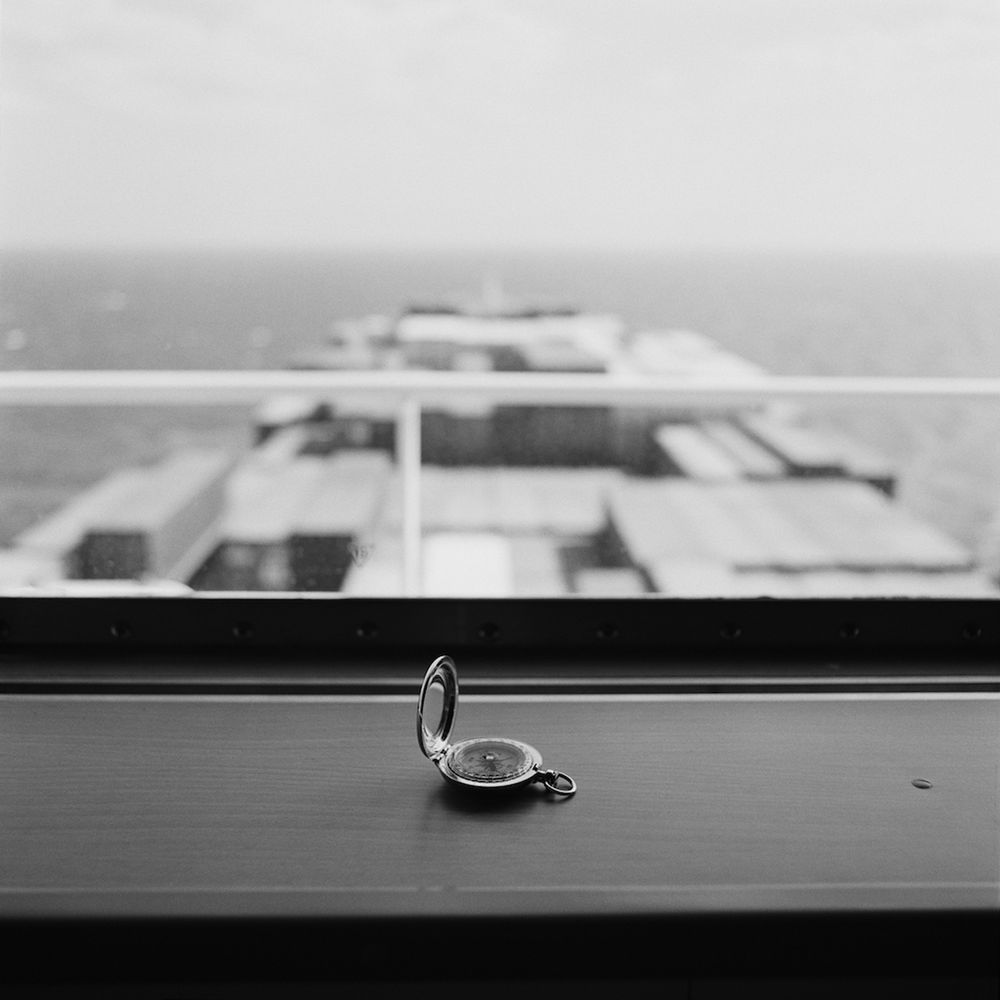
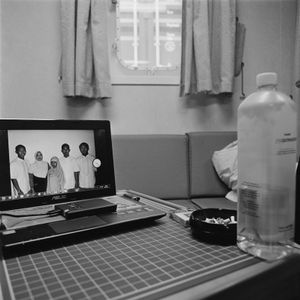
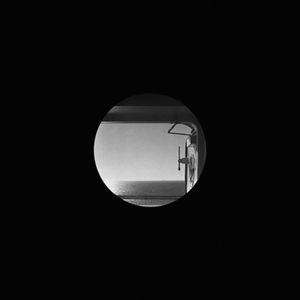
The project is developed inside the cargo vessels of the major shipping companies operating in the Mediterranean sea, exploring inside the new travelling "house" of the sailor and its "link" with the house on the earth, with connections also to the anthropology of the domestic things.
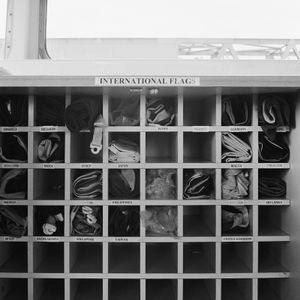
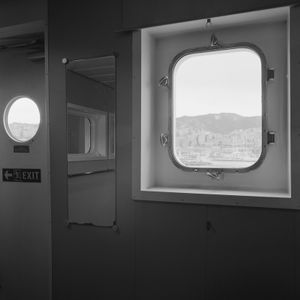
A four-year journey, the exploration of cargo ships of different nationalities, direct participation in the journey: interiors, objects, small totems hidden in the cabins, on the bedside tables, abandoned on the beds. Massimiliano Camellini, starting from the literary prompt of Novecento by Italian writer Alessandro Baricco (which inspired the film The legend of the pianist on the ocean by Giuseppe Tornatore) enters these small city states, platforms in continuous movement that have their own internal rules, different from the mainland.
This way, he focuses attention on the spaces of work and rest, on the everyday life of gestures, completely eliminating the human figure, perhaps not necessary for the narrative plot. Obvious traces still remain, food on the tables, a smartphone resting on the sill, passports, an unmade bed, a prayer attached to the wall. A daily routine made even more evident by the emptiness, by the simple clues left in the field, by those elements capable of reconstructing an idea of living space, of home, of stability sought and obtained.
Moreover, AL DI LÀ DELL'ACQUA is the Italian translation of the Haitian expression LÒT BÒ DLO: the meaning is "to the other side of the water", and was used when they talked about America or France. It can also be regarded as a figure of speech telling a vocation of any individual who, living on the earth or sea, is looking towards new worlds, other meanings, different answers. The house of people living on the islands or on board of vessels has always a link with another space and a glance into ... ∞