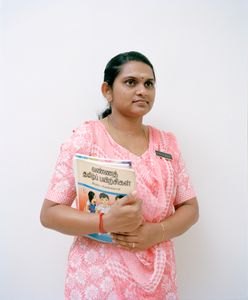
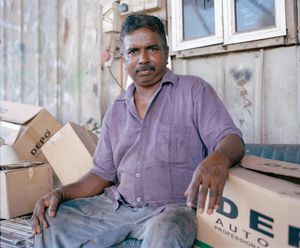
In 1877, Hevea Brasiliensis or Para rubber seeds were introduced to Malaya by British colonists via the Royal Botanical Gardens in Kew, London. These seeds commenced the British Empire’s dominance in the rubber industry between the late nineteenth century and mid twentieth century. During this period, the high demand for workforce in rubber plantations prompted the largest migration of Indian laborers into the Malay Peninsula. After Malaya’s independence from the British in 1957 and the formation of Malaysia in 1963, the British way of systematically cultivating and commodifying natural rubber are still practiced in post-colonial Malaysia. Most of the migrant Indian laborers remained in the country and adopted an identity influenced by colonial culture and systems that are still deeply rooted in modern Malaysia.
‘Skeletons of Empire’ visually portrays the outcome of the British Empire commodifying natural resource as a capital. It investigates the skeletal structure of proven methods and systems left behind by the British Empire which made natural rubber a crucial industrial commodity in post-colonial Malaysia. The work illustrates the traces of British imperial influence in shaping a former colonial territory’s economy and reality through the impact of systematic plantation and man-made landscapes moulded by former imperial industries.
‘Skeletons of Empire’ also explores the migrant Indian community that remained in Malaysia as a result of British colonisation by way of commodifying natural rubber. It portrays the enduring remnants and influence of British Imperialism and its ramifications in creating the Indian diaspora existing in post-colonial Malaysia. By depicting the lived experience and identity of this community, the work visualises the effects of colonial sociocultural systems infused with the ancestral heritage of former imperial subjects.