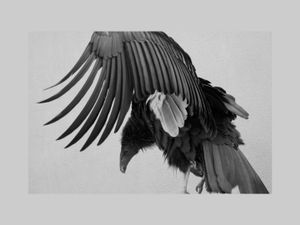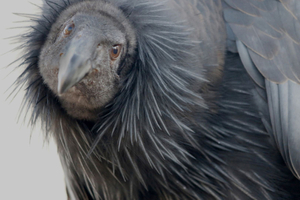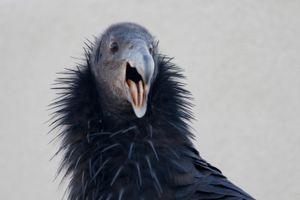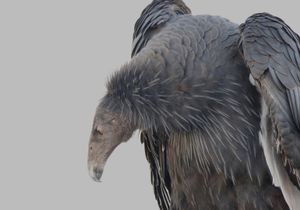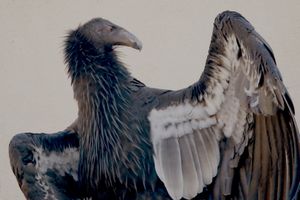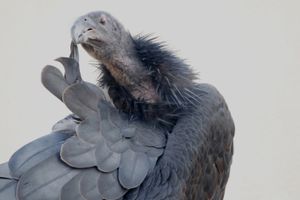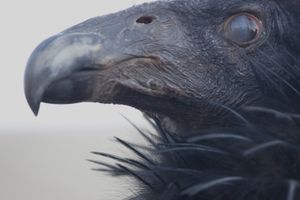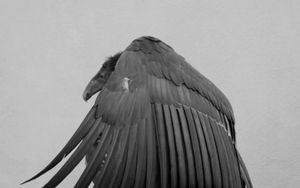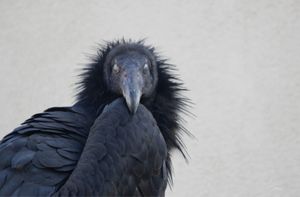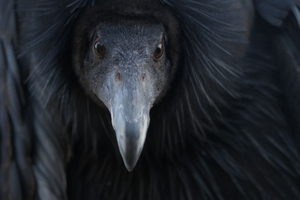
This young 3-year-old condor is part of an ongoing effort to halt the extinction of the California Condor. Dolly has a broken wing so cannot live in the wild. What I hope to portray with these images of this glorious bird are the many elements of her personality: She is young, fierce, inquisitive, majestic, vulnerable, injured, touching, innocent and a marvel of nature. Protecting her and her species is vital.
As with other vultures, they are nature's housekeepers, cleaning up those remains that can cause disease, a vital ecological participant. Lead poisoning from spent ammunition is the number one cause of death among endangered condors.
The California condor (Gymnogyps californianus) is the largest bird in North America, with a wingspan said to reach 10 feet and once dominated the western skies. Condors can soar to heights of 15,000 feet and may travel up to 150 miles a day in search of their next meal. They do not have a good sense of smell, so they find their food mostly by their keen eyesight.
Condors produce very few young - one egg per clutch - and provide an extensive amount of parental care. The chick learns to fly when they are about 6 months old but will stay with the parents for many more months.
By 1985 the entire wild known population had been reduced to just nine birds. The last of the free-flying condors were taken into captivity in 1987 in order to save the species from extinction. Today, there are more than 400 condors in the world, with more than 230 flying high in the wild. As they continue to recover, these birds still face many threats from humans.