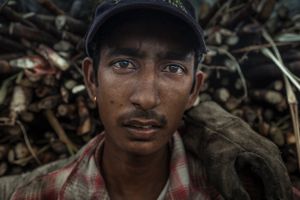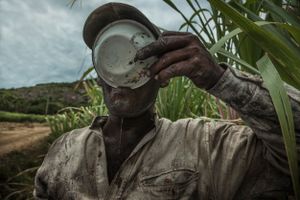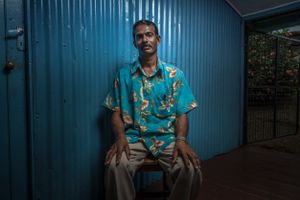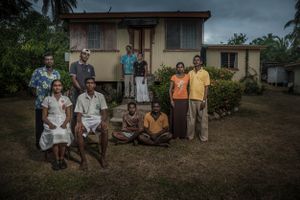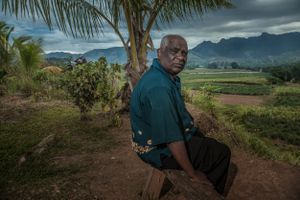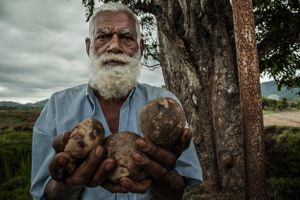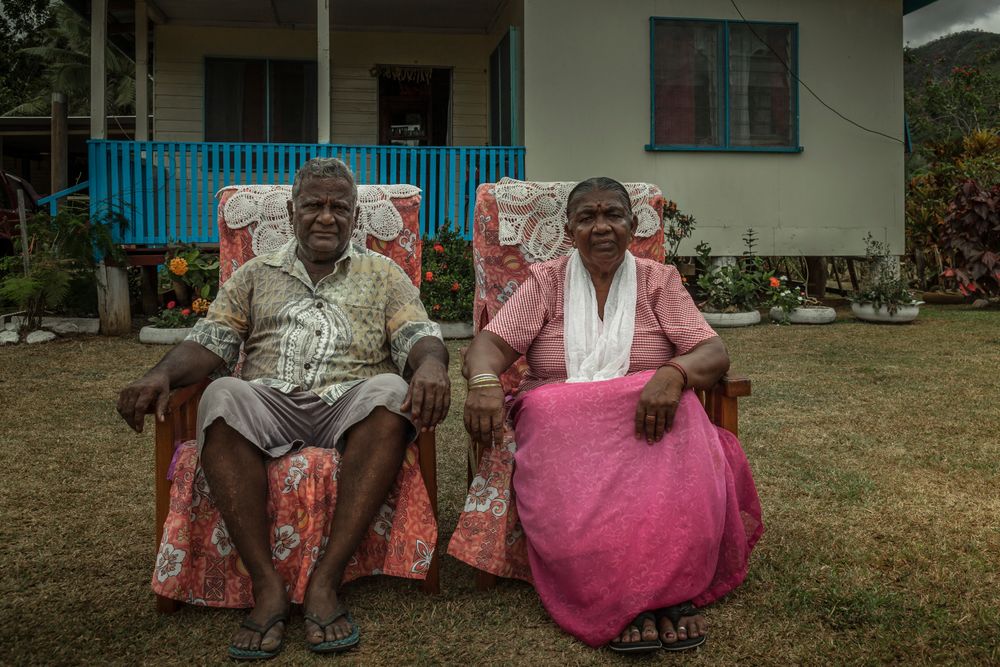
Indian sugar-cane families in Fiji.
The Fijian-Indian community has been in Fiji for generations, descendants of Indian indentured labourers who established the sugar industry.
Some families still live on sugar-cane farms their descendants leased a hundred years ago, farming as they have done for generations, planting and harvesting cane by hand.
Denied the right to own land, Fijian-Indian families leased small parcels of land and built a life and world of their own. As their communities grew, ethnic tensions developed and their tight knit and often successful communities have sometimes been regarded with mistrust and envy by their Fijian neighbours.
Most recently there have been three coups that manipulated racial tension. But any direct connection to India has long since disappeared. They are marooned by history.
They are the ‘black Jews’ of the Commonwealth, never completely secure, nor fully at home in the country of their birth, a complex legacy that calls into question ideas of race, land and belonging.
Bought there by colonialists who have long since moved on, there’s no clear agreement about their rights to be there. Just the right to belong, born on the sugar-cane farm.