
Holy Week in Guatemala
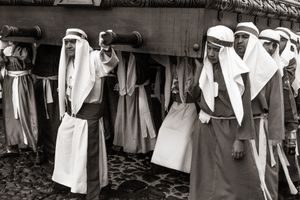
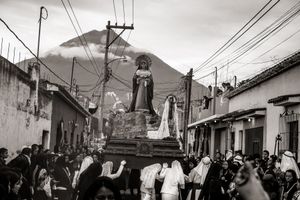
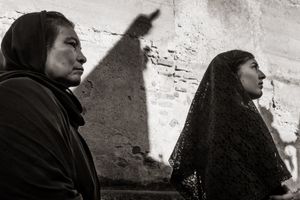
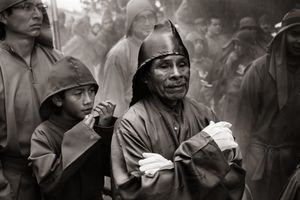
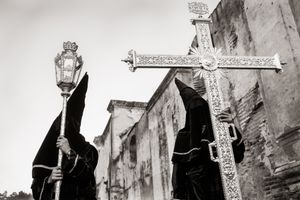
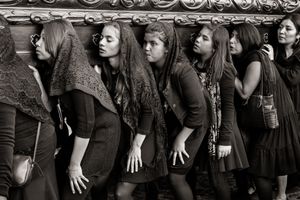
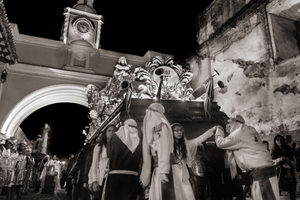
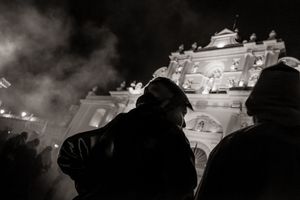
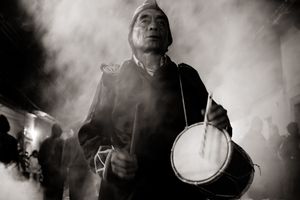
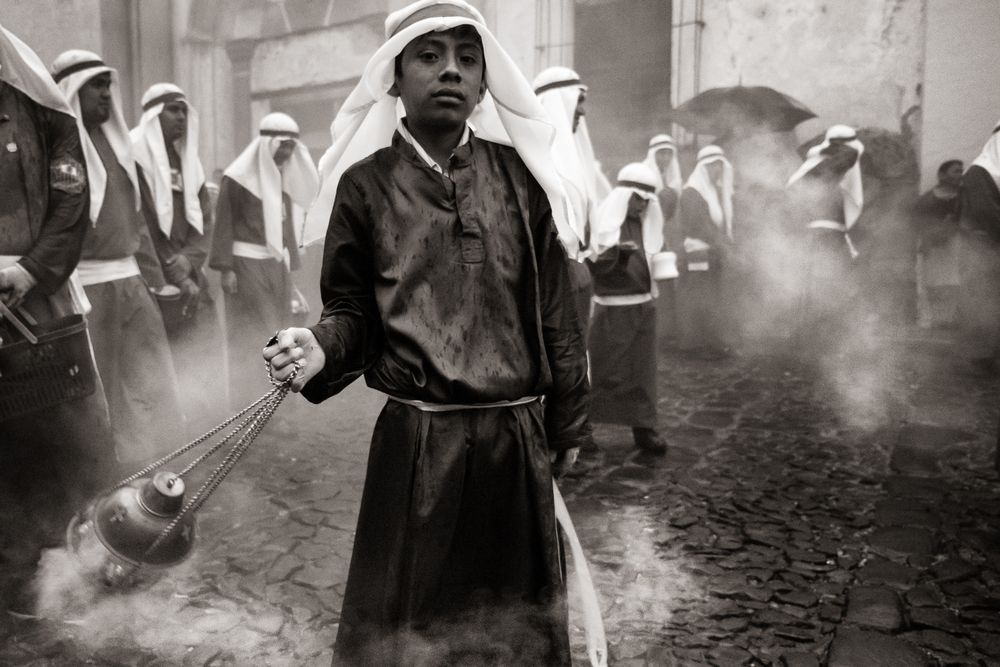
The burden and beauty of belief weighs heavy on the shoulders of the faithful as they perform the age-old traditions of Holy Week (Semana Santa) which were brought to Guatemala from Spain in the 17th Century. Throughout the week, parishioners from churches in and around Antigua partake in solemn processions that commemorate the last days of Jesus. A thick veil of smoke from incense burners fills the air, and the mournful sounds of funeral dirges from brass bands echo off ancient monastery walls, as the spectacular processions slowly wend their way through the narrow cobblestone streets and over decorative carpets (alfumbras) of pine needles, flowers, fruit and colored sawdust. Scores of men dressed in historical garb (cucuruchos) carry elaborately carved antique wooden platforms (andas) featuring Jesus in biblical scenes. Hundreds more walk alongside the andas, awaiting their turn to carry. Over fifteen hundred men may serve as cucuruchos during a single procession. The anda is never set down, and as it sways back and forth while the procession slowly inches forward, it seems as though it might topple over at any moment. In a similar fashion, andas with statues of the Virgin Mary are carried by doleful women, dressed in black or white lace. Both the statues of Jesus and Mary, and the massive andas, which may weigh thousands of pounds, are centuries old. The processions can last over twelve hours, and often begin or end in the wee hours of the night. No written description can adequately convey the spirituality that permeates the atmosphere during these activities, but all those who witness the processions will certainly be touched. These photos provide a glimpse into the passion of Holy Week in Guatemala.
No categories selected
Photos (15)