

My Banff
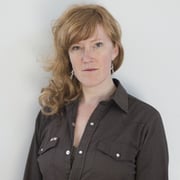
My Banff I'm interested in community collaboration, collective narratives and perception of place. One of my main concerns is the role of artist as observer and storyteller. In "My Banff", I'm thinking about the function of memory, vantage point and experience in relationship to place. Over the past few years I've been researching and thinking about Banff as a tourist destination in tandem with Banff as a place I call home. Because of its location within a National Park and because it has been marketed with such a high profile for so many years, Banff sometimes feels like a fake place. I first explored this idea in an earlier two-dimensional rendering of "The Banff Bubble" from 2004. In this image, I inserted a dome over the town using Photoshop. At that time, even though I worked in Banff, I did not live in the town and my perception of it was seen more through the eyes of a visitor. To be honest, as someone living in nearby Canmore, I almost looked down upon the tourist aspect of the town and felt it was inauthentic. When I moved to Banff in 2007, I began to see the town in a different way. I started to avoid Banff Avenue and took the back alleys and bike paths to get around town. My circle of friends who lived in town grew, and I started to collect stories and memories that were a result of living in the place. As a friend of mine said, "yeah sure it's a tourist town, but it's still home." I started thinking about my earlier Banff Bubble piece and reflected on what it really said about the experience of living here. Banff has been a tourist town since the Canadian Pacific Railway first promoted the natural hot springs on Sulphur Mountain to raise monies to fund the completion of the railroad across Canada. Unlike other western Canadian towns that have a history of mining or forestry, Banff has always functioned as a place of natural exoticism. As a result, it occupies a strange place culturally; a town that relies on tourism as its main industry and that constantly negotiates the line between authenticity and mythical narrative. But what is the ‘Banff’ experience? A strange mixture that combines the mountain environment with fudge shops, ski trips, and seedy clubbing nightlife? As a resident, I am concerned with the effect these perceptions of the town have on me and the people who reside here on a more permanent basis. I think that in many ways residents became a cog in the wheel through marketing of this experience, and find they are inadvertent players in a script they didn’t write. The author Hal K Rothman describes this as the ‘dilemma’ of the local: Locals must be what visitors want them to be in order to feed and clothe themselves and their families, but they also must guard themselves, their souls, and their places from people who less appreciate its special traits. They negotiate these boundaries, creating a series of boxes between themselves and visitors, rooms where locals encourage visitors to feel they have become of the place but where the locals also subtly guide visitors away from the essence of being local. (Rothman, page 12) I have experienced this feeling myself over the years and found it funny how I felt the need to propel this illusion, even if it isn't always truthful. "The Banff Bubble", in this installation is meant to function as a larger metaphor for the experience of living in a highly mediated place. I’m interested in the concept of the snow globe or domed city. In her book, The Artificial Kingdom, Celeste Olalquiaga writes about the function of snow globes or “dream spheres”, as being able to “ provide a unique medium for … evanescent recollections and fantasies, replicating in their glass and water distortions the amorphous state of half-consciousness.” (P62) The world within the snow globe is not based in reality and often combines random symbols in order to ‘sum up’ an experience. The work "My Banff" is an attempt to tell my version of living in Banff, weaving together stories collected from friends, my experience and my perception of the place I call home. Rothman, Hal K. Devil’s Bargains: Tourism in the Twentieth-Century American West. Lawrence; University Press of Kansas 1998 Olalquiaga, Celeste. The Artificial Kingdom: On the Kitsch Experience. Minneapolis: University of Minnesota Press 1998 "The Banff Bubble" 6'x6'x60”. Mixed media. The topography in my sculpture is build from traditional model train materials, but the buildings and people within my circle are represented in two- dimensional cut outs constructed from photographs I have taken throughout the town. On each photo is a fragment of a story or description of what I associate with the building or person in the image. These are places or people that are personally relevant or significant to my life here. This includes the houses where my friends reside, my place of work or houses that I like architecturally. I have also collected stories from friends and acquaintances from town which I've integrated either in the written stories on the cards or by recreating through miniature scenes within the sculpture. In a way, this is my form of resistance to the perception that Banff is only a tourist town. By 'tagging' and including places and people that I connect with, I'm trying to re-invent my version of this place. "Bird's Eye View" Video 11:11 running time "Birds Eye View" is a video piece that was created in collaboration with a local friend, Mark Fuller, and presents a view of the town shot from the wing of a hobby plane. My intention with this work is to play on the notion of the town being a model or miniature, and to explore yet another vantage point of the town. Perception and scale tie in together with this piece. "Portraits" Archival Inkjet prints from 4”x5” negatives. The large format portraits represent people that I know from the town and are intended to create another level of narrative. In addition, each of the large portraits is rendered as a miniature within the diorama in roughly the same location, or as close as possible to the location, that they were originally photographed. There are also miniature portraits within the diorama that are only rendered as small portraits, again playing on the idea of toy-sized scale and memory.
No categories selected
Photos (22)


