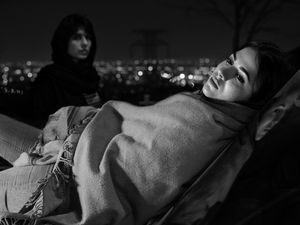
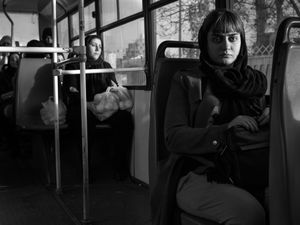
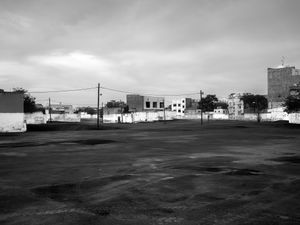
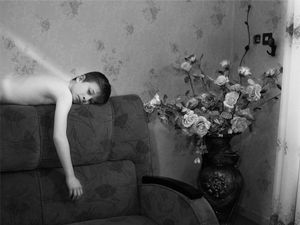
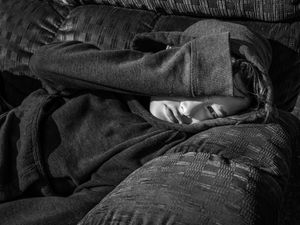
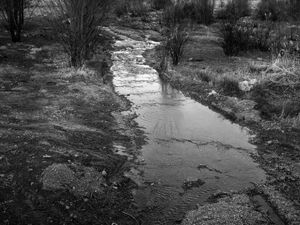
My practice originates in a disposition towards studying the poetics of spaces and states in transition. Trusting myself with a delicate balance between constructing and responding to the world, I photograph interiors and exteriors as they transform into each other, as mental states of connection and contemplation. Coming from the point of pure curiosity, I reflect on self-portraiture while I photograph others, and I delve for portraiture when photographing landscapes and still lives. I consider the silent internal conversations of the people I photograph and the concealed burden of history on a nation’s back.
The works revolve around what is known or unknown about the notion of home and the familiar, as experienced by a migrant body. It exists not only in the isolated frames, but between and beyond them in the Sequence; which has an essential place in it’s presentation and how it is read. The narrative quality of photographs themselves and their placement in the sequence are often described as Cinematic. I find myself and my work In the meeting point of the borders; between temporal and eternal, inside and out, familiar and peculiar, personal and political, seen and unseen, magic and mundane, imagined and experienced.
When making my work, I have also been thinking through the idea of Psychogeography as a movement that represents a political statement against the rational, ordered, capitalist city and includes elements of subjective encounter with the city. Although I am aware of the undercurrent of political tensions in my work, in an era of inter-governmental and political hostility, and projected identity politics, I believe that an a-political or poetical expression can be a more profound political response.