The Latin root word for forest is foris - meaning: outdoors, door, and entrance.
There have been several press articles that note that London has been classified as a forest. The word forest was originally used to define legal property, rather than ecological category, and the definition of what a forest is can still be called into question - however, there are apparently 8.4 million trees the city.
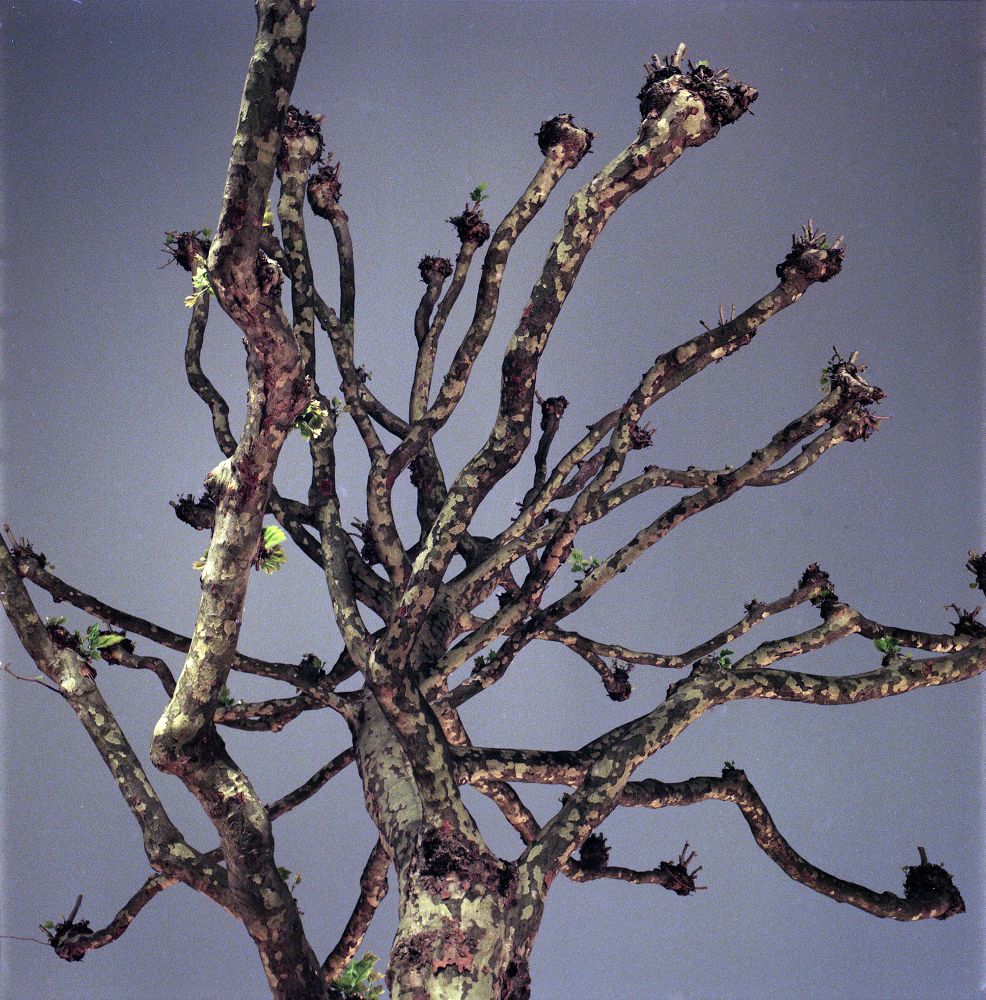
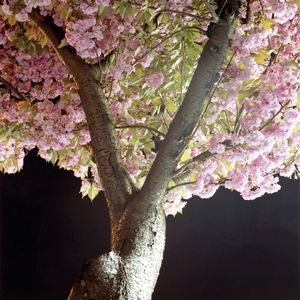
The photographs have been made over a few in many different boroughs, frequently during late night walks. Darkness has held a particular draw, when the city’s own dimensions can fade from view, and the magnetism of the tree comes into prominence more fully.
It seems to be a consensus that trees are healthy to have in the city. Their presence perhaps also fulfills older needs, to do with safety and hiding. But trees also hide themselves. They suggest, but do not fully provide solidity. They have the ability to be both there and not there. The trees’ sculptural and quasi-architectural presence is so physical and elaborate, but doesn’t seem to demand our attention. Mostly we ‘flip’ by without noticing them. While planted with tripod and camera squarely before striking trees, other night wanderers regularly ask me what I am looking at.
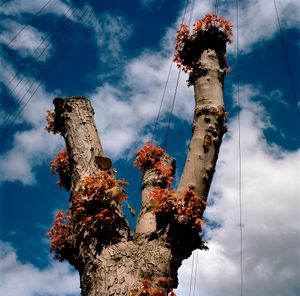
The trees' urban location is conspicuous via artificial light, wires or harsh pollarding. The series highlights how trees are valued in the city, but also how they are continuously managed and disciplined on the street.