Submerged Conscience
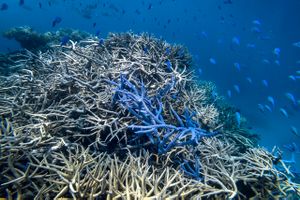
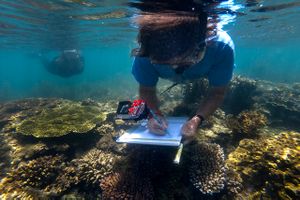
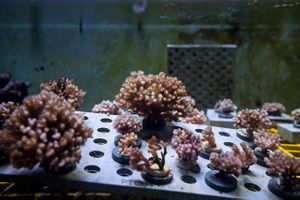
Globally, more than 300 million people depend on the ecosystem services that coral reefs provide, for their livelihoods and food security. Coral reefs are rapidly degrading due to the multiple pressures of climate change. The principal risk related to the ocean warming is the spread phenomenon of corals bleaching. Since the 1980s, rising sea surface temperature owing to global warming have triggered unprecedented mass bleaching of corals. Thermal stress during marine heatwaves disrupts the symbiotic relationship between corals and their algal symbionts, causing the corals to lose their colour. Bleached corals suffer physiological damages and prolonged bleaching often leads to high levels of coral mortality. The cumulative, combined footprint of all the major bleaching events now covers almost the entire Great Barrier Reef Marine Park. According to the studies conducted by the most important Australian authorities that are working for the coral reef's safeguard such as the AIMS (Australian Institute of Marine Science), the JCU (James Cook University) and the ARC (Centre of Excellence for Coral Reef Studies), the Great Barrier Reef has lost half of its coral cover since 1985 due to a combination of diverse components such as ocean acidification and water quality. The challenge worldwide is therefore to steer reefs through this period of continued warming. In order to fight the effects of climate change on the Great Barrier Reef, different marine authorities are conducting researches and experiments with the aim of finding a solution for the protection and the safeguard of the reefs of the world. During the last years, AIMS with the joined work of JCU and ARC researchers, is developing a significant project about assisted evolution, creating hybrid corals more resilient to bleaching events. The scientists are studying a heat-resistant strain, a "Super-Coral" that could withstand the rising ocean temperatures. The breakthrough research raises hopes for one day to counteract some of the effects of coral bleaching, which are ravaging large parts of the reef. The risk of an extinction of the reefs in the world is more than ever real and this requires urgent and rapid actions to reduce global warming. Securing biodiversity and ecosystems for future generations is our duty. We should not give up hope for the persistence of Earth's coral reefs. To steer coral reefs through the next century, we will need to be aware of their importance and most of all responsible of our actions as human being part of this wonderful planet called Earth.
No categories selected
Photos (20)