Artsakh: Daring to Exist
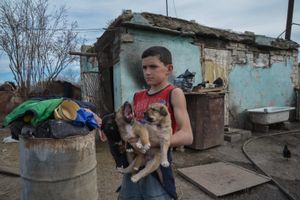
Artsakh roughly means ‘garden’ and it is the Armenian name given to a stunning mountainous territory known today as Nagorno-Karabakh. Armenians use the term to designate what was once the 10th province of the ancient Kingdom of Armenia between the 11th and 13th centuries. The territory is currently controlled by the de-facto independent Nagorno-Karabakh Republic and it is essentially an Armenian-majority enclave within modern-day Azerbaijan. The autonomous state is connected to mainland Armenia through a narrow corridor and secured through a 240km-long militarised border with WW1-style trenches. The breakaway Republic constitutes one of the last post-Soviet unresolved conflicts. Under Soviet rule, and as part of Azerbaijan SSR, the area was called the Nagorno-Karabakh Autonomous Oblast (NKAO). Following a referendum in 1988, a majority vote for secession from Azerbaijan and union with Armenia was declared. Clashes between the Armenian and Azerbaijani population broke out shortly after and reached their peak with an all-out war between Armenia, Armenian separatists from Nagorno-Karabakh and Azerbaijan in 1992, following the USSR’s collapse. In 1994, a ceasefire brokered by Russia resulted in Azerbaijan seceding control of the territory of Nagorno-Karabakh, as well as surrounding areas currently established as buffer zones. The war left an estimated 30, 000 people dead and approximately 800,000 refugees from both sides. Despite a 20-year ceasefire, the 240km frontline between Nagorno-Karabakh and Azerbaijan is a heavily militarised border where clash and diversion incidents occur almost daily. Against many odds, today’s Armenian-majority population of Nagorno-Karabakh continues to strive for either unification with ‘mother Armenia’ or for an international recognition status. The Republic is only recognized by three other states with limited recognition (South Ossetia, Transnistria and Abkazia).
No categories selected
Photos (10)