

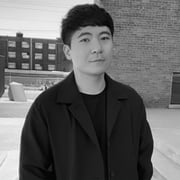
After Armando
I first began my documentary project called “After Armando” about the life of an immigrant slaughterhouse worker called Martin and his friends and colleagues who lived in the margins of society in Queens, New York. I believed that somehow I would be able to tell a “real” and “truthful” story about these immigrants, because I thought that we were the same. As I continued this project, the incredible gap between me and Martin and our friends had become clearer but the boundary between photographer and subject and friend, became less clear. I soon realized that Martin had developed an interest in photography through his exposure as a subject. I gave him a camera and asked him to make photos of anything he would like. I struggled with the power discrepancy between us and worried if this was really a collaboration. I soon realized that this is the question for all documentary photographs. I wanted to figure out if there is a way to resolve the power inequalities between myself and Martin. These works are the subject of our image making. In the sixteen months since Martin and I started this project, much has changed in the world, including the deaths and departures of some of the group and a global pandemic. We continue to meet and make and share photographs. We will both soon be leaving the United States and I look forward to seeing what happens next and how I can better understand these complex questions about photography itself.
No categories selected
Photos (10)


