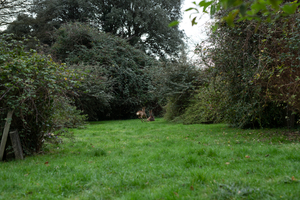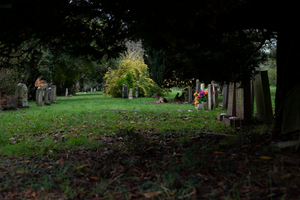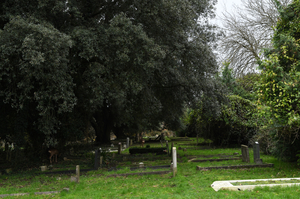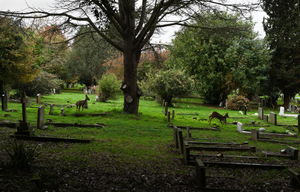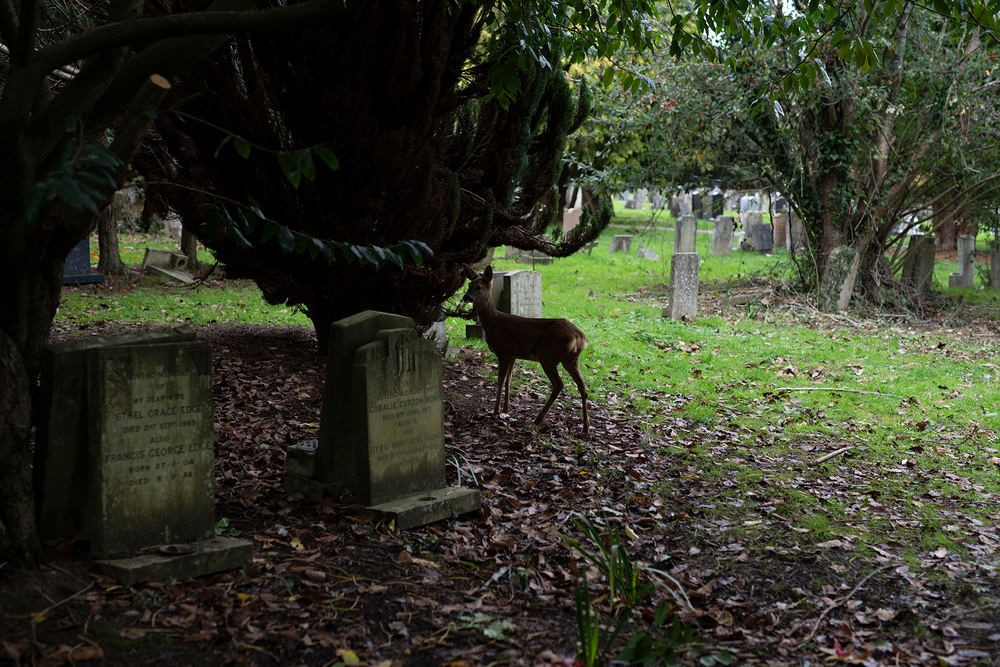
Designated a Site of Nature and Conservation Importance, my local cemetery occupies 37 acres of chalk downland on the edge of the South Downs, on the south coast of England, UK.
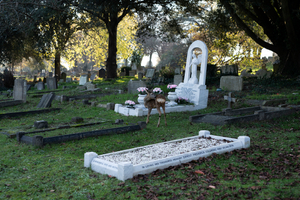
The cemetery is home to an abundance of flora and fauna; exemplifying the role of urban green spaces, as many locals visit the cemetery just to walk in the grounds and enjoy the wildlife, especially the Roe deer.
Roe deer are true natives to the British Isles, they are solitary animals but form groups in winter months. They do not maintain exclusive territories but live reasonably comfortably within overlapping areas. Both sexes have distinctive white rumps, with the female having a small tuft of hair at the base of the rump patch during winter. Males grow three small antlers and these are clearly visible as bumps during growth. The Roe deer are active both night and day, often using the cover of night to venture into more open spaces. They will spend hours resting and ruminating between bouts of feeding.
I first noticed the deer when visiting my grandfather's grave but initially I resisted photographing them. However, I felt compelled to return and during the autumn of 2020, using a full frame camera with a 50mm fixed focal length lens, explored the deer's relationship with their habitat.