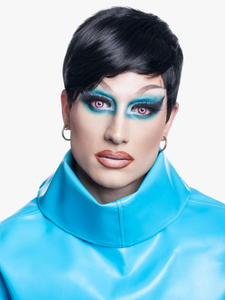
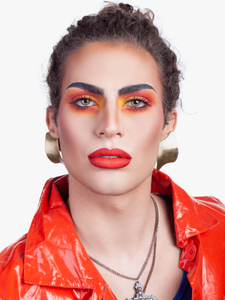
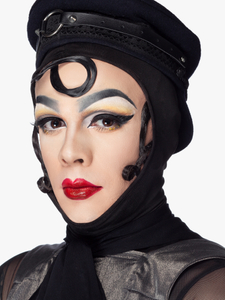
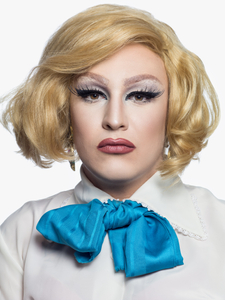
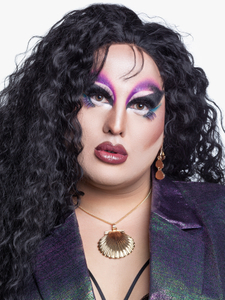
From the ancient Greek cults to Shakespearean comedies. From the “en travesti” ball tradition to famous movies like “The Rocky Horror Picture Show” and “Tootsie”.
There is a common image to these artistic expressions so far away in space and time: man disguised as a woman.
Since the female interpretation has become part of the Western society imagery, the figure of the transvestite has often been perceived not only as a sign of diversity compared to the norm, but even as a disturbing phenomenon.
Even through the radiant personalities of famous Drag Queens from the nineties, transvestism has gained a prominence perhaps never before.
The feminine depiction has played a fundamental role in the modern history of the gay culture.
In the thirties, during the era of prohibition in the United States, the homosexual community used underground clubs as a place for recreation and expression.
In these places many of them felt free to dress up and become Drag Queens.
Coming to the fifties and sixties: discrimination grows and a harsh suppression is taking place by politics and law enforcement against the LGBT world.
The Stonewell Inn in Manhattan is not only the hub of the New York gay scene, but also the epicenter of a series of riots that led, in the late sixties, to the recognition of the homosexual community and the acquisition of important rights.
Lastly the explosion of AIDS: Drag Queens now become the heroic interpreters of a vital and luminous energy that contrasts with the da